
Best Time to Hike Salkantay Trek
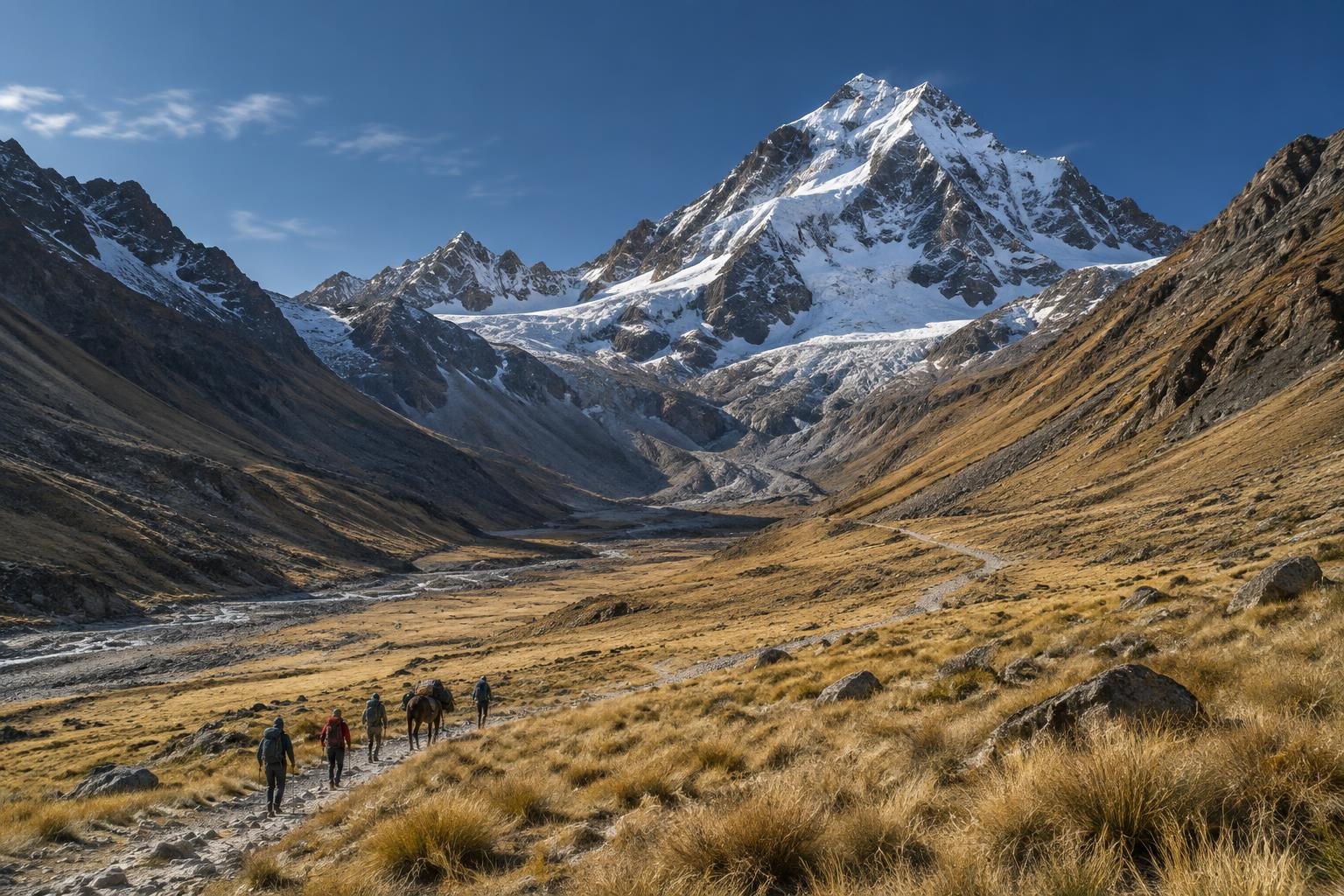
The best time to hike Salkantay Trek is May to September, the dry season in the Cusco region. Rainfall typically bottoms out around June, while the wet months from December to March bring far more rain. Book your timed Machu Picchu ticket ahead and acclimatize in Cusco first.
Month-by-month climate for Salkantay Trek
| Month | Rain | Daylight |
|---|---|---|
| Jan | 115 mm | 12.7 h |
| Feb | 164 mm | 12.4 h |
| Mar | 91 mm | 12.1 h |
| Apr | 51 mm | 11.7 h |
| May | 10 mm | 11.4 h |
| Jun | 4 mm | 11.2 h |
| Jul | 8 mm | 11.3 h |
| Aug | 8 mm | 11.6 h |
| Sep | 19 mm | 11.9 h |
| Oct | 56 mm | 12.3 h |
| Nov | 64 mm | 12.6 h |
| Dec | 135 mm | 12.8 h |
Modelled regional averages for 2010–2023 (rainfall) and calculated daylight hours; they describe the wider area, not a reading taken on the trail. Temperature changes little from month to month here, so we don’t chart it. Altitude, not season, drives how cold it feels on the route, so check the managing authority’s guidance for the section you plan to walk.
The modelled averages show a sharp split. June is the driest month at about 4 mm, with July and August near 8 mm. February is the wettest at roughly 164 mm, followed by December at 135 mm and January at 115 mm. Daylight changes only modestly, from about 11.2 hours in June to 12.8 hours in December, so the dry months give slightly shorter days.
Salkantay Trek season by season
Dry season · May to August
These are the driest months on average, with rainfall typically ranging from about 4 to 10 mm per month. That fits the official season guidance of May to September and generally means steadier trail conditions on the long pass days. Daylight is at its shortest, around 11.2 to 11.6 hours, so start early and keep a headlamp handy for the pre-dawn pass day.
Late dry season · September to October
September still falls inside the official dry season, with rainfall averaging only about 19 mm. October is outside that window, and modelled rainfall climbs to about 56 mm as the wetter pattern returns. Days lengthen to roughly 11.9 to 12.3 hours, giving a little more margin. Treat late September as the safer end of the shoulder and confirm current conditions before you commit.
Early wet season · November to December
Rainfall rises from about 64 mm in November to around 135 mm in December, so showers become far more likely on the trail. Daylight is longer, reaching about 12.8 hours in December, which helps with pacing. This period sits outside the official May to September season guidance, so check with the regional authorities and your operator about conditions and route status before planning.
Peak rains · January to April
This stretch is the wettest of the year on average. January sits near 115 mm and February peaks around 164 mm, easing to about 91 mm in March and 51 mm in April. These months fall outside the official season guidance, so expect more cloud and wet ground, and confirm with the managing authorities and your operator whether the route is running before you plan around it.
Official season guidance
Regional authorities: May to September (dry season)
The Salkantay does not require the limited Inca Trail permit, but you still need a Machu Picchu entry ticket (timed, book ahead) and most people go with a guided operator. The Salkantay Pass is high — acclimatize in Cusco first.
Check current dates on machupicchu.gob.pe (official Machu Picchu site, Peru Ministry of Culture)What to pack for the season
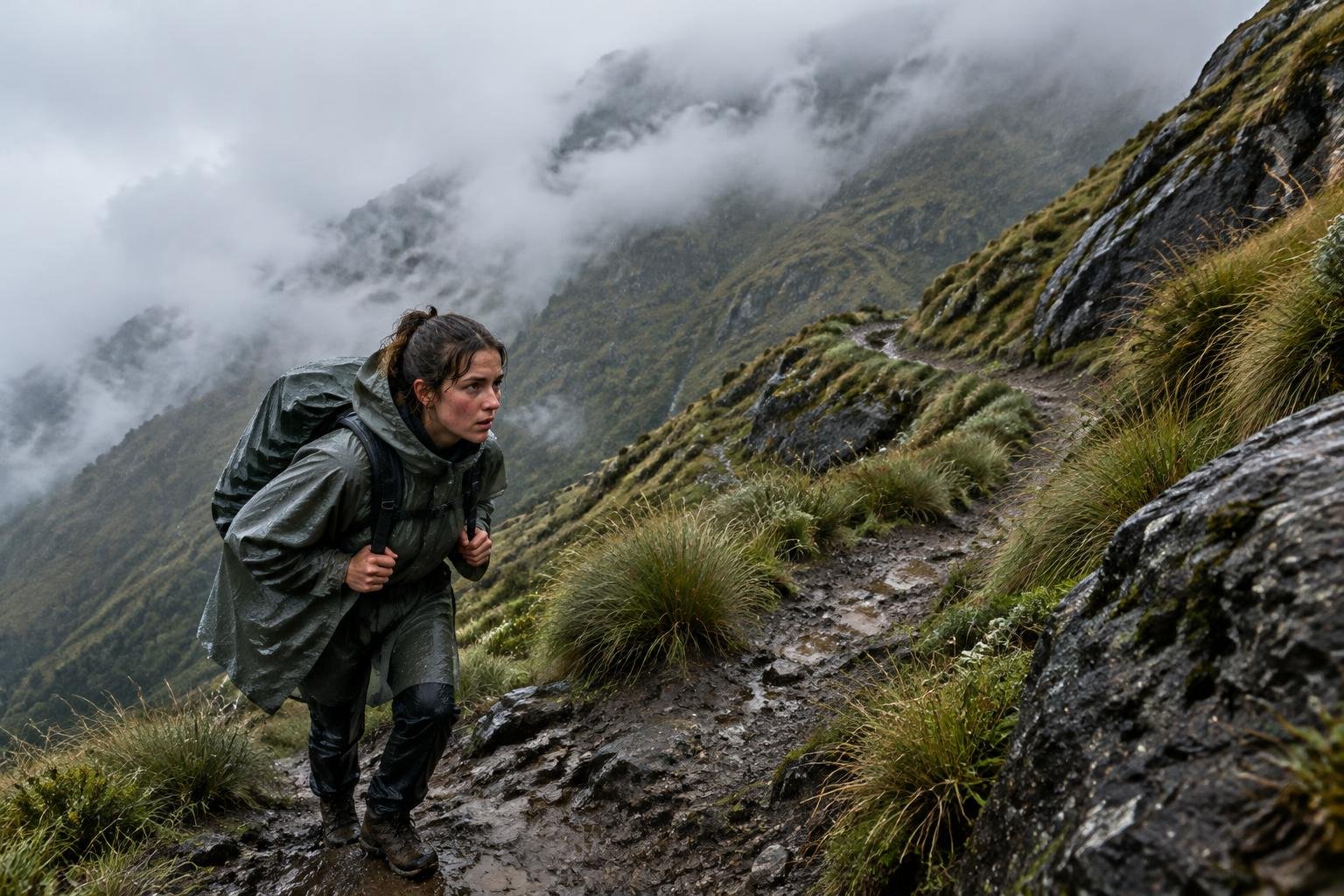
Packing should follow the rain pattern. In the dry season, prioritize sun protection, warm layers for early starts and a headlamp for short daylight. If you travel in the shoulder or wet months, add reliable rain cover for you and your pack, and spare dry layers. Always plan for changeable conditions on a high pass.
For layering, rain cover and weather planning, see hiking in rain, heat and cold.
Timing mistakes to avoid
The most common mistake is choosing a month from one number alone. Rainfall here is a modelled regional average, not a measurement at the pass, so conditions can differ. Another is ignoring the official May to September guidance and booking in the wet months without checking route status. Finally, don't skip acclimatizing in Cusco, and remember the timed Machu Picchu ticket needs booking ahead.
Common questions
Is the Salkantay Trek possible in the rainy season?
The official season guidance is May to September, so the wetter months fall outside it. Modelled rainfall is much higher from December to March. If you consider traveling then, check with the regional authorities and your operator about current conditions and whether the route is running.
Which month is driest for the Salkantay Trek?
Based on modelled regional averages, June is typically the driest month at about 4 mm, with July and August close behind near 8 mm. These figures are averages for the region rather than trail measurements, so conditions on any given day can differ.
How much daylight should I plan for?
Calculated daylight ranges from about 11.2 hours in June to about 12.8 hours in December. During the dry season the days are on the shorter side, so start early and carry a headlamp, especially for the long pass day.
Do I need to book around the season?
Yes, plan ahead. You still need a timed Machu Picchu entry ticket, and most people go with a guided operator. Because the dry season is the official recommended window, book early for May to September and acclimatize in Cusco first.
Sources
- Regional authorities — machupicchu.gob.pe (official Machu Picchu site, Peru Ministry of Culture): official season and permit guidance.
- NASA POWER (Prediction Of Worldwide Energy Resources): monthly temperature and rainfall averages, 2010–2023, from MERRA-2 reanalysis. Daylight hours are calculated from latitude.
Conditions, closures and permit rules change without notice — confirm current information with the managing authority before you go. See our editorial policy and affiliate disclosure.