
Rain Covers & Liners: Complete Guide
Comprehensive technical analysis of sizing, materials, installation requirements, and manufacturer standards for rain covers & liners.


Recommended Products
See the full ranking →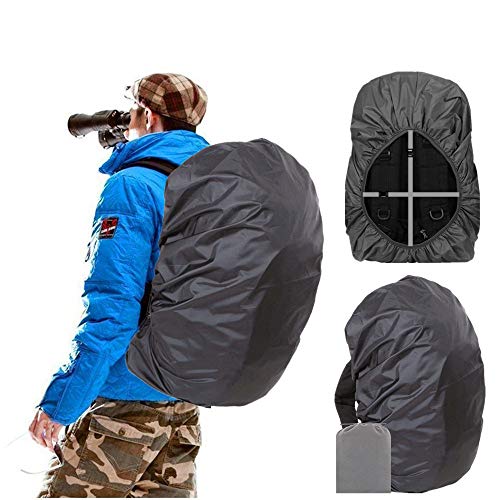

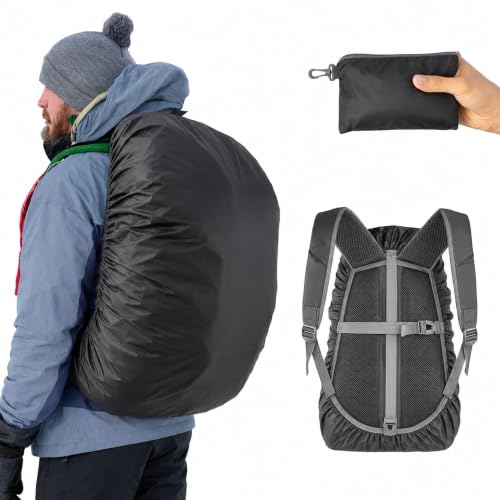
A rain cover sheds external rain off a hiking backpack's shell while a pack liner keeps the gear inside dry from the core out; serious hikers run both together rather than relying on either alone. Neither one waterproofs a pack completely, and each fails in a different way, so understanding the split lets a hiker size, pack, and budget for wet-weather protection instead of guessing.
A rain cover is a separate waterproof shell that stretches over the outside of a loaded pack, while a liner is a waterproof bag or sack that goes inside the main compartment before gear is packed; the cover blocks rain from soaking the fabric and stitching, and the liner blocks water that gets through seams, zippers, or the cover's gaps. Used alone, a cover keeps the pack itself lighter and drier but leaves contents exposed at zipper seams and the cover's open bottom. Used alone, a liner keeps the contents bone-dry even in a downpour but does nothing to stop the pack's fabric from soaking up water, adding weight, and losing insulation value in cold conditions. Most three-season and winter hikers carry both: the liner as the non-negotiable dry-gear guarantee, the cover as a second layer that also protects the pack's fabric, hipbelt padding, and any hardware from prolonged soaking.
The table below lines up the two systems by what they actually do.
| Attribute | Rain Cover | Pack Liner |
|---|---|---|
| What it protects | Pack's outer fabric, zippers, hipbelt padding | Everything packed inside the main compartment |
| Typical weight | 2–6 oz depending on pack size | 1–3 oz for a dedicated liner; near 0 for a repurposed trash bag |
| Failure point | Wind-driven rain under the hem; gusts flipping it off | Pinholes, poor seal at the top, overstuffing that stresses seams |
| Access while hiking | Must remove or unclip to reach side/front pockets | No effect on external pocket access |
| Works with external attachments | Poorly — trekking poles and ice axes on the outside tear it | Not affected, since it's inside the pack |
| Best paired with | A liner, for full protection | A cover, to keep the pack shell dry too |
Size a rain cover to the pack's stated liter capacity, not to torso length or body size, and round up if the pack is loaded with an external sleeping bag, tent, or heavy side pockets. Most rain cover lines are sold in capacity bands — commonly small (fits roughly 15–35L), medium (35–55L), large (55–75L), and extra-large (75L and up) — sized to stretch over the pack body plus a margin for external gear. A cover sized too small won't reach the pack's base, leaving the bottom seams and hipbelt exposed; a cover sized too large flaps loose in wind, catches on branches, and is more likely to blow off. Hikers who lash a sleeping pad, wet gear sack, or extra layer to the outside of the pack should size up one band from the pack's raw liter capacity to make sure the cover still closes over the bulk. Elastic hems, a drawcord at the opening, and a cinch point at the shoulder-strap gap all help a properly sized cover stay seated instead of sliding or lifting.
A sturdy plastic trash bag or contractor bag used as a pack liner is enough to keep gear dry on most hikes, provided it's puncture-resistant, sized to the pack's main compartment, and twisted or folded shut rather than left open. Contractor-grade bags (roughly 3-mil thickness) resist punctures from tent poles, stove canisters, and boot edges far better than the thin bags sold for household trash, which tear against pack frames and sharp gear corners. The trade-off against a dedicated pack liner or a roll-top dry bag is durability and a real seal: a trash bag's twist-and-fold closure is not as reliable in a sustained downpour or a stream crossing as a roll-top's compressed rubber seal, and a trash bag typically doesn't survive more than a handful of trips before thinning or tearing. For weekend trips and fair-weather forecasts, a contractor bag lining the main compartment is a functional, near-zero-cost liner. For thru-hikers, wet climates, or trips where a soaked sleeping bag is a real safety issue, a purpose-built liner or dry bag earns its extra weight and cost through a more dependable seal and longer service life.
Rain covers fail in wind when gusts get under the loose hem and either flip the cover off the pack entirely or hold it open long enough for wind-driven rain to blow in sideways, which is the scenario covers are least equipped to handle. A cover is built to shed rain falling downward onto a mostly static pack; it is not built to stay sealed against horizontal rain punching under an elastic edge, and ridge lines, exposed passes, and open alpine terrain are exactly where both wind and rain peak together. The elastic hem and any cinch cords are the weak points: hems stretched thin from repeated use lose their grip, and a hem that isn't cinched snug at the shoulder-strap notch leaves a gap wind can exploit first. Because of this failure mode, a liner inside the pack is the backup that keeps gear dry even if the cover partially fails or blows off completely — which is the core reason the two systems are recommended together rather than as alternatives to each other.
Go Deeper
Detailed companion guides for rain covers & liners.
Best Rain Covers For Backpacks
Buyer's guide: best rain cover for backpack.
Best Dry Bags For Backpacking
Buyer's guide: best dry bag for backpacking.
Rain Cover vs Pack Liner
Rain cover vs pack liner compared: what each one protects, where each fails in wet weather, and why experienced hikers carry both together on trail.
Packing Aids (Cubes, Sacks)
Related care, repair & accessories guide.
Trekking-Pole & Gear Attachment
Related care, repair & accessories guide.