Trail-Specific Pack & Trip Guides
Which pack for which trail — thru-hikes, international treks and trip-length capacity guides, plus packing lists. Authoritative manufacturer specifications, sizing parameters, and sub-category master breakdown.
- 5
- Sub-Categories
- 10
- In-Depth Guides
- 20
- Products Reviewed
- Sep 2026
- Published
Affiliate disclosure: this page contains affiliate links. Purchases made through them may earn us a commission at no extra cost to you. See our affiliate disclosure.
In plain English
Every trail has its own personality. A desert route may have no water for miles, a mountain trail may climb for hours, and some parks have strict rules about how you store food because of bears. These details change what you need to carry, and so they change the backpack you need.
The easiest way to plan is to count nights and count the distance between places where you can refill water or buy more food. Hikers call that a resupply. The longer the stretch between resupplies, the more you carry and the bigger your pack needs to be.
Before any trip, read the official page for the park or trail you are visiting. Rules about permits, campfires and food storage change, and they are different from place to place. A little homework at home saves a lot of trouble at the trailhead.
Recommended Products

Sub-Category Micro Hubs
In-depth technical analyses, material specifications, and comparative evaluation.
Thru-Hike Pack Guides
Detailed evaluation of anatomical parameters, safety standards, and practical recommendations for thru-hike pack guides.
International Trek Packs
Detailed evaluation of anatomical parameters, safety standards, and practical recommendations for international trek packs.
Trip-Length Capacity Guides
Detailed evaluation of anatomical parameters, safety standards, and practical recommendations for trip-length capacity guides.
Packing Lists
Detailed evaluation of anatomical parameters, safety standards, and practical recommendations for packing lists.
Seasonal & Conditions Guides
Detailed evaluation of anatomical parameters, safety standards, and practical recommendations for seasonal & conditions guides.
Specific trails and trip lengths impose their own pack requirements: a resupply-length carry, a portering rule, or a season can decide the right backpack more than any general spec. This hub matches famous routes and trip durations to the pack and packing list they call for.
Long-trail thru-hikes — the Appalachian Trail, Pacific Crest Trail, and Continental Divide Trail — reward a light, durable pack sized to the longest food carry between resupplies. International treks from the Camino de Santiago to Everest Base Camp set pack size by duration, climate, and whether porters or duffels carry the bulk. The thru-hike and international-trek sub-hubs below cover the popular routes.
The fastest way to size a pack is by nights out, adjusted for gear bulk and season — the trip-length capacity guide turns that into liter targets, and the packing-list guide ties gear to trip type so nothing essential is forgotten and nothing dead-weight is carried. Every guide here links back to the capacity and fit hubs.
Rules that change the pack you need
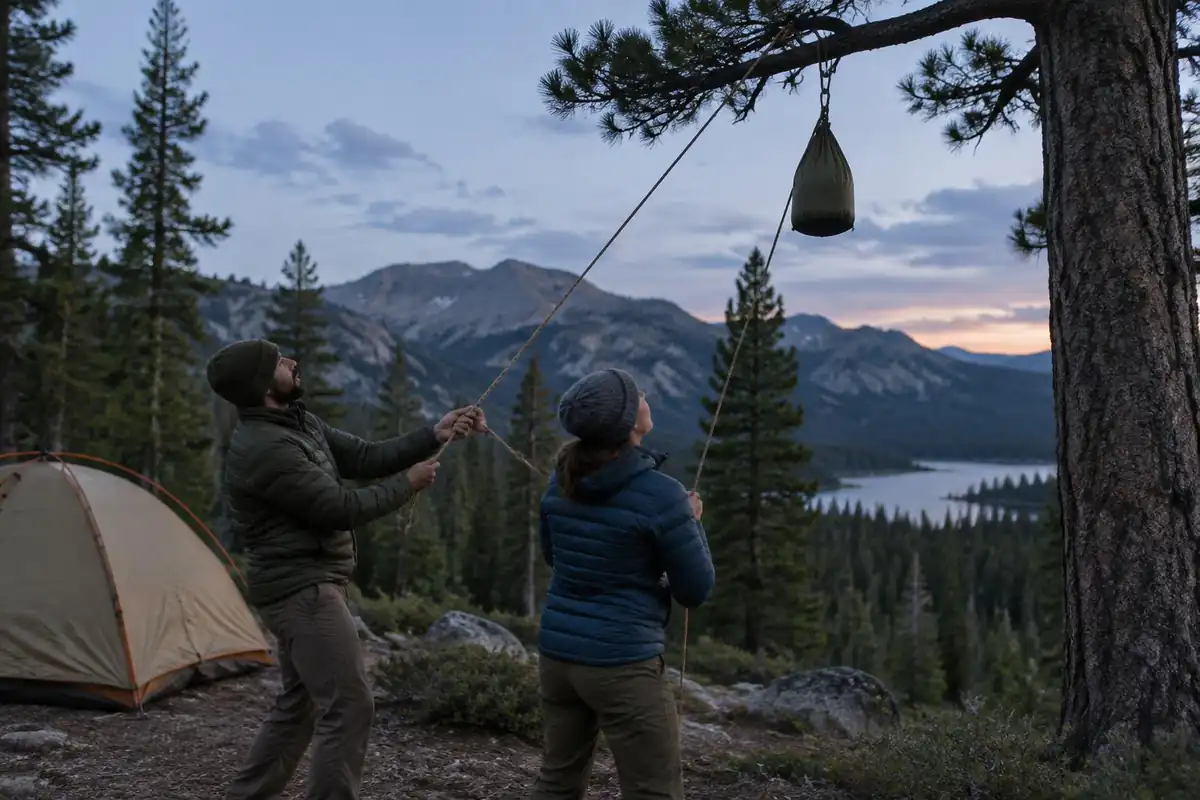
Food storage is the rule most likely to change your pack. Rocky Mountain National Park requires a bear canister for every wilderness overnight and asks to see it before issuing a permit.1 Yosemite makes hanging food illegal everywhere in the park.2 Sequoia and Kings Canyon require containers from May 1 to October 31 in named areas such as the Rae Lakes Loop and Dusy Basin.6 In New York's Eastern High Peaks Wilderness, canisters are required from April 1 to November 30.7 These rules change, so check the current park page before you go.
A canister is a rigid block your pack must swallow. Glacier Bay's loaner holds about six days of food in 560 cubic inches and weighs 2.8 lb.8 Denali's small container weighs 3 lb for 3–5 days of food, and its larger one 5 lb for 7–10 days.9 On canister-required trails, a pack that is plenty big on paper can still be too narrow to fit one.
Estimating time and difficulty on a route
Naismith's rule, from 1892, allows one hour per three horizontal miles plus one hour per 2,000 feet of ascent.4 Analysis of fell-running records suggests one meter of climb is worth about 7.92 meters of flat travel.10 Mountaineering Scotland uses a slower variant of 4 km/h plus one minute per 10 m of ascent.11 A University of Utah analysis of GPS data from nearly 30,000 people found people move fastest on a slightly downhill slope.4
For difficulty, Shenandoah National Park multiplies elevation gain in feet by 2 and by distance in miles, then takes the square root; a 10-mile hike gaining 2,200 feet scores about 209.8, which the park rates Very Strenuous.12 The NPS also advises planning uphill sections to take at least double the downhill time and setting a turnaround time you stick to.13
Treks abroad and at altitude
International treks add travel logistics. The TSA bans flammable cooking fuel from both carry-on and checked bags,14 allows camp stoves only when completely emptied of fuel and cleaned,15 and does not allow bear spray in either.16 MSR notes canister fuel is not available everywhere and that liquid fuel is the safer bet for remote international travel.17
High routes bring altitude risk. The CDC says any unacclimatized person sleeping at 8,000 feet or higher is at risk of altitude illness, that fitness and training do not protect against it, and that above about 9,850 feet sleeping altitude should rise no more than about 1,600 feet per day.18 Never go higher to sleep with symptoms, however mild, and get medical help if they worsen.18 Build those extra acclimatization days into your food count and pack size.
Relevant Products