
Everest Base Camp vs Annapurna Base Camp: Which Should You Hike?
Choose Everest Base Camp if you want the bigger, higher Himalayan objective and can spend roughly a fortnight with built-in acclimatization days; choose Annapurna Base Camp if you want a somewhat shorter teahouse trek, often a week to ten days, through forest and gorge into a sanctuary.
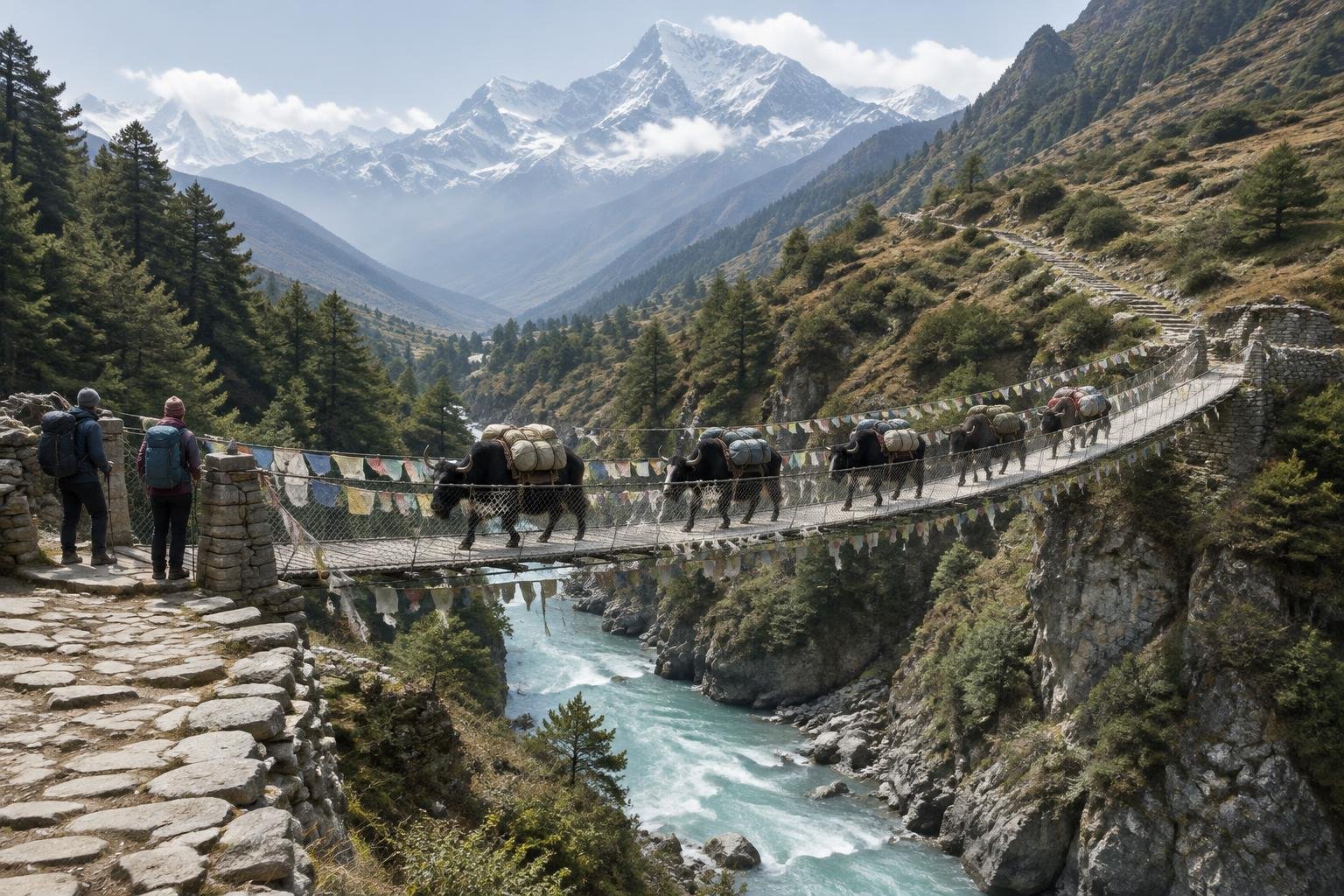
Everest Base Camp and Annapurna Base Camp at a glance
Everest Base Camp is a roughly 130 km (80 mi) out-and-back from Lukla through the Khumbu, reaching 5,364 m. Annapurna Base Camp is an out-and-back of about 110–115 km (68–71 mi) from Nayapul/Siwai into the Sanctuary, ending at 4,130 m. Both are Nepal teahouse treks without technical climbing, so hikers often weigh them against each other.
| Everest Base Camp | Annapurna Base Camp | |
|---|---|---|
| Place | Khumbu Himalaya · Nepal | Annapurna Himalaya · Nepal |
| Distance | ~130 km / 80 mi round-trip from Lukla (~65 km / 40 mi one-way to Base Camp) | ~110–115 km / 68–71 mi round trip (out-and-back from Nayapul/Siwai), typically walked over 7–12 days |
| Elevation gain | Net gain ~2,500 m (8,200 ft) from Lukla (2,860 m) to Everest Base Camp (5,364 m); cumulative ascent over the full round trip (including acclimatization hikes and repeated up-and-down) is commonly cited at roughly 7,000–10,000 m (23,000–33,000 ft) — cumulative figure for the whole route, not a single segment | ~3,000+ m cumulative gain from trailhead (~1,000 m) up to Annapurna Base Camp itself at 4,130 m (13,549 ft) |
| Difficulty | Strenuous / high-altitude (no technical climbing, but altitude and multi-day cumulative fatigue are the main hazards) | Moderate–strenuous (teahouse trek, no technical climbing required, but sustained high altitude and long trekking days) |
| Route type | out-and-back | out-and-back |
| Official season | Late September to November and March to May | October–November and March–April |
| Managed by | Nepal DNPWC & local committees | ACAP / NTNC |
Effort and difficulty
Everest Base Camp covers about 130 km / 80 mi round trip and is rated strenuous and high-altitude, with the main hazards being altitude and cumulative fatigue. Its net gain from Lukla at 2,860 m to 5,364 m is about 2,500 m (8,200 ft), and the cumulative ascent is commonly cited at roughly 7,000–10,000 m. Annapurna Base Camp runs about 110–115 km / 68–71 mi, is rated moderate–strenuous, and gains roughly 3,000+ m cumulatively from about 1,000 m to 4,130 m. Everest is the bigger commitment and goes higher; Annapurna still involves long days and sustained altitude.
Season, permits and booking
Everest Base Camp's official best season is late September to November and March to May. Annapurna Base Camp's is October–November and March–April. Everest requires the Sagarmatha National Park permit plus the local Khumbu Pasang Lhamu Rural Municipality permit. Annapurna requires the ACAP permit and trekker registration. For both, Nepal's guide rules for trekkers have been revised, and both call for acclimatization time. Confirm current requirements with each managing authority, the Nepal Tourism Board, or a licensed operator before you book.
Which one is right for you?
Choose Everest Base Camp if…
Pick Everest Base Camp if reaching 5,364 m is the point of the trip and you can commit about two weeks, including rest days and spare days for weather-dependent mountain flights. It suits hikers who are fit and ready for a strenuous, high-altitude walk, comfortable with slow ascent days, and happy to follow a stone-laid trail shared with porters and yak trains.
How to hike Everest Base Camp — Namche & TengbocheChoose Annapurna Base Camp if…
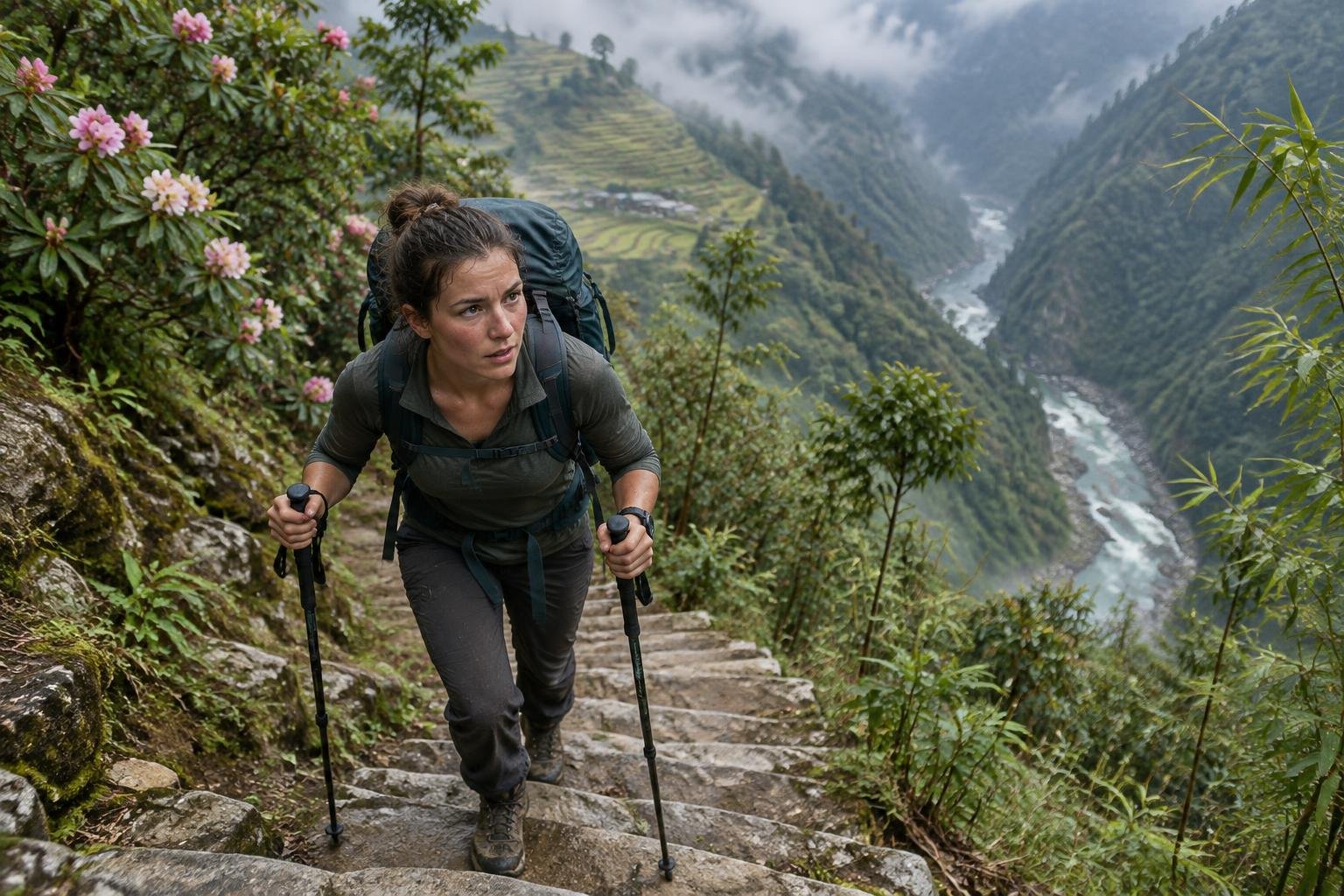
Pick Annapurna Base Camp if you prefer a trek of about a week to ten days that moves from stone staircases through bamboo and rhododendron forest into a gorge and then the amphitheater. It suits hikers who want a moderate–strenuous teahouse trek, accept the effort of the stair-heavy days around Chhomrong, and are willing to take a spare day for altitude and weather.
How to hike Annapurna Base Camp — the SanctuaryWhat the two have in common
Both are out-and-back teahouse treks in Nepal that need no technical climbing. Both go high enough that altitude is a real factor, so each builds in acclimatization and a faster descent than ascent. Each is managed through permits, and each follows terrain that shifts from valley or forest paths to moraine and stony ground near the top.
How your choice changes what you pack
Both treks call for layers that handle warm valley days and cold nights at altitude, a pack sized for a teahouse trek, and a way to carry water. The higher, longer Everest route suggests planning more carefully for cold at the top and for spare days if flights slip. Annapurna's stone staircases and forest sections reward sturdy footwear and trekking poles for the long ups and downs.
Common questions
Which is harder, Everest Base Camp or Annapurna Base Camp?
Based on the supplied ratings, Everest Base Camp is the tougher one: it is rated strenuous and high-altitude, while Annapurna Base Camp is moderate–strenuous. Everest reaches a higher point and is longer overall, though both involve sustained altitude and long trekking days.
Which is better for first-time high-altitude trekkers?
Annapurna Base Camp is the lower, shorter option, topping out at 4,130 m, so it may suit a first high-altitude trek better. Both still demand acclimatization and a spare day, so plan carefully and check current requirements with a licensed operator.
Which takes longer to complete?
Everest Base Camp is typically spread across roughly a fortnight, with rest days built in. Annapurna Base Camp is typically walked over a week to ten days, with some listings noting 7–12 days. Both benefit from a spare day for weather and altitude.
Do both treks need permits?
Yes. Everest Base Camp requires the Sagarmatha National Park permit plus the local Khumbu Pasang Lhamu Rural Municipality permit. Annapurna Base Camp requires the ACAP permit and trekker registration. Guide rules for trekkers have been revised, so check current requirements with the Nepal Tourism Board or a licensed operator.
Sources
- Nepal DNPWC & local committees — ntb.gov.np: official information for Everest Base Camp.
- ACAP / NTNC — ntb.gov.np: official information for Annapurna Base Camp.
Conditions, permits and access rules change without notice — confirm current information with each managing authority before you go. See our editorial policy.