
Best Women's Trail Running Shoes
Trail runners have quietly become the default footwear for a lot of hikers, and it is not just a running thing — a lighter shoe means less work with every step, faster drying after a creek crossing, and almost no break-in period. The trade-off is real: you give up some ankle support, underfoot protection and outright durability compared with a boot. This page walks through how to choose a women's trail runner that suits your feet and your terrain.
Affiliate disclosure: this page contains affiliate links. Purchases made through them may earn us a commission at no extra cost to you. See our affiliate disclosure.
In plain English
A trail running shoe looks like a running sneaker with a chunkier, grippier sole. Many hikers wear them instead of boots because they are light, breathe well, and feel comfortable almost right away. Picture swapping heavy work boots for sturdy sneakers: you move more freely, but you feel more of the ground.
Women's trail runners are built on a slightly different foot shape than men's. That suits many women, but not all. If the front of the shoe squeezes your toes, try a wide or men's version. What matters is that your heel stays put and your toes have room to spread.
Look at the bottom of the shoe too. The bumps on the sole, called lugs, work like tire tread. Deep lugs grab mud, and shallow lugs feel smoother on hard, dry trail. Pick the tread for the ground you walk most often.
This page contains affiliate links. Purchases made through them may earn a commission at no extra cost to you. See our affiliate disclosure.
Who it's for
Trail runners suit hikers carrying light-to-moderate loads on trails they know, plus thru-hikers and fastpackers who prioritize low weight over armor. If you have weak ankles, carry a heavy pack, or spend days on loose talus and snow, a boot may still serve you better. Foot shape matters too: high-volume, wide or narrow feet all fit differently.

How to choose trail runners
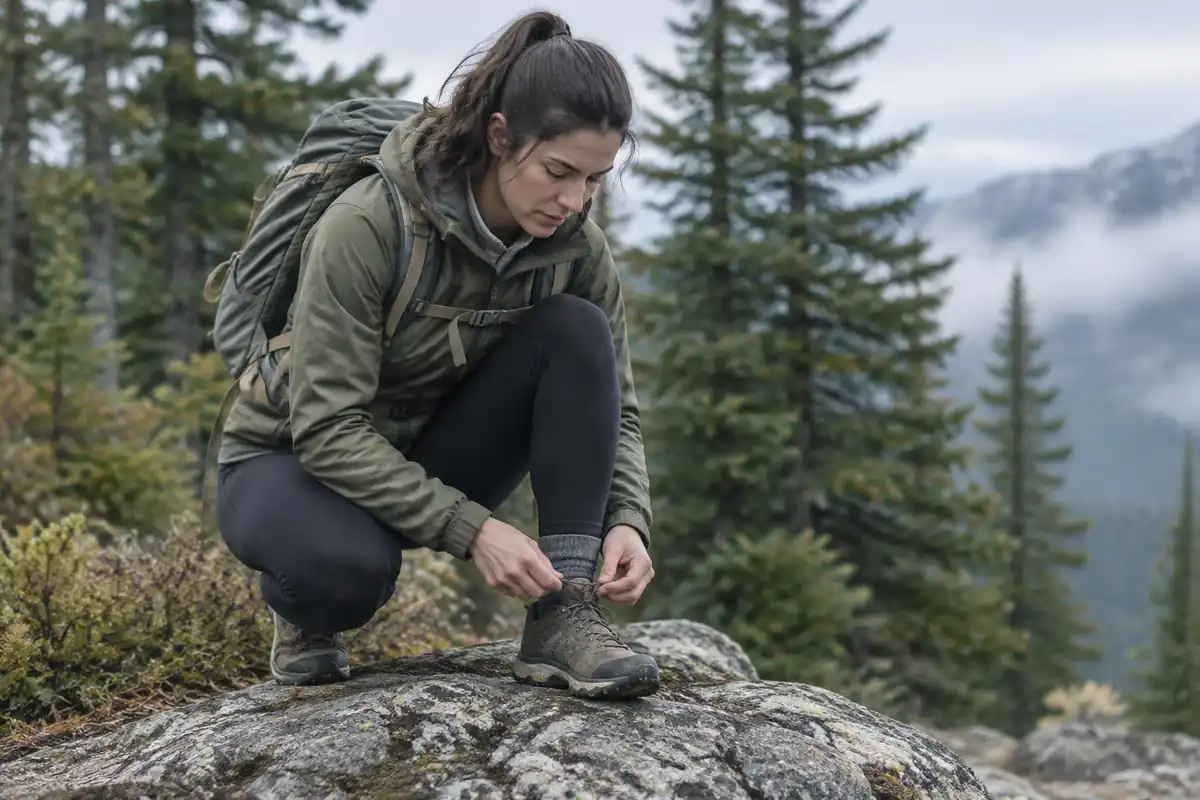
Women's trail runners are often built on a different last from the men's version, commonly with a narrower heel and lower volume. That works well for many feet, but not all: plenty of women fit better in a unisex or men's shoe, particularly if your forefoot is broad. Judge the shoe by how it holds your heel and lets your toes spread, not by the label.
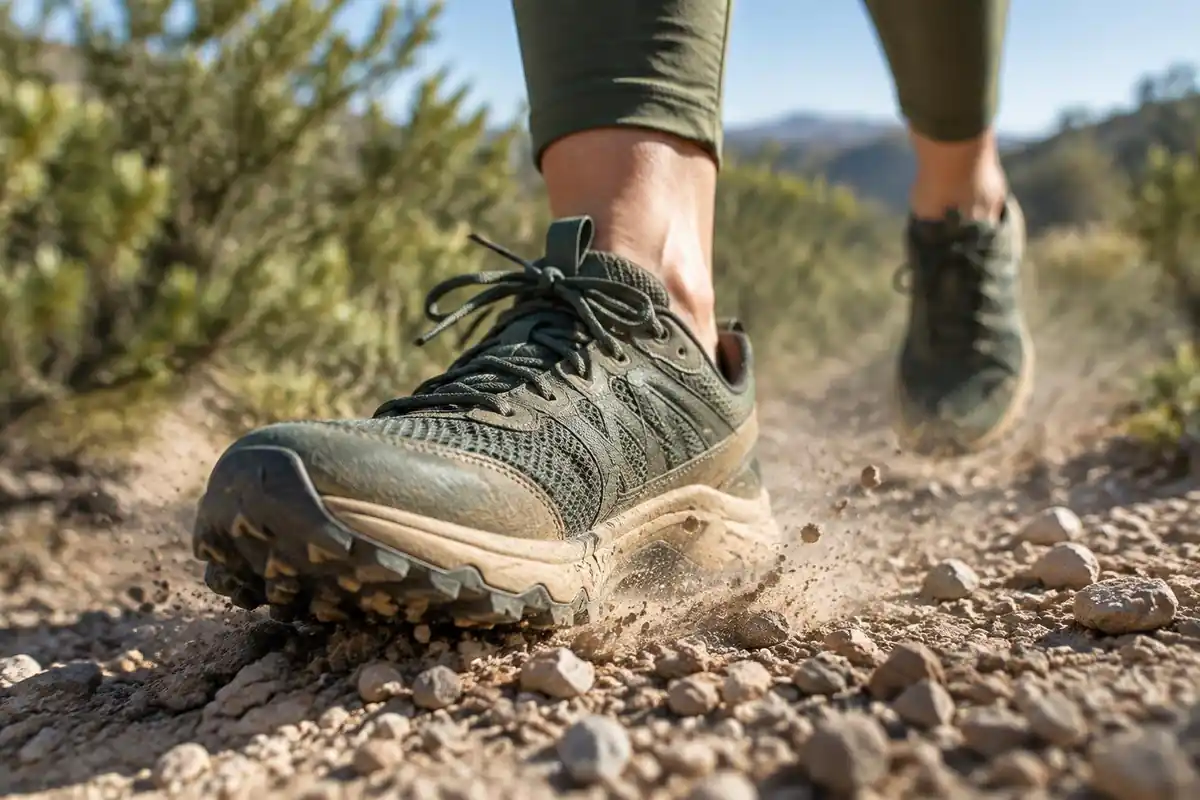
Shallow, closely spaced lugs roll smoothly on hardpack and rock but smear in mud. Deep, widely spaced lugs bite into soft ground and shed muck, at the cost of a vague feel on slabs. Softer, stickier rubber grips wet rock better and wears faster. Match the outsole to where you actually hike most, not the worst day you can imagine.
Drop is the height difference between heel and forefoot, which varies by shoe. Changing it shifts strain between your calf, Achilles and knee, so change it gradually rather than all at once. Cushioning is a separate decision: tall, plush stacks save your legs on long days, and firmer, lower stacks give more ground feel and stability on uneven footing.
A trail runner is thin by design, so sharp rock is what you notice first. Look for a rock plate or a dense midsole layer if your trails are rooty and rubbly, and a real toe bumper if you kick things. Mesh uppers breathe and drain well; waterproof membranes keep drizzle out but hold water in once it gets over the collar.
Plan for a trail runner to wear out sooner than a boot, since midsoles pack out and outsoles smooth off long before the upper looks finished. Thru-hikers and fastpackers routinely budget for several pairs across a long trail and mail them ahead. Heavier packs, abrasive granite and hot pavement all shorten that window, so track how your legs feel, not just how the shoe looks.
3 trail runners to compare
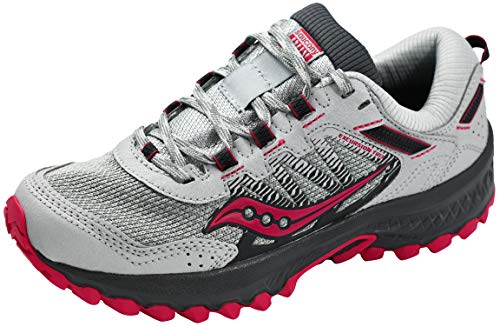
Real options that fit the criteria above. We don't publish prices or ratings — check the current price and reviews on Amazon.


Why light shoes feel so much easier
The main argument for trail runners is weight, and research backs the idea that foot weight matters. A review of military load-carriage studies found each kilogram added to the feet raises energy expenditure about 7 to 10%, compared with about 4% for a kilogram on the thigh.1 Your feet travel further and faster than any other part of you on each stride, so extra mass there costs more.
KEEN, which makes both boots and light hiking shoes, describes the split this way: lighter shoes are designed to be lightweight and breathable, while boots are built for durability and weather resistance.2 That is a manufacturer's framing rather than independent research, but it matches the trade-off on this page. You save energy and gain airflow, and you give up armor.
Underfoot protection and pack weight
A thin shoe is fine under a light daypack, but pack weight changes what reaches your foot. In a study of long-distance hikers, forefoot pressure rose 5.41% with a pack weighing 10% of body weight and 8.73% with one at 20%, compared with no pack.4 The same study found a clear, load-dependent rise once packs passed about 10% of body weight.4 That is why the page recommends a rock plate or denser midsole on rubbly trails: under a heavier load, the forefoot takes the hit.
This page leaves out specific lug depths, drop figures and mileage lifespans, because they are common industry descriptions rather than figures from a neutral study. A shoe's real wear depends on your body weight, your pack and the rock you walk on.
Fit, swelling and blisters
Trail runners are often worn on long days, when feet swell. The American Academy of Orthopaedic Surgeons says feet can swell up to 8% during the day, recommends about half an inch between the longest toe and the tip of the shoe, and advises sizing for the larger foot.3 Trying shoes at the end of the day, in the socks you will use, catches most fit problems in the store.5
Fit matters because blisters and ankle sprains are the most common hiking injuries, with blisters making up 8 to 33% of those reported in a 2023 systematic review.6 Dermatologists recommend nylon or moisture-wicking socks, shoes that are neither too tight nor too loose, and stopping when skin turns red or painful.7 Mesh shoes also let in grit that rubs, and low gaiters seal around the shoe to keep dirt, dust and small rocks out.8
Common questions
Can trail runners really replace hiking boots?
For a lot of hiking, yes; many long-distance hikers made the switch years ago and never went back. Lighter shoes mean less fatigue over a day, they dry quickly, and there is essentially no break-in. What you give up is ankle support, underfoot armor and warmth, so boots still earn their place on scree, snow and heavy-load trips.
Should I size up for hiking?
Sometimes. Feet swell over long days and under a pack, and downhill miles push your toes forward, so what matters is toe room: about half an inch ahead of your longest toe while wearing your hiking socks, with the heel locked and no lift. If your street size already gives you that, you do not need to go up.
Do I need a waterproof trail runner?
Often not. Non-waterproof mesh drains and dries as you walk after a wet crossing, while a membrane keeps that water trapped against your foot and breathes less on warm climbs. Waterproof versions make sense for cold, drizzly shoulder-season days and shallow snow, where staying warm matters more than drying fast.
This is general footwear & apparel guidance, not a lab review — it explains what to look for and how to choose so you can pick well. We publish no prices or ratings; current price, availability and reviews are shown on Amazon. Product links are affiliate links: we may earn a commission at no extra cost to you. See our affiliate disclosure.