
Multi-Day Backpacking: Complete Guide
Comprehensive technical analysis of sizing, materials, installation requirements, and manufacturer standards for multi-day backpacking.
Recommended Products
See the full ranking →
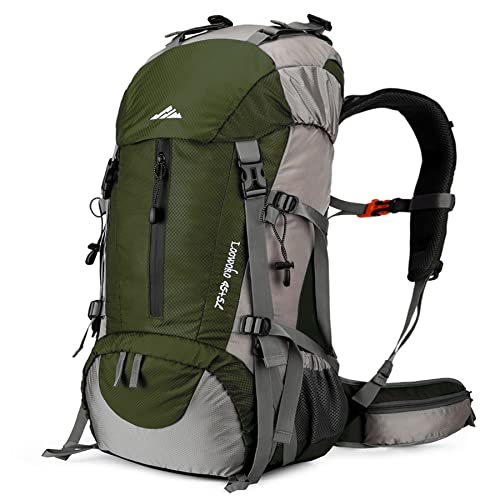

A multi-day backpacking pack is the flagship hiking-backpack category on this site: an internal-frame pack built to carry three or more days of food, water, shelter and clothing while transferring most of that load onto the hips instead of the shoulders. It sits above single-night and weekend packs in the 35–45L range and below week-plus expedition loads, most often landing in the 50L to 65L capacity band. The defining trait is a supportive suspension system — a frame, a structured hipbelt, and torso-adjustable fit — rather than any single liter number, since two hikers on the same three-night trip can pack very differently and still need the same underlying frame and hipbelt support to carry it comfortably.
A backpacking backpack is an internal-frame pack, typically 45 to 70 liters, built to carry a full camping kit — shelter, sleep system, food, water and clothing — for three or more consecutive days. A hipbelt, frame, and torso-adjustable harness transfer most of that load to the hips, setting it apart from an unsupported daypack.
That suspension is what separates a backpacking backpack from a daypack under 25 liters, which carries a single day's water, food and layers with little or no frame support. It also separates a true multi-day pack from single-night and weekend packs in the 35–45L range, which use a lighter suspension sized for a shorter, lighter load, and from a thru-hiking pack, which is built for the same multi-day carrying job repeated for months of consecutive high-mileage days rather than one trip. At the upper end, 65L-plus expedition packs share the same core design but add volume and frame strength for winter loads or trips exceeding a week. What a multi-day pack has in common with all of these neighbors is the frame-and-hipbelt system; the liter count just tunes it to the trip.
Most three- to five-night backpacking trips call for a 50L to 65L pack, with efficient three-season packers landing on the smaller end and hikers carrying a bear canister, cold-weather layers, or shared group gear needing the larger end. Trip length, season, and gear list — not a fixed liter rule — set the right size.
Capacity guidelines shift with trip length and packing style rather than following a single formula:
| Trip Length | Typical Capacity | Notes |
|---|---|---|
| 1–2 nights | 35–45L | Better matched to weekend backpacking than a true multi-day trip |
| 3–5 nights | 50–65L | The core multi-day backpacking range |
| 5–7+ nights, or any trip needing a bear canister | 60–75L | Extra volume goes to bulk, not just added weight |
| Ultralight, 3–5 nights | 40–55L | A lower base weight needs less volume for the same number of nights |
A hiker choosing between a 45–55L multi-day pack and a 55–65L extended-trip pack should size around the specific gear list for the trip, not just the number on the tag. Carrying a bear canister, a warmer sleeping bag, or a shared tent pushes toward the larger end even on a trip that's otherwise short.
Beyond capacity, a multi-day pack needs a correctly sized torso and hipbelt, an internal frame rated for the load, a back panel suited to your climate, and enough external attachment points for a sleeping pad, trekking poles, and wet gear. Fabric durability and pocket layout matter more here than on a day hike.
Multi-day packs share a common feature set worth comparing pack to pack before buying:
- Torso length that's adjustable or sold in fixed sizes, set independently from the pack's liter volume
- An internal frame using aluminum stays, a perimeter wire, or both, matched to the pack's rated load range
- A structured hipbelt, sometimes swappable for a different size, since it carries most of the load
- A back panel style — ventilated trampoline mesh or closer-fitting contact mesh — matched to climate and terrain
- Top-loading or front-panel access, with a floating lid or roll-top closure for load compression
- External attachment points for trekking poles, an ice axe, and a sleeping pad
- Hipbelt and shoulder-strap pockets sized for a phone, snacks, and a water bottle
- Pack-body fabric in roughly the 100 to 420 denier range, or Dyneema Composite Fabric on ultralight packs, trading weight for abrasion resistance
A fully loaded multi-day pack should generally stay at or under about 20% of body weight for a comfortable carry, with food adding roughly 1.5 to 2.5 lbs per person per day. A correctly fitted hipbelt carries about 80% of that load, which is why hipbelt fit matters as much as total pack weight.
That 20% guideline covers total loaded weight — pack, gear, food, fuel and water — not just the empty pack. Traditional backpacking setups commonly land in the 30 to 45 lb range for a multi-day trip, while ultralight backpacking targets a base weight (everything except food, water and fuel) under roughly 10 lbs, which pulls total loaded weight and required pack volume down together. Hikers moving toward that lighter end of the spectrum often also move toward a smaller, simpler pack, covered in more detail in what ultralight backpacking actually means.
Weight distribution matters as much as total weight. A hipbelt sized correctly and cinched to the top of the hip bones carries roughly 80% of a loaded pack's weight, leaving the shoulder straps to manage the remaining 20%, mostly for stability. A pack that's the right capacity but has a poorly fitted hipbelt feels heavier than the number on the scale suggests, and no amount of shoulder-strap padding fixes that. Because it's easy to fill unused volume with items you don't need, choosing a pack sized to the trip — rather than the largest one that seems safe — is one of the simplest ways to keep loaded weight under control. For a closer look at comfort and hipbelt fit, see the guide to the most comfortable backpacking backpacks; for trips that double as base-camp camping rather than lightweight trail travel, the best backpacks for hiking and camping covers the added organization that kind of trip needs.
Go Deeper
Detailed companion guides for multi-day backpacking.
Best Backpacking Backpacks
Buyer's guide: best backpacking backpack.
Best Backpacks For Multi-Day Hiking
Buyer's guide: best backpack for multi day hiking.
Most Comfortable Backpacking Backpacks
Buyer's guide: most comfortable hiking backpack.
Best Backpacks For Hiking And Camping
Buyer's guide: best backpack for hiking and camping.
Best Value Backpacking Backpacks
What actually determines value in a backpacking backpack — fit, frame durability, and which features are worth paying extra for versus skipping.
Thru-Hiking Backpacks
Related backpacks by activity guide.
Fastpacking & Trail-Running Packs
Related backpacks by activity guide.