
Best Backpacking Backpack
Best Backpacking Backpack, ranked from aggregated owner ratings and reviews, not first-hand testing. Real pros, cons, and who each pick is best for.
Our Top 3 Picks
Quick Comparison
| Product | Best for | Buy | |
|---|---|---|---|
| Teton 55L Scout Internal Frame Backpack for Hiking | Top Overall Pick | See Amazon | View |
| Loowoko 50L Hiking Backpack with Rain Cover for Both Men & Women | Best Value | See Amazon | View |
| WoneNice 50L | Best for Women | See Amazon | View |
| Teton 75L Explorer Internal Frame Backpack for Hiking | Best Hydration Pack | See Amazon | View |
| Osprey Rook 65L Men's Backpacking Backpack | Best for Multi-Day | See Amazon | View |
What should you look for in a backpacking backpack?
Torso and hipbelt fit matter more than any other factor when choosing a backpacking backpack, since a pack that's the wrong length for your spine will ride poorly no matter how good its frame or fabric is. After fit, prioritize frame type, back panel style, capacity for your typical trip length, and fabric durability, in roughly that order.
Start with torso length, not height or the size on the box. Torso length is measured from the C7 vertebra, the bony bump at the base of your neck, down to the iliac crest, the top of your hip bones. Most backpacking packs are sold in small, medium, and large torso sizes, or use an adjustable suspension that slides within a range; check that measurement against each pack's specific size chart, since sizing isn't standardized across brands.
How does frame type affect the carry?
Nearly every backpacking backpack uses an internal frame — aluminum stays, a perimeter wire, or a combination — that transfers weight from the pack body to the hipbelt. Heavier-duty stay systems generally support higher loaded weights more predictably, which matters more as your typical pack weight climbs toward the top of a pack's rated range.
Back panel style is the other major suspension choice:
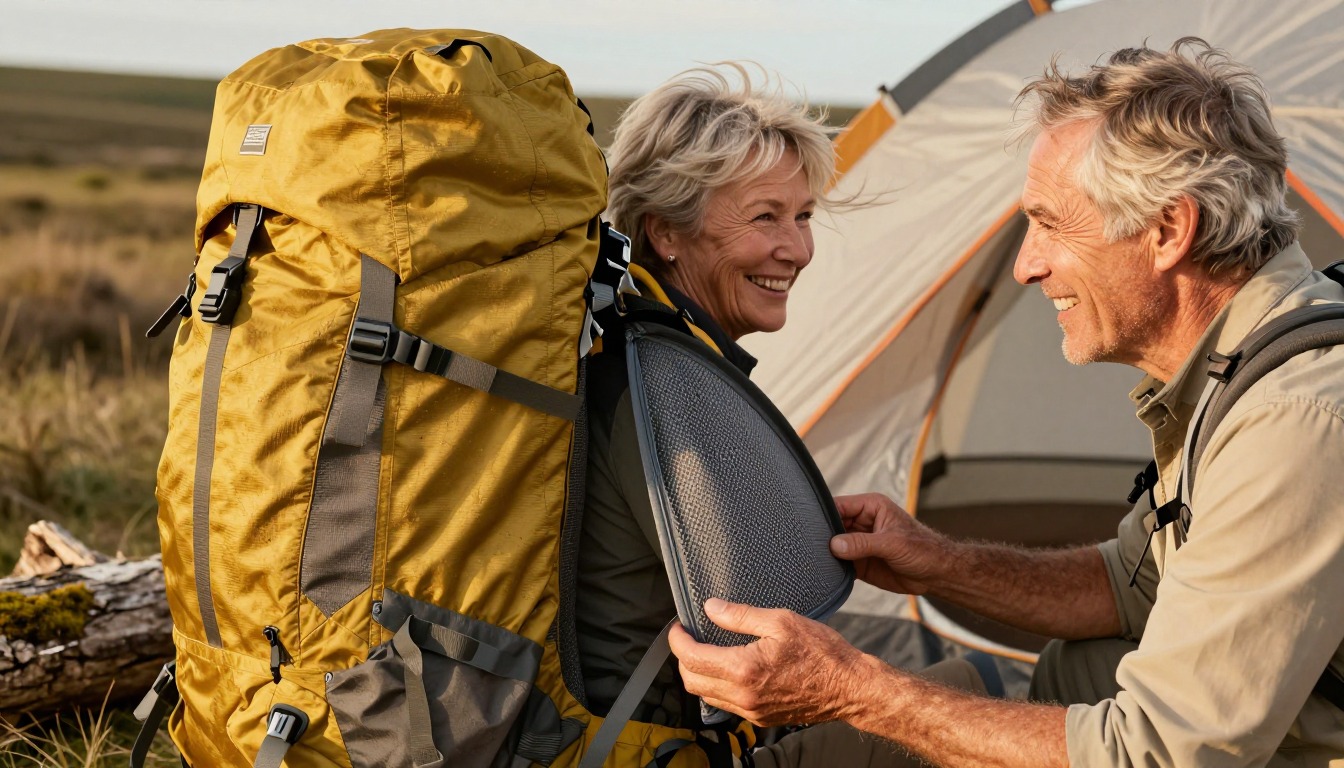
- Trampoline-style mesh panels suspend a taut mesh sheet off the pack body, creating an air gap that improves ventilation on hot or humid trails, at the cost of the pack sitting slightly farther from your back.
- Contact mesh panels sit closer to your back for a more stable, load-hugging carry on technical terrain, with less airflow and a sweatier back in warm conditions.
What capacity fits most multi-day trips?
Most three- to five-night trips in three-season conditions fit comfortably in a 50L to 65L pack. Efficient packers with a moderate gear list often do well with 45–55L, while hikers carrying a bear canister, a heavier sleeping bag, or shared group gear should look toward 55–65L. Trips exceeding a week, or requiring winter-weight gear, typically call for 65L or more.
What do different price tiers actually buy you?
Price generally tracks frame sophistication, fabric durability, and material weight rather than comfort for any one hiker. Lower-priced packs commonly use a simpler frame and fewer adjustability options; mid-range packs add refined suspension and better fabric; premium packs, including Dyneema Composite Fabric ultralight packs, cut weight while holding a comparable load, usually at a higher cost per liter. None of these tiers guarantee comfort on their own — fit still decides that.
Which brands are worth knowing?
Several established brands cover most of the backpacking backpack market, each with its own suspension and fit philosophy worth understanding before you narrow your search:
- Osprey — known for the Anti-Gravity (AG) trampoline suspension on packs like the Atmos AG and Aura AG, alongside lighter Exos and Eja models and load-hauling Aether and Ariel packs.
- Gregory — known for the Baltoro and Deva load-hauling series, the lighter Zulu and Jade line, and the more streamlined Paragon and Maven packs.
- Deuter — known for the Aircontact and Aircontact Lite lines, which favor a close-fitting, stable contact back panel over trampoline-style ventilation.
- REI Co-op — known for value-oriented packs like the Traverse and Flash, which cover core backpacking features at a lower price point.
- Granite Gear — known for simpler, lighter internal-frame packs like the Crown2, popular among hikers who want less structure and lower pack weight.
- Hyperlite Mountain Gear — known for Dyneema Composite Fabric ultralight packs like the Southwest and Windrider, built around minimal frames and very low pack weight.
Who a backpacking backpack suits
A backpacking backpack in the 50–65L range suits hikers taking three- to five-night trips with a standard or moderately lean gear list. It's oversized for single-night trips, where a 35–45L weekend pack carries the same kit with less unused volume, and undersized for week-plus expeditions or heavy winter loads, better served by a 65L-plus expedition pack or an external-frame pack built for heavy loads.
How to decide between two packs that both fit
When two backpacking backpacks both match your torso length and target capacity, compare rated load range, back panel style for your climate, and how the compression system cinches down for a shorter trip versus a fully loaded one. A pack that carries well both two-thirds full and fully loaded is more versatile over years of varied trips than one optimized for only one end of that range.
Full Ranking, Reviewed

Best for Backpacking backpacks
- 45–65 L capacity
- 4.1 lb empty
- Rain cover included
- Teton tough
- Routes a hydration bladder and hose without fuss
- Ventilated back panel cuts sweat on long climbs
- That 45–65 L volume is overkill for quick hikes and better suited to multi-night trips.
Verdict: TETON Sports’s 45–65 L backpacking pack pairs a breathable back with room for a bladder, making it the one we would grab first for Backpacking Backpacks.
Best for Backpacking backpacks
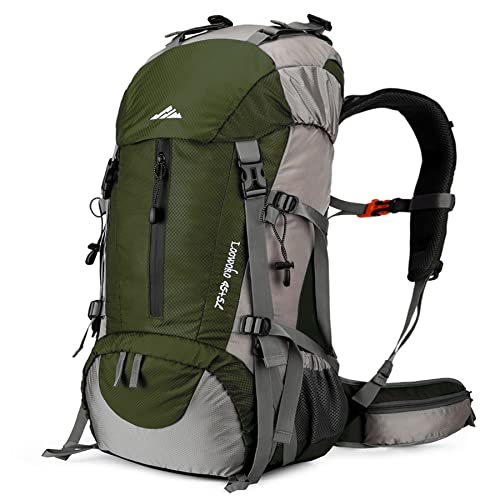
- 50 L capacity
- Nylon shell
- 2.4 lb empty
- Rain cover included
- Rain Cover Included
- Airflow channels help your back stay cooler under load
- Includes a rain cover for sudden downpours
- That 50 L volume is overkill for quick hikes and better suited to multi-night trips.
Verdict: This 50 L backpacking pack pairs a breathable back with a bundled rain cover, making it well worth a look for Backpacking Backpacks.

Best for Backpacking backpacks
- 45–50 L capacity
- Nylon shell
- 2.4 lb empty
- Rain cover included
- Airflow channels help your back stay cooler under load
- Packs an integrated rain cover to keep gear dry
- Padded hip belt shifts load onto your hips, not your shoulders
- At 45–50 L it is more pack — and more weight — than a day hiker needs; it earns its keep on overnight and multi-day loads.
Verdict: This 45–50 L backpacking pack pairs a breathable back with a bundled rain cover, making it an easy shortlist pick for Backpacking Backpacks.

Best for Backpacking backpacks
- 65–85 L capacity
- 5.5 lb empty
- Rain cover included
- Teton tough
- Hydration sleeve keeps water within easy reach
- Ventilated back panel cuts sweat on long climbs
- That 65–85 L volume is overkill for quick hikes and better suited to multi-night trips.
- At 5.5 lb it is heavier than the lightest packs in its class before you load it.
Verdict: TETON Sports’s 65–85 L backpacking pack pairs a breathable back with room for a bladder, making it well worth a look for Backpacking Backpacks.

Best for Backpacking backpacks
- 65 L capacity
- 3.7 lb empty
- Rain cover included
- Adjustable AirSpeed Suspension
- Ventilated back panel cuts sweat on long climbs
- Includes a rain cover for sudden downpours
- That 65 L volume is overkill for quick hikes and better suited to multi-night trips.
Verdict: This 65 L backpacking pack pairs a breathable back with a bundled rain cover, making it well worth a look for Backpacking Backpacks.
Frequently Asked Questions
What's the single most important thing to get right when buying a backpacking backpack?
Torso length and hipbelt fit matter more than any spec sheet. Measure from your C7 vertebra to your iliac crest, match that number to each pack's size chart, and try the hipbelt loaded before assuming a pack is the right size.
Do I need an expensive backpacking backpack?
No. Price tends to track frame sophistication and fabric weight more than comfort for any one hiker. A correctly fitted mid-priced pack from REI Co-op or Granite Gear can carry as comfortably as a premium pack that doesn't fit as well.
What's the difference between a backpacking backpack and a hiking daypack?
A backpacking backpack has an internal frame and structured hipbelt built to carry three-plus days of gear, typically 45–70L. A daypack under 25L carries a single day's water, food and layers, usually with little or no frame support.
How long does a good backpacking backpack last?
A well-built pack, fitted correctly and not overloaded past its rated range, commonly lasts many years and multiple trail seasons of regular use. Frame fatigue, fabric abrasion, and zipper wear are the usual limiting factors, not a fixed lifespan.