
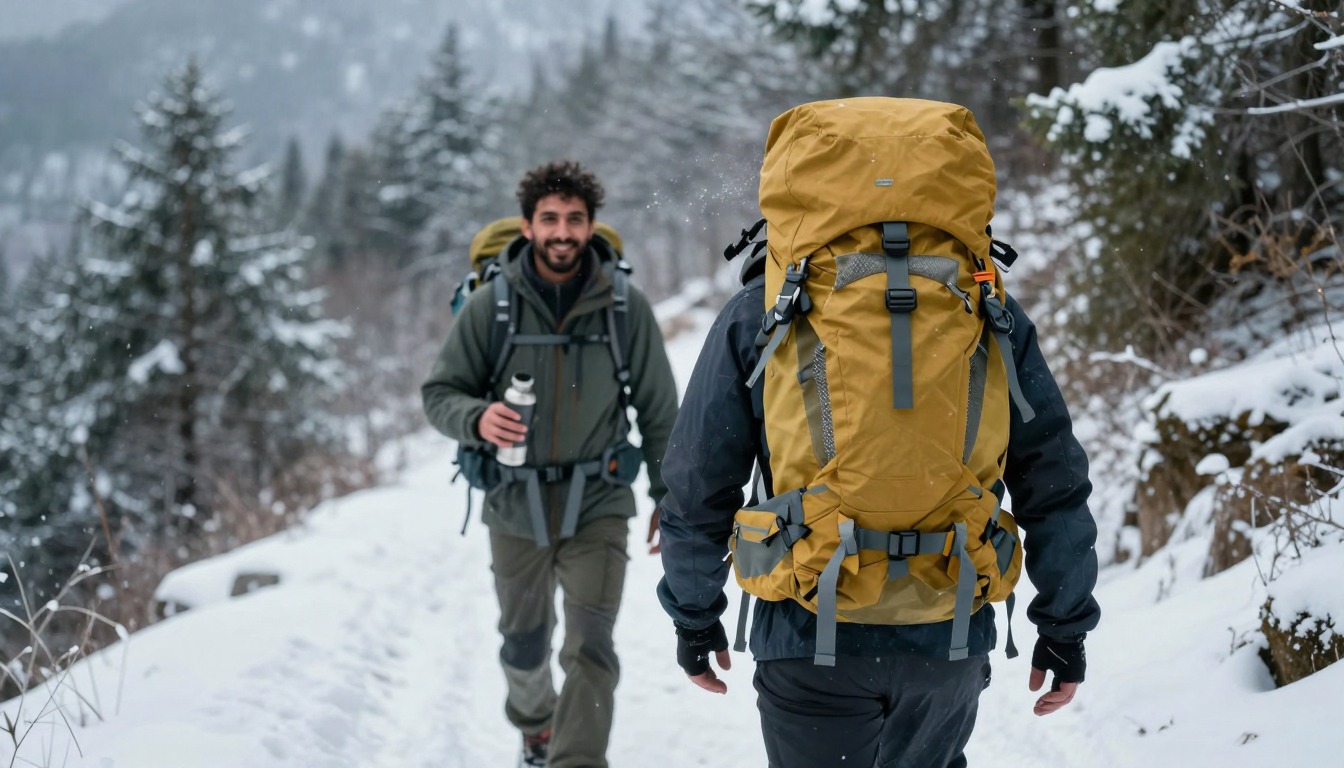


A one-to-two-night winter backpacking trip typically needs 50 to 65 liters, while trips of three or more nights, or trips into terrain requiring a full avalanche safety kit, often need 65 to 80 liters. These figures run 10 to 20 liters above what the same trip length would need in summer, because winter gear is bulkier at nearly every stage of the system rather than just heavier.
Why winter trips need more liters than the same trip in summer
A four-season tent packs larger than a three-season tent of similar floor space, a sub-freezing sleeping bag compresses to a bigger stuff sack than a 30–40°F summer bag, and insulated clothing — a heavyweight parka, insulated pants — takes up more room than the fleece and softshell layers a summer hiker packs instead. None of these items necessarily weighs dramatically more than its summer counterpart; they simply take up more physical space because of insulation loft.
What adds bulk beyond the core camp system
Avalanche safety gear is the other major factor. A collapsible shovel and probe typically need their own space, whether that's a dedicated exterior pocket or room set aside in the main compartment, and this gear has no equivalent on a typical summer trip. A stove and extra fuel for melting snow into drinking water also add bulk that a summer hiker near a running creek or lake usually skips.
Typical winter backpacking capacity by trip length
| Trip Type | Typical Capacity |
|---|---|
| 1–2 night winter backpacking | 50–65L |
| 3+ night winter backpacking | 65–80L |
| Winter trip crossing avalanche terrain | 65–80L |
| Winter day hike (for comparison) | 30–40L |
Splitting shared gear — the tent, stove, and fuel — between two or more hikers is the most common way to bring individual pack size back toward the lower end of these ranges. As with any capacity decision, total carried weight still matters more than the liter number alone; keeping a loaded winter pack near 20% of bodyweight, with the hipbelt carrying the bulk of that load, holds true regardless of season.