

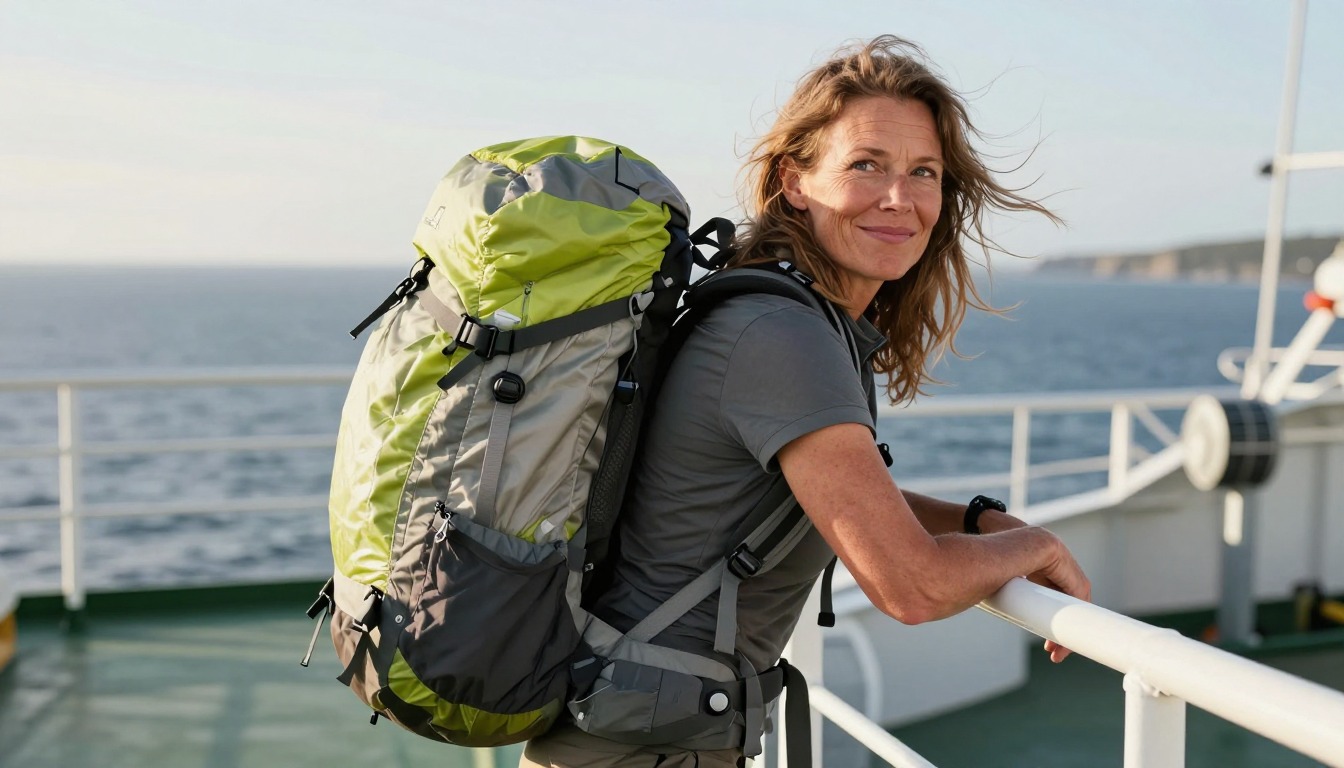


A hut-to-hut pack typically runs 25 to 40 liters, since staffed huts provide beds and meals and remove the need to carry a tent, sleeping bag, and stove. The exact size within that range depends on trip length and how much extra clothing or gear you want for the evenings.
Why hut-to-hut packs run smaller
Standard multi-day backpacking packs, generally 45 to 55 liters, are sized around a tent, sleeping bag, stove, and several days of food. Hut-to-hut routes remove all four of those categories, since a bed, hot meal, and often potable water are available each night at the hut. What's left, a rain shell, an insulating layer, a headlamp, personal items, and a day's worth of snacks, fits comfortably in far less volume.
Matching size to trip length
| Trip Type | Recommended Size |
|---|---|
| Single hut-to-hut day | 20–30L |
| 3–5 night hut tour | 30–40L |
| Hut tour combined with camping nights | 40–50L |
Trips that mix staffed-hut nights with a night or two of independent camping need more volume, since a tent or bivy and a full sleeping bag come back onto the list for those specific nights.
Fit still matters at smaller sizes
Torso length and hipbelt fit affect comfort at 30L just as much as at 55L. Measure from the C7 vertebra, the bony bump at the base of the neck, down to the iliac crest, the top of the hip bones, and check that measurement against each pack's size chart rather than choosing by liter count or height alone. A well-fitted hipbelt still carries the majority of the load, even when that load is lighter than a standard backpacking trip's.
When to size up
Hikers who want extra padding for camera gear, plan to shop or pick up souvenirs along a hut route, or combine the trip with international travel often size up to the 35–40L end of the range rather than the minimum 25L. The extra few liters costs little in comfort on a hut-to-hut trip, since the pack is rarely loaded anywhere near a standard backpacking pack's weight.