

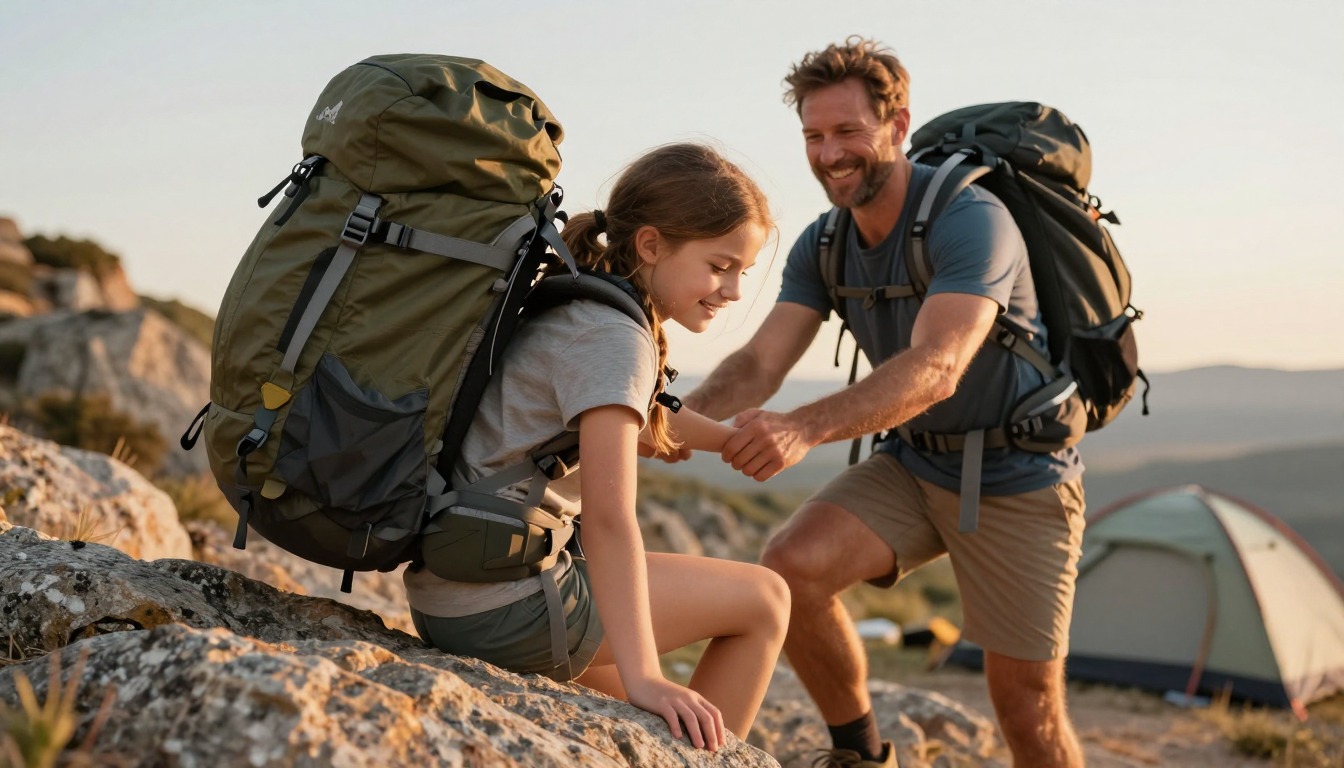


Whether a day hike needs a hipbelt comes down to load weight and terrain more than pack size alone. Most day hikes carry well under the roughly 20%-of-bodyweight load guideline used for overnight backpacking, which is why many minimalist day packs skip a padded hipbelt entirely.
When a hipbelt matters most
A hipbelt earns its weight once a load crosses about 10 to 15 pounds, since shifting that weight onto the hips reduces shoulder fatigue on hikes lasting several hours. It also helps stability on uneven, rocky or steep terrain, where a load that shifts side to side is harder to manage without a belt anchoring it to the hips.
When a hipbelt is optional
Short, light day hikes under a few hours with a load closer to 5 to 10 pounds rarely need a padded hipbelt. Many packs in this category use a simple webbing waist strap instead, which stabilizes the load without adding the bulk, weight or warmth of a full padded belt.
What day-hiking packs typically include
| Pack type | Typical hipbelt | Best suited for |
|---|---|---|
| Minimalist daypack (10–18L) | Simple webbing strap or none | Short, light-load hikes |
| Ventilated mid-size daypack (18–25L) | Padded, often removable belt | Full-day hikes, varied terrain |
| Larger daypack (25–30L) | Padded, structured belt | Winter loads, camera gear, longer hikes |
A hiker unsure which category fits should weigh their heaviest realistic day-hike load, not their lightest one, since a hipbelt that's unnecessary on an easy day still helps on the hardest day of the season.