
Best Women's Hiking Boots
A hiking boot that fits your foot is worth more than any feature list. Women's models are often built on a different last from men's, but feet vary far more than any category label suggests. This page walks through cut, fit, waterproofing, break-in and terrain matching so you can judge a boot on the things that actually decide comfort at mile ten.
Affiliate disclosure: this page contains affiliate links. Purchases made through them may earn us a commission at no extra cost to you. See our affiliate disclosure.
In plain English
A hiking boot is a shoe built for dirt, rock and a backpack. Compared with a sneaker, it has a thicker, grippier sole, a tougher upper, and often a collar that rises around your ankle. Think of the difference between a road bike tire and a mountain bike tire: same idea, built for rougher ground.
The box says women's, but what matters is whether the boot matches your foot. Women's boots are shaped on a slightly different foot model, called a last, yet plenty of women fit better in a men's or wide boot. Try boots on in the afternoon, with the socks you will hike in, because feet get bigger during the day.5
Then pick the boot for the hikes you really do. A short walk on a smooth path needs a light, flexible boot. A weekend with a heavy pack on rocky trail needs something stiffer and sturdier. More boot is not always better, because every ounce on your feet gets lifted with every step.
This page contains affiliate links. Purchases made through them may earn a commission at no extra cost to you. See our affiliate disclosure.
Who it's for
Day hikers on maintained trails, backpackers carrying real weight, and anyone whose feet get hot spots in running shoes all land here for different reasons. Load, terrain and climate drive the choice more than gender does. Wide forefeet, high arches, low-volume feet, thin ankles and strong calves all exist across sizes, so fit for your foot, not the label.

How to choose hiking boots
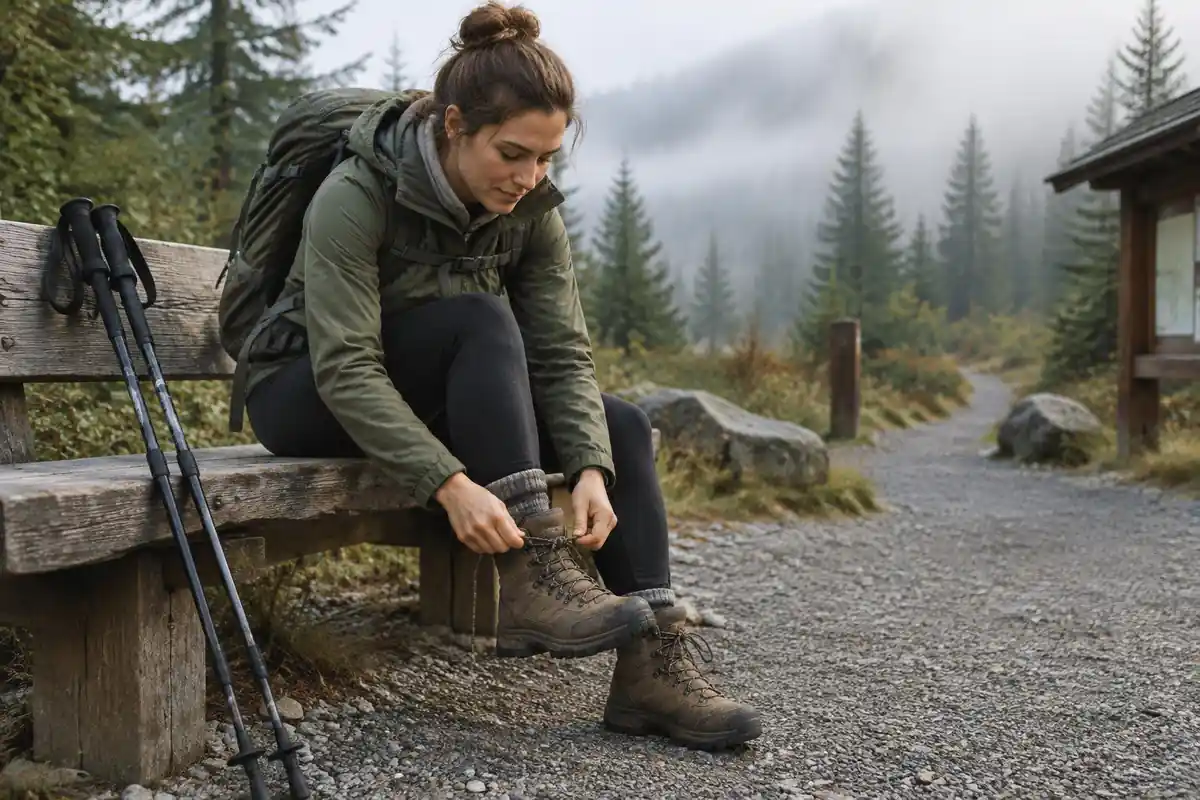
Women's lasts often differ from men's, and some fit a narrower heel better. That is an average, not a rule. If your forefoot is broad or your instep is high, a men's or wide-width build may simply fit better. Shop late in the day, wear your hiking socks, and check heel hold on a ramp.
Low-cut shoes move fast and cool well, but leave your ankle exposed on uneven ground. Mid-cut is the common compromise: a collar above the ankle bone that steadies a loaded foot without locking it. High-cut boots add torsional stiffness and debris protection for scree and heavy packs, at the cost of weight, flex and hot-weather comfort. Match the cut to the load, not the ambition.
A waterproof membrane keeps out dew, puddles and light rain, but it also slows drying and traps heat. In hot, dry country a breathable non-waterproof boot stays cooler and dries within hours of a creek crossing. In cold, wet or shoulder-season conditions the membrane earns its place. Water deeper than the collar gets in either way, so gaiters and dry spare socks still matter.
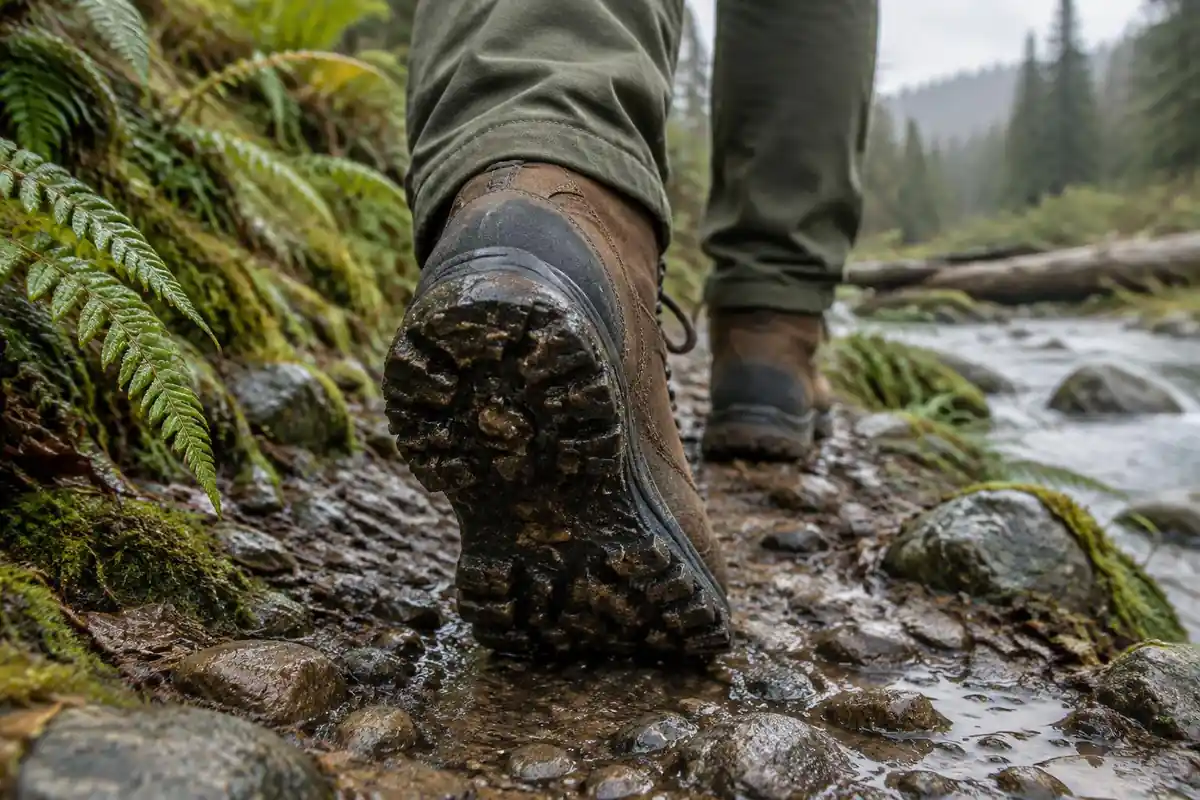
Groomed trails and a light daypack reward a flexible, lighter build that lets your foot work. Rocky talus, off-trail travel or a multi-day pack want a stiffer midsole and a deeper lug pattern, because a soft sole under weight lets sharp rock bruise the arch. Think about the hardest ground you actually walk, not the trip you hope to take someday.
Modern synthetic and split-leather boots need days, not weeks. Wear them around the house, then on short walks, before anything long. Full-leather builds take longer and mold to the foot over time. Break-in softens materials; it will not fix length, width or a heel that slips. Leave about half an inch ahead of your longest toe so toes clear the front on descents.
Lacing is the cheapest fit adjustment you own. A surgeon's knot at the ankle flex point locks the heel without crushing the forefoot, skipping an eyelet gives a high instep room, and window lacing relieves pressure over a sore spot. Aftermarket insoles change volume too: thicker for low-volume feet, thinner if the boot feels tight across the top.
4 boots to compare
Real options that fit the criteria above. We don't publish prices or ratings — check the current price and reviews on Amazon.


Why boot sizing differs from your street shoes
Foot size is not fixed through the day. The American Academy of Orthopaedic Surgeons notes that feet can swell up to 8% during the day, recommends measuring while standing because body weight spreads the foot, and points out that one foot may be larger than the other, so you size for the larger one.1 The same group advises trying shoes on at the end of the day or after a workout, wearing the kind of sock you will use for the activity.5
Many guides suggest going up about half a size from street shoes. That is a common hiking habit rather than a measured rule, and no medical source in this site's library puts a number on it. What OrthoInfo does give is a target: about half an inch between the longest toe and the tip of the shoe.1 Use that gap as the test. If your usual size already gives it with hiking socks on, you may not need to size up at all. If it does not, go up until it does, then check that the heel still holds.
What the injury research says about heels and ankles
A 2023 systematic review of hiking injuries found blisters and ankle sprains were the most common, with blisters making up 8 to 33% of reported injuries, and the lower limb was the most injured part of the body in every study it covered.2 Two features on this page map directly onto those findings. A heel cup that holds your heel cuts the sliding that rubs skin raw, and a collar plus a firmer midsole add steadiness on uneven ground.
Blister prevention starts with fit. Dermatologists say shoes should be neither too tight nor too loose, recommend nylon or other moisture-wicking socks, and warn that cotton soaks up sweat and adds friction.6 They also advise stopping when skin turns red or painful, which can head off a blister before it forms.6
The weight cost of a sturdier boot
A stiffer, taller boot is heavier, and weight on your feet is expensive. A review of military load-carriage research found each kilogram added to the feet raises energy expenditure by about 7 to 10%, compared with about 4% for a kilogram on the thigh.4 That is the reasoning behind matching the cut to the load rather than the ambition.
The case for the extra weight is stability under a pack. KEEN, a footwear maker, says a boot's added stability and support can be welcome with a fully loaded backpack, while lighter hiking shoes are designed around low weight and breathability.3 Pack weight also changes what your foot goes through: in one study of long-distance hikers, forefoot pressure rose 5.41% with a pack at 10% of body weight and 8.73% with a pack at 20%.7 A heavier load is a fair reason to accept a heavier boot. A light daypack usually is not.
Waterproof boots and cold, wet feet
A membrane matters most when cold and wet combine. NIOSH, the federal workplace-safety agency, says wet feet lose heat 25 times faster than dry feet, and that trench foot can develop at temperatures as high as 60°F if feet stay wet.8 The National Park Service adds that wool or polypropylene socks keep feet warm even when wet.9 In warm, dry country, the drying speed of a non-waterproof boot usually counts for more. Either way, gaiters seal around the top of footwear to keep dirt, rocks and snow out.10
Common questions
Should I buy women's boots or unisex ones?
Buy whichever fits. Women's lasts often differ from men's, which suits many feet. But if yours is broad across the forefoot or high over the instep, a men's or wide build can be the better shape. Sizing differs between the two, so try the converted size on.
How much break-in do hiking boots need?
Less than the old reputation suggests. Synthetic and fabric-and-leather boots usually feel settled after a few days of normal wear and a couple of short walks. Stiff full-leather boots can take several weeks and longer miles. If a spot still hurts after that, the fit is wrong, so keep looking rather than toughing it out.
My heel slips and I get blisters. What now?
Try lacing first: a snug surgeon's knot where the ankle bends usually kills most heel lift. A thicker insole or a heel-lock pad can take up spare volume. If the slip persists, the heel cup is simply too wide or too deep for your foot, and a different last, not thicker socks, is the fix.
This is general footwear & apparel guidance, not a lab review — it explains what to look for and how to choose so you can pick well. We publish no prices or ratings; current price, availability and reviews are shown on Amazon. Product links are affiliate links: we may earn a commission at no extra cost to you. See our affiliate disclosure.