
Best Camp Chairs (2026)
A camp chair turns a hard log or cold ground into a real place to rest, eat, and unwind after miles on the trail. For backpackers, it's extra weight you carry on your back, so every ounce has to earn its place in the pack. For car campers, comfort and stability matter far more than weight.
Who it's for
Anyone who sits on the ground for more than a few minutes benefits, but needs vary. Ultralight backpackers and thru-hikers often skip a chair or pick the lightest packable option to save weight. Car campers and anyone with back or knee trouble get more value from a sturdier, more supportive chair.
How to choose a camp chair
This is the core trade-off. Ultralight chairs use thin fabric and slim aluminum poles to weigh close to a pound, trading support for that savings. Bigger camp chairs with wider seats and high backs weigh several pounds but feel like a real chair. Choose based on how far you're carrying it.
A chair only helps if it actually fits in the pack. Check its packed dimensions against your pack's space, not just its weight — a short but wide chair won't slide into a side pocket. For car camping, packed size barely matters; for backpacking, weigh the comfort against the space it takes from food and shelter.
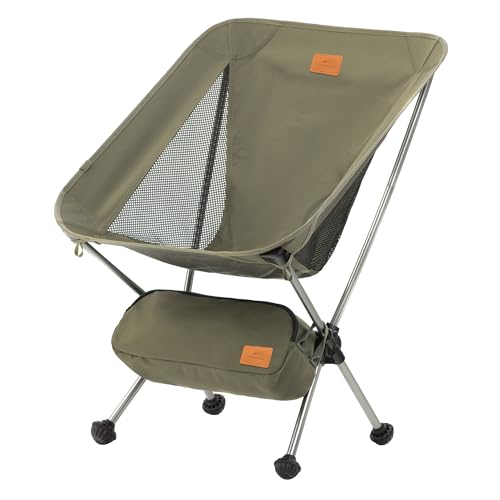
A chair that feels solid on a patio can sink or tip on sand, mud, or soft forest duff. Look at the feet — a wider design or connected base spreads your weight and resists sinking, while thin single-point legs dig in. Also check the listed weight capacity; a chair rated too close to your weight will feel wobbly.
How a chair feels after an hour depends more on shape than price. A taller back and some recline take pressure off your lower back, while a low, minimal seat saves weight but offers little support. Seat height matters too — a low seat is easy to pack but harder to get out of, especially for older knees.
A good camp chair should go up and down in under a minute without wrestling with poles. Shock-corded aluminum poles tend to hold up better over repeated use than flimsier alternatives, and ripstop fabric resists tears from grit and rocky ground better than lightweight mesh. Fewer small parts also means less to lose on the trail.
4 camp chairs to compare
Real options that fit the criteria above. We don't publish prices or ratings — check the current price and reviews on Amazon.


Common questions
Do I really need a camp chair for backpacking, or can I just sit on the ground?
You don't need one — plenty of thru-hikers skip it to save weight. But if you're stopping for more than a quick break, a chair takes pressure off your back and hips and makes resting far more comfortable. It's a comfort-versus-weight decision, not a safety requirement.
What's the difference between an ultralight backpacking chair and a regular camp chair?
An ultralight chair uses thinner fabric, slimmer poles, and a lower, more minimal frame to shave weight and pack down small, sometimes trading off back height or armrests. A regular camp chair uses heavier materials for a taller back, wider seat, and more stability, but it's bulkier to carry any real distance.
How do I keep a camp chair from sinking into sand or soft ground?
Look for a chair with wide feet, a connected base bar, or add-on foot discs, since these spread your weight over more surface area instead of four narrow points. On very soft ground like sand or mud, even a good design will sink some — setting up on drier, firmer ground nearby usually helps more.
This is a general buying guide, not a lab review — it explains what to look for so you can choose well, and links to real products to compare. We publish no prices or ratings; current price, availability and reviews are shown on Amazon. Product links are affiliate links: we may earn a commission at no extra cost to you. See our affiliate disclosure.