
Women's Fit Guide: Complete Guide
Comprehensive technical analysis of sizing, materials, installation requirements, and manufacturer standards for women's fit guide.

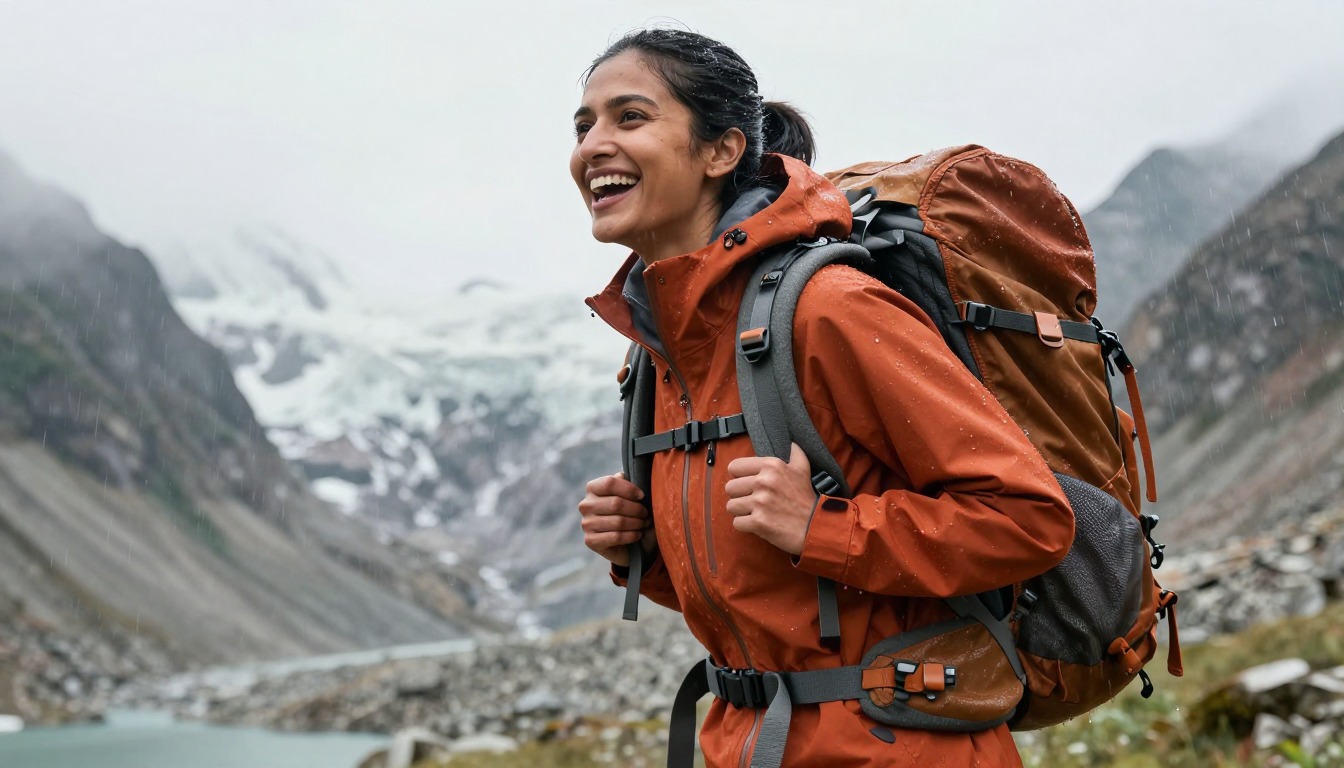
A women's-fit hiking backpack sizes the same way any hiking backpack does — measure torso length, load the pack, and check hipbelt and shoulder-strap contact — but the numbers get matched against a shorter torso-length range and a differently shaped hipbelt and shoulder strap. Most brands cut women's-fit frames from roughly 14 to 18 inches, several inches shorter at the top end than a unisex or men's-fit range that commonly spans 16 to 22 inches. The measurement itself comes from the C7 vertebra to the iliac crest, the same method used for measuring torso length on any hiking backpack, then matched to the brand's women's chart instead of its unisex one. What changes across the women's-fit category is the chart, the strap curve the number gets checked against, and a short list of fit signals tied to a narrower average shoulder width.
A women's-fit backpack changes three measurable things: a shorter torso-length range, shoulder straps cut with an S-curve and spaced narrower at the top anchor point, and a hipbelt angled more steeply with shorter wings to match a shorter waist-to-hip taper. Fabric, frame technology and liter capacity at a given size tier typically stay identical to the brand's unisex version of the same pack.
| Size tier | Typical women's-fit torso range |
|---|---|
| XS | ~14–15.5 in |
| S | ~15.5–17 in |
| M | ~17–18.5 in |
Unisex and men's-fit charts commonly start where the women's-fit chart ends, around 16 inches, and run past 20 inches on some large-capacity packs. Several brands build both versions on one frame platform: the Osprey Aura AG shares its aluminum-stay suspension with the Atmos AG, and the Gregory Deva shares its FreeFloat back panel with the Baltoro, with women's-fit torso sizing and strap geometry layered on top of the same underlying frame. Liter capacity, main-compartment layout and pocket count generally carry over unchanged between a brand's two versions of one pack — only the suspension geometry shifts.
Measuring for a women's-fit pack uses the same C7-vertebra-to-iliac-crest method as measuring torso length on any hiking backpack, then checks the result against the brand's women's chart rather than its unisex chart. Because women's charts pack their size tiers into a shorter overall span, often in half-inch increments, a small measurement error is more likely to land on the wrong side of a size boundary than it would on a longer unisex chart.
Have a second person run a flexible tape from the C7 bump at the base of the neck straight down the spine to the line between your thumbs at the top of the hip bones, standing naturally rather than slouched or arched. Record the figure in inches, then compare it against the specific brand's women's chart rather than a generic average, since a 16-inch torso can land in a different size tier depending on the brand. Hip circumference matters separately for hipbelt padding length, and it's measured at the widest point around the hip bones rather than the waist. A torso length under roughly 14 inches typically falls outside a standard adult women's chart entirely, at which point packs built for petite and short-torso hikers become the more accurate comparison.
A man should size to a women's-fit pack when his torso length falls under roughly 17 inches or his shoulders are narrow enough that unisex strap spacing gaps at the collarbone or slides toward the outer shoulder under load. Torso length and shoulder width, not the gender label on the size chart, determine which frame a body matches, and smaller-framed men use women's-fit packs regularly without any functional downside.
The reverse case holds too: a woman whose torso runs longer than about 18 inches, or whose shoulders sit wider than the women's-fit spacing accommodates, typically gets a better fit from a unisex or men's-fit pack, or from a frame built specifically for a longer torso. Retailers use "women's," "men's" and "unisex" as shorthand for average body-shape statistics, not a purchase restriction. A hiker who tries on both versions of the same pack platform loaded with a few pounds of gear will usually feel which suspension matches their frame within a minute, regardless of which label sits on the tag.
Check narrow-shoulder fit by loading the pack, putting it on, and confirming the straps lie flat against the chest with no gap near the collarbone, the S-curve clears the widest part of the chest without crossing over it, and the load lifters run near a 45-degree angle from shoulder to pack body. Straps that slide toward the outer shoulder or fall off entirely under load signal the spacing is still too wide, even on a women's-fit frame.
- Good sign: strap lies flat against the chest, no gap or pinch near the collarbone
- Good sign: S-curve clears the widest part of the chest without crossing it
- Poor sign: strap slides toward the outer shoulder or off the shoulder under load
- Poor sign: strap digs into the side of the neck rather than sitting on the shoulder muscle
- Check first: set load lifters to roughly 45 degrees before assuming the pack itself is the wrong fit
Go Deeper
Detailed companion guides for women's fit guide.
Women's Backpack Fit Guide
Step-by-step guide to sizing a women's-fit hiking backpack: measuring torso length, reading the size chart, and checking hipbelt and shoulder fit under load.
Measuring Torso & Hips
Related fit, sizing & packing guide.
Adjusting Your Pack
Related fit, sizing & packing guide.