

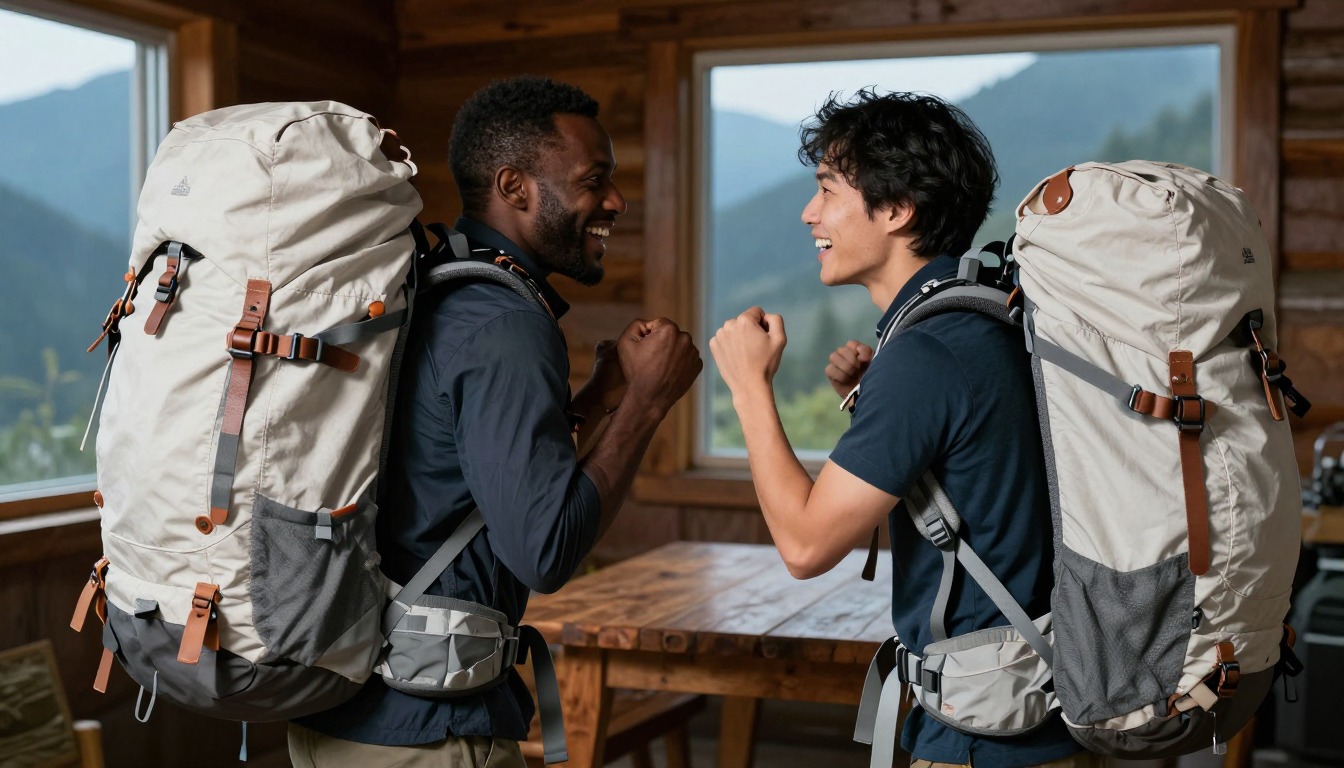
A hiking backpack stays organized when gear is grouped both by zone — bottom, core, top — and by category within each zone, so you always know roughly where an item is without unpacking the whole bag.
What's the fastest way to organize gear inside a pack?
Grouping similar items into their own stuff sacks or dry bags — one for the sleep system, one for the kitchen, one for clothing — keeps the pack organized even after several days on trail. Each sack occupies one predictable spot within its zone, so finding the stove or a spare layer doesn't mean digging through unrelated gear.
Color-coded or clearly different stuff sacks make this system faster still, since you can identify a bag by sight rather than by feel. This matters most in the core zone, where food, cook system, and water often sit close together and can otherwise blur into an undifferentiated mass of gear.
Does organization change between the main compartment and outer pockets?
Outer pockets and the top lid should hold only what you'll reach for without opening the main compartment: rain gear, snacks, a headlamp, sunscreen, a map. Keeping a strict rule about what's allowed in these accessible spots — rather than letting overflow gear drift there — is what keeps a pack organized on day three of a trip the same way it was on day one.
A hipbelt pocket works well for the smallest, most-used items, like lip balm, a phone, or trail snacks, since it's reachable without breaking stride or removing the pack.