

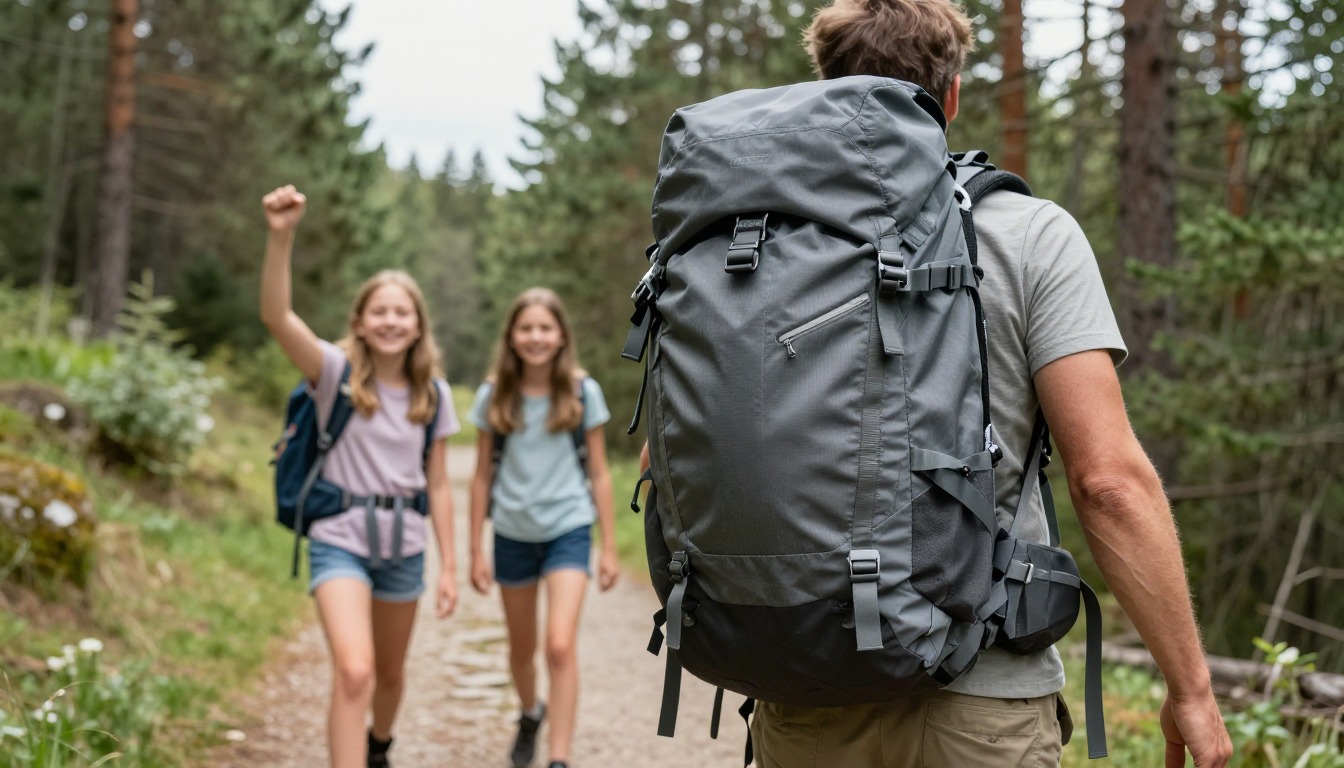
Liters are the volume unit hiking backpacks use to describe how much gear they hold. Manufacturers calculate it by adding up the main compartment plus most or all external pockets — side water-bottle pockets, the front mesh or shove-it pocket, and sometimes the lid or brain pocket, depending on the brand's measurement method.
Liters describe potential storage, not the pack's full carrying ability. Items lashed to the outside — a sleeping pad under compression straps, trekking poles in a side pocket, an ice axe on a loop — add carrying capacity without changing the printed liter figure. Two packs both listed at 50L can also differ slightly in real usable space depending on pocket shape and how the manufacturer counts external storage, since there's no single universal industry standard for exactly which pockets get counted.
Older packs and some outdoor gear sold in the US also list capacity in cubic inches rather than liters; one liter equals roughly 61 cubic inches, so a 65-liter pack is close to 4,000 cubic inches. Most current hiking-backpack listings use liters, but it's worth converting when comparing an older pack or a hunting-specific model that still uses the imperial unit.
Because liters are the standard unit across nearly every hiking-backpack brand, they're the fastest way to compare packs from different makers at a glance, even before checking torso fit, frame type or specific features like hipbelt padding or hydration-sleeve compatibility. Start any pack search by narrowing to a liter range that matches trip length, then compare fit and features within that shortlist.