
Beginner Hiking Backpacks: Complete Guide
Comprehensive technical analysis of sizing, materials, installation requirements, and manufacturer standards for beginner hiking backpacks.

Recommended Products
See the full ranking →

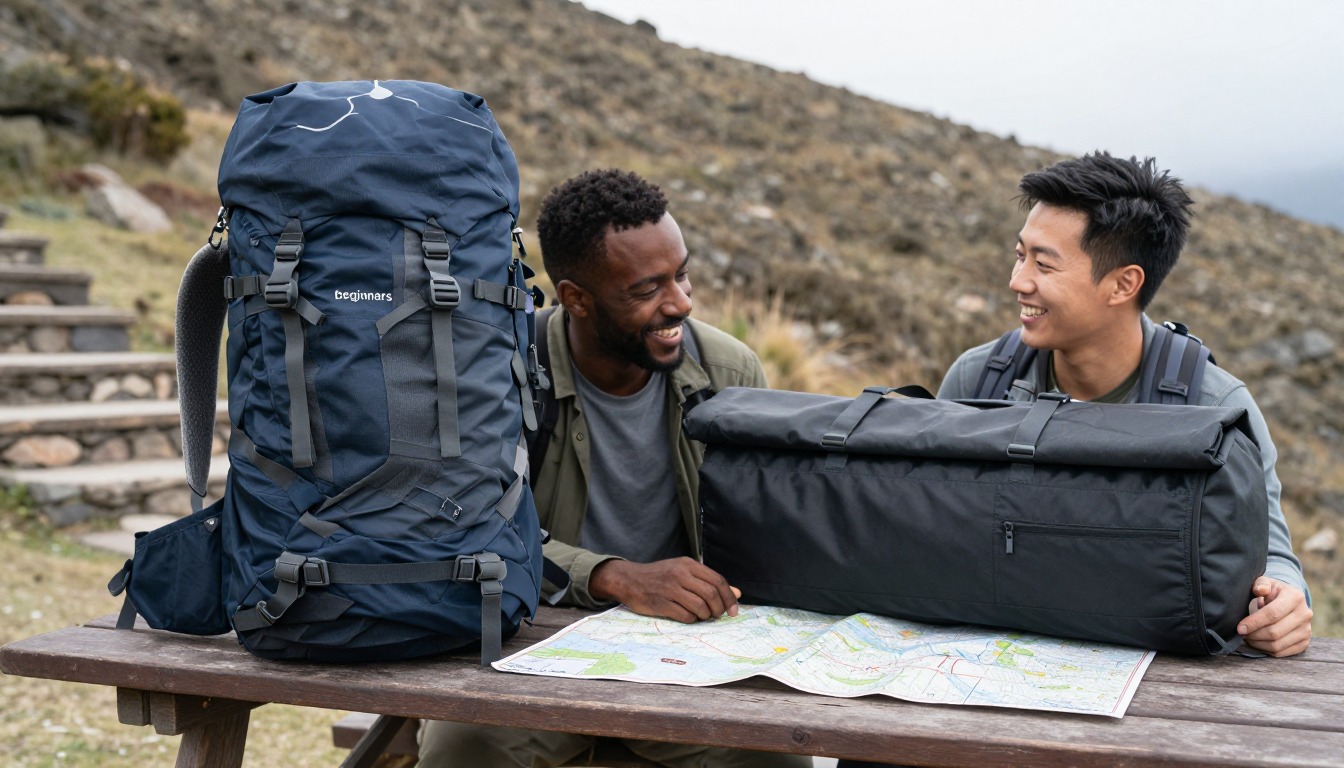
A beginner hiking backpack keeps fit simple and forgiving with an adjustable suspension and moderate price. New hikers rarely know their exact torso length, typical trip length, or how a loaded hipbelt should feel, so a first pack needs to tolerate some guesswork rather than demand precision from day one. The safest starting point is a mid-capacity pack with an adjustable suspension, a padded hipbelt, and a price that doesn't punish a hiker for outgrowing gear as trip length and preferences change over the first year or two.
A beginner should look for an adjustable torso length, a padded hipbelt built to carry roughly 80% of the load, a ventilated back panel, and a capacity matched to trips actually planned for the first year — typically 30 to 50 liters, covering day hikes through a first overnight trip. Fit matters more than any single feature, since even a well-built pack rides poorly on the wrong torso length.
Torso length, not height, determines pack fit. It's measured from the C7 vertebra — the bony bump at the base of the neck when the head tilts forward — down the spine to an imaginary line across the top of the hip bones, the iliac crest. Most adults fall between 16 and 20 inches, and an adjustable-suspension pack lets a beginner fine-tune that measurement at home rather than guessing correctly on the first try.
- Adjustable suspension: a torso-length slider or swappable hipbelt/shoulder-strap sizing, so the pack can be dialed in without buying a second size
- Padded, structured hipbelt: transfers most of the load to the hips instead of the shoulders once loads pass roughly 15 pounds
- Ventilated back panel: mesh or channeled foam that reduces sweat buildup on warm-weather hikes
- Moderate capacity: 30–50 liters, large enough for a first overnight trip without forcing a day hiker to carry a half-empty pack
- External attachment points: loops or straps for trekking poles, a sleeping pad, or a jacket, useful before a beginner owns compression-friendly gear
No — beginners don't need an expensive pack. A mid-priced pack with a simple internal frame and an adjustable suspension handles day hikes and first overnight trips as well as a premium ultralight model, and it's more forgiving of the sizing and packing mistakes new hikers are likely to make before they understand their own preferences.
Premium packs mostly buy weight savings and premium fabrics — Dyneema Composite Fabric (DCF) instead of standard nylon, lighter aluminum alloys, and minimalist hardware — advantages that matter most to hikers who already know their base weight and packing style well enough to exploit them. A beginner hasn't developed that baseline yet, so a heavier but more structured, more affordable pack built from durable 210D to 420D nylon is the more practical starting point.
Well-known mid-range packs commonly recommended for new hikers include the Osprey Atmos AG and Aura AG series, REI Co-op's Trailmade and Traverse lines, and Gregory's Zulu and Jade packs — all built around adjustable torso suspensions and structured hipbelts aimed at exactly this stage of hiking experience. None of these need to be the single "best" pack on paper; they need to fit correctly and tolerate a season or two of learning.
The most common beginner mistakes are buying by height instead of torso length, overpacking a large-capacity pack simply because there's room, leaving the hipbelt loose so the shoulders carry the full load, and skipping the load-lifter straps that pull weight in toward the back.
Sizing by height rather than torso length is the single most frequent error, since two hikers of the same height can have torso lengths several inches apart. Overpacking follows close behind — a beginner with a 50-liter pack often fills it to capacity out of habit, pushing well past the roughly 20%-of-bodyweight load guideline that keeps a pack manageable over a full day. A loose or unadjusted hipbelt is the third common issue: even a well-padded hipbelt only carries its share of the load, around 80%, when it's cinched snugly over the hip bones rather than resting low on the hips. For a full breakdown of these and other setup errors, see the guide to common beginner backpack mistakes.
A single mid-capacity pack — typically 40 to 50 liters with an adjustable suspension — can grow with a beginner from day hikes to first overnight and short backpacking trips, delaying the need for a second, more specialized pack until trip style and preferences are firmly established.
A 45-to-50-liter pack works for a day hike by using the pack's compression straps to cinch down a partially filled main compartment, keeping the load stable even well under capacity. That same pack then handles a first one- or two-night backpacking trip without modification, since 45–55 liters is the standard range for multi-day trips. Packs like the Osprey Atmos AG 50 or Gregory Baltoro sit at the upper end of that range and are commonly used this way by hikers who want one pack to cover both use cases before deciding whether they need a dedicated daypack or an ultralight setup.
| Pack size | Covers for a beginner | Trade-off |
|---|---|---|
| 30–40L | Day hikes, very short overnight trips | Tight for a full overnight kit |
| 40–50L | Day hikes (compressed) through first 1–2 night trips | Slightly heavier and bulkier for day use |
| 50L+ | Multi-day trips, colder-weather overnight kit | Overkill and hard to load light for a day hike |
Once a beginner settles into a consistent hiking style — mostly day hikes, regular weekend trips, or longer multi-day routes — sizing down to a dedicated daypack or up to a larger multi-day pack usually makes more sense than continuing to stretch one all-purpose pack across every trip type. Reviewing how to choose a capacity for your hiking style before that second purchase helps match the next pack to actual trip patterns rather than guesswork.
Go Deeper
Detailed companion guides for beginner hiking backpacks.
Best Beginner Hiking Backpacks
Buyer's guide: best hiking backpack for beginners.
Best Beginner Backpacking Packs
Buyer's guide: best backpack for beginners backpacking.
Beginner Backpack Mistakes to Avoid
Avoid the sizing, packing and hipbelt mistakes new hikers make most often, and learn the fit and adjustment steps that fix them before your first trip.
Budget & Value Backpacks
Related backpacks by hiker guide.
Tall & Long-Torso Backpacks
Related backpacks by hiker guide.