
Best Hiking Backpack For Beginners
Best Hiking Backpack For Beginners, ranked from aggregated owner ratings and reviews, not first-hand testing. Real pros, cons, and who each pick is best for.

Our Top 3 Picks
Quick Comparison
| Product | Best for | Buy | |
|---|---|---|---|
| MIYCOO Hiking Backpack with 2L Water Bladder | Top Overall Pick | See Amazon | View |
| Lightweight Hydration Backpack | Best Value | See Amazon | View |
| Teton 55L Scout Internal Frame Backpack for Hiking | Best Hydration Pack | See Amazon | View |
| WoneNice 50L | Best for Women | See Amazon | View |
| NOOLA 25L Hydration Hiking Backpack with 3L Water Bladder for Women and | Best Ultralight | See Amazon | View |
A beginner hiker is best served by a mid-capacity, internal-frame backpack with an adjustable torso suspension and a structured hipbelt, chosen for the trips actually planned rather than the biggest or lightest pack available.
What kind of backpack should a beginner hiker buy?
A beginner hiker should buy a mid-capacity internal-frame backpack with an adjustable torso-length suspension and a structured, padded hipbelt, sized for day hikes and short overnight trips rather than a highly specialized ultralight or expedition pack. An internal frame keeps the load stable and predictable, which matters more to a new hiker than shaving ounces.
What capacity is right for a beginner?
Most beginners are best served by a 30 to 50 liter pack, large enough for a first overnight trip while still usable, compressed down with side straps, for day hikes. Hikers who know they'll stick to day hiking can size closer to 25–35 liters; hikers planning a first backpacking trip within the year should lean toward 45–50 liters. A closer look at choosing capacity by hiking style helps narrow that range further once trip plans firm up.
Internal frame or frameless: which is better for beginners?
An internal-frame pack is better for beginners than a frameless design, since the frame — typically a single aluminum stay or a semi-rigid framesheet at this capacity — transfers weight to the hipbelt even when a hiker's packing technique isn't yet refined. Frameless packs reward experienced packers who know how to use folded gear as structure; that skill takes time to develop.
What fit features matter most for a first backpack?
The features that matter most are an adjustable torso-length suspension, a padded hipbelt that sits over the hip bones, a ventilated back panel, and external attachment points for trekking poles or a sleeping pad.
- Adjustable suspension: lets a beginner fine-tune torso fit without buying a second size
- Structured hipbelt: carries roughly 80% of the load once it's positioned correctly
- Ventilated back panel: mesh or channeled foam that limits sweat on warm days
- Attachment points: loops or straps for poles, a pad, or a jacket
- Simple main compartment: a single large compartment is easier to pack well than a maze of small pockets
How much should a beginner expect to spend?
A beginner should expect to spend in the entry-to-mid price tier rather than the premium tier, since premium pricing mostly buys weight savings and specialty fabrics that matter more to hikers who already know their gear list and packing habits. Mid-range packs from established brands typically include the same core fit features — adjustable suspension, structured hipbelt, ventilated back panel — as premium models, just built from heavier, more affordable materials.
What should a beginner skip for their first pack?
A beginner can skip ultralight fabrics like Dyneema Composite Fabric, minimalist frameless designs, and highly specialized load-hauling suspensions built for expedition weights, since none of those solve problems a first-year hiker actually has. A comfortable, adjustable, moderately priced pack that fits correctly solves far more real problems than a lighter or more technical one that doesn't.
Full Ranking, Reviewed

Best for Beginner Hiking backpacks
- 24 oz empty
- Hydration-ready
- Breathable Mesh Shoulder Straps
- Set up to carry a reservoir for hands-free sipping
- Breathable mesh back keeps air moving against your spine
- Check the size and colour options on the live listing, as availability shifts.
Verdict: This hiking pack pairs a breathable back with room for a bladder, making it the one we would grab first for Beginner Hiking Backpacks.

Best for Beginner Hiking backpacks
- 12 L capacity
- Nylon shell
- 9 oz empty
- Hydration-ready
- Leakproof & Anti-popping Water Bladder
- Routes a hydration bladder and hose without fuss
- Ventilated back panel cuts sweat on long climbs
- At 12 L it is best kept to shorter outings — it fills up once you add layers, lunch and water for a full day.
Verdict: NEVO RHINO’s 12 L hydration pack pairs a breathable back with room for a bladder, making it well worth a look for Beginner Hiking Backpacks.
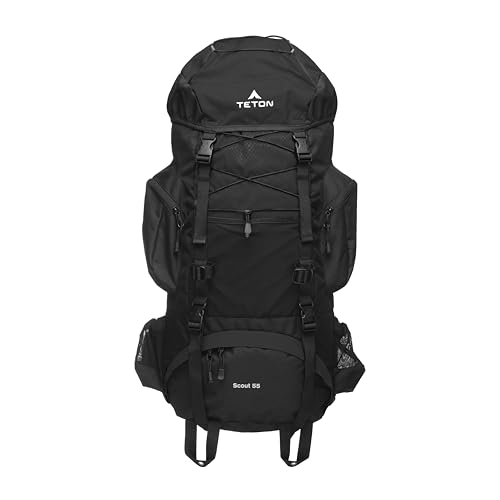
Best for Beginner Hiking backpacks
- 45–65 L capacity
- 4.1 lb empty
- Rain cover included
- Teton tough
- Set up to carry a reservoir for hands-free sipping
- Airflow channels help your back stay cooler under load
- That 45–65 L volume is overkill for quick hikes and better suited to multi-night trips.
Verdict: TETON Sports’s 45–65 L backpacking pack pairs a breathable back with room for a bladder, making it a strong option for Beginner Hiking Backpacks.

Best for Beginner Hiking backpacks
- 45–50 L capacity
- Nylon shell
- 2.5 lb empty
- Rain cover included
- Ventilated back panel cuts sweat on long climbs
- Packs an integrated rain cover to keep gear dry
- Padded hip belt shifts load onto your hips, not your shoulders
- At 45–50 L it is more pack — and more weight — than a day hiker needs; it earns its keep on overnight and multi-day loads.
Verdict: This 45–50 L backpacking pack pairs a breathable back with a bundled rain cover, making it a strong option for Beginner Hiking Backpacks.

Best for Beginner Hiking backpacks
- 22–25 L capacity
- Ripstop fabric shell
- 2.2 lb empty
- Rain cover included
- Multiple Storage Options
- Hydration sleeve keeps water within easy reach
- Breathable mesh back keeps air moving against your spine
- Colours and exact capacity options change often on Amazon — confirm the current variant on the listing before buying.
Verdict: This 22–25 L hiking pack pairs a breathable back with room for a bladder, making it well worth a look for Beginner Hiking Backpacks.
Frequently Asked Questions
What size backpack should a beginner hiker buy?
Most beginners should buy a 30 to 50 liter pack, which covers day hikes and a first overnight trip without needing a second pack right away. Lean toward the smaller end if you'll mostly day hike, and toward 45-50L if a first backpacking trip is planned within the year.
Do beginners need a women's-specific or men's-specific pack?
Fit depends on torso length and shoulder width, not gender labeling, so a beginner should choose based on measured torso length and how the pack feels loaded rather than the marketing category. Many brands sell the same platform in both a standard and a shorter, curved women's-specific suspension.