

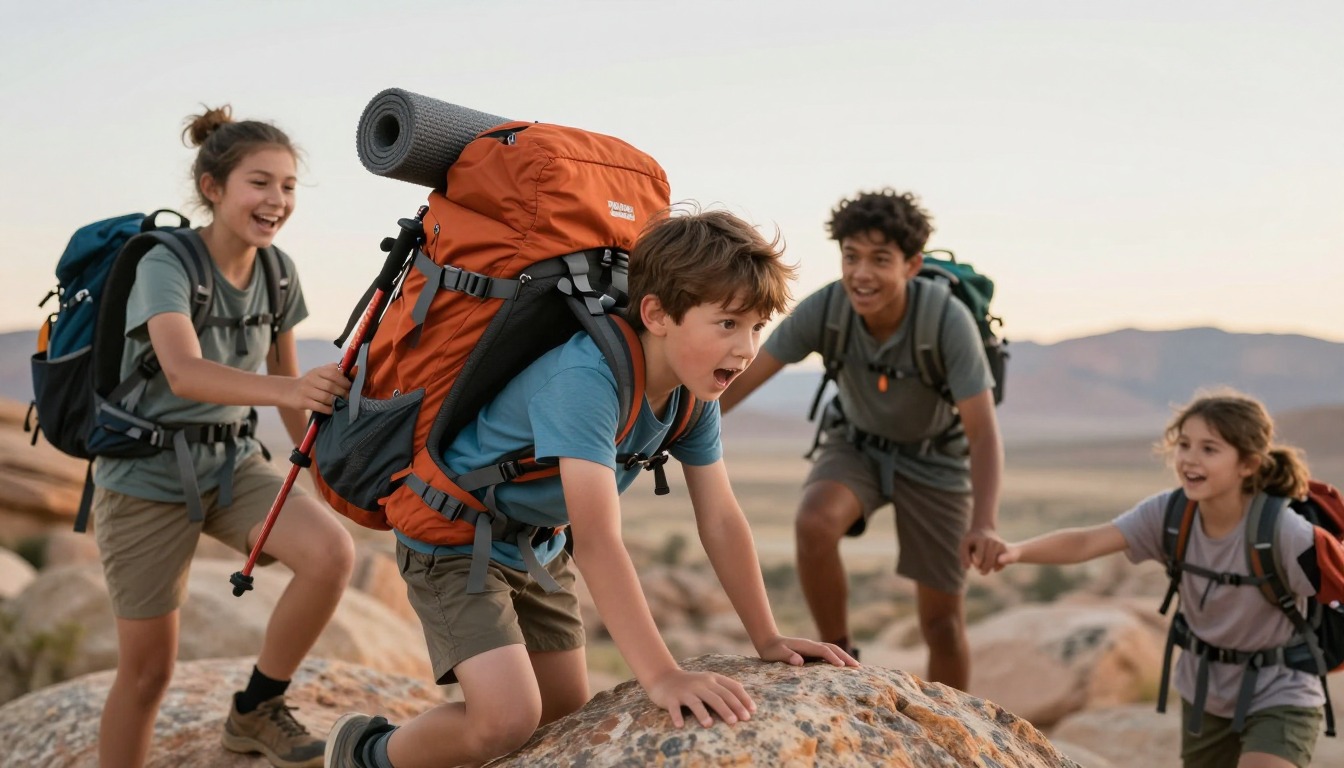


These figures are guidelines, not hard limits, and they scale with a child's age, fitness, hiking experience and the specific trip's terrain and length.
Load guidelines by age
| Age | Suggested load | Notes |
|---|---|---|
| Under 4 | None — rides in a child carrier | Not carrying independently yet |
| 4-6 | Under 10% of body weight | Often just water and a comfort item |
| 7-10 | 10-15% of body weight | A real share of the ten essentials |
| 11-13 | 15%, up toward 20% if experienced | Daypack or light overnight loads |
| Teens (14+) | Approaching the adult ~20% guideline | Full share of overnight gear as fitness allows |
Why the percentage is lower for kids
A child's proportionally smaller frame and still-developing joints and posture make them more sensitive to overload than an adult carrying the same relative percentage, which is why outdoor-education guidance sets the ceiling lower for younger kids and raises it gradually with age and experience. A hipbelt still helps at any age once a pack carries real weight, transferring a share of the load off the shoulders the same way it does on an adult pack, so a framed kids' or youth pack with a hipbelt can comfortably carry more than a beltless daypack of the same weight.
What pushes the safe number up or down
Trip length, elevation gain, terrain difficulty and how much water needs to be carried all shift a child's comfortable load within their age band. A short, flat trail lets a child carry toward the top of their range comfortably; a long, steep or hot trip calls for staying toward the bottom, since fatigue and heat compound faster in kids than in adults.
A practical way to apply the guideline
Rather than calculating an exact percentage before every trip, it's more practical to load a kids' or youth pack, have the child wear it around the house or yard, and watch for signs of strain — hunching, an altered gait, or complaining after a short walk. Those signs mean the pack is too heavy regardless of what the percentage math suggested, and the load should come down before the trip rather than after it starts.