

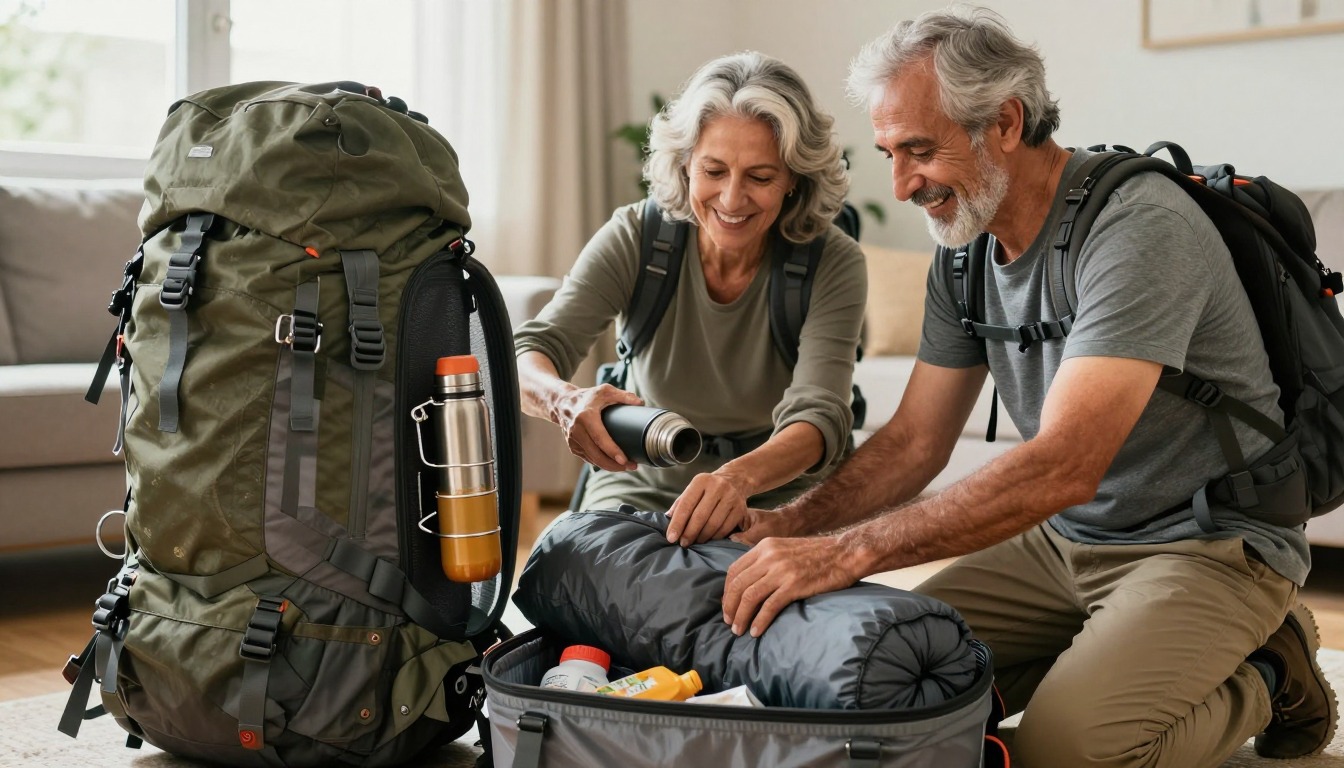


There's no single backpack model designated for older hikers — the right choice comes down to the same fit fundamentals as any hiking backpack, with a few practical priorities weighted more heavily.
Lower overall pack weight matters more
Every pound a pack weighs empty is a pound of capacity used before any gear goes in, so a lighter-weight pack frame and fabric leaves more of the roughly 20%-of-bodyweight load guideline available for actual gear. Trimming base weight — the gear itself, not just the pack — often does more for comfort than any single pack feature.
Easy-to-operate hardware helps
Large, simple buckles and hipbelt closures that don't require fine finger dexterity are easier to operate quickly, especially when hands are cold or gloved. Packs with fewer small zippers and simpler pocket layouts are generally quicker and easier to use at trailheads and rest stops.
A well-fitted hipbelt still does most of the work
A correctly fitted, padded hipbelt carries roughly 80% of a loaded pack's weight, which matters for any hiker who wants to minimize strain on the shoulders and upper back. Getting torso length measured correctly — from the C7 vertebra to the iliac crest — and choosing an adjustable suspension makes it easier to fine-tune fit over time.
Trekking pole compatibility adds stability
Attachment loops or quick-stow points for trekking poles let a hiker use poles for extra stability on uneven terrain without giving up a hand to carry them. Many day-hiking and beginner packs already include this as standard.
The honest bottom line
No pack substitutes for matching trip difficulty to current fitness and comfort level. The most useful shopping approach is trying a pack on loaded with typical trip weight, checking that the hipbelt sits comfortably over the hip bones, and confirming buckles and straps are easy to operate before buying, rather than searching for a specific "senior" product category that doesn't really exist in hiking gear.