

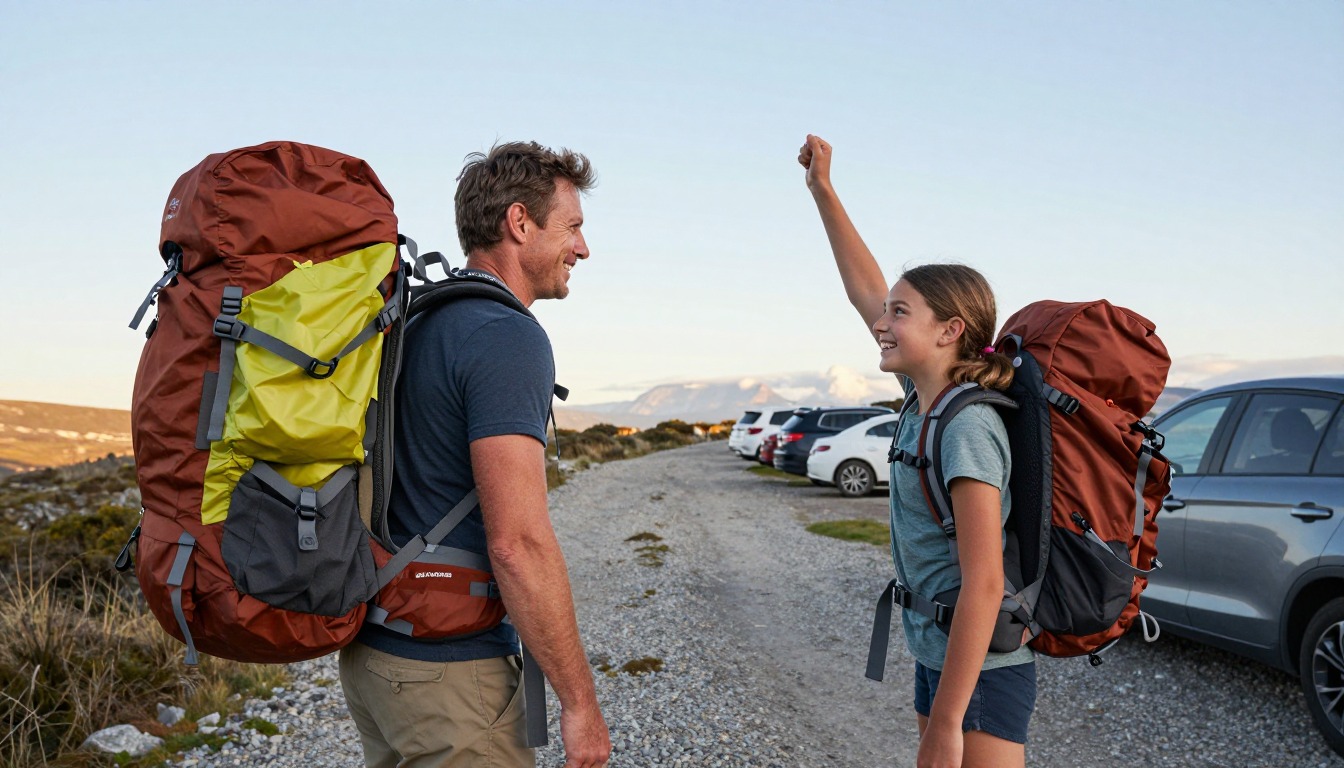


Bushwalking describes hiking through bush, scrub or less-maintained terrain, a usage most common in Australia and New Zealand. The gear fundamentals are the same as any hiking backpack — torso-length fit, a structured hipbelt, and capacity matched to trip length — with fabric durability weighted more heavily.
Why fabric durability matters more for bushwalking
Off-trail or scrub terrain brushes against a pack's fabric far more than a maintained, cleared trail does, so a heavier-denier fabric — 210D to 420D nylon rather than the 30D to 70D fabrics found on packable or ultralight packs — resists snags, abrasion and small punctures better over repeated trips. Reinforced panels on the pack's lower back and sides, common on many standard hiking packs, add extra protection in spots most likely to brush against brush and rock.
Pocket and pack style considerations
Solid-fabric side pockets hold up to scrub better than open stretch-mesh pockets, which can snag and tear on branches. A simpler pack silhouette without a lot of loosely dangling straps or external mesh also catches less on low vegetation than a pack with many hanging attachments.
Capacity and fit still come first
Fabric toughness matters, but it doesn't replace correct sizing: measure torso length from the C7 vertebra to the iliac crest, and size capacity to trip length — 20–25L for a day walk, 30–50L for a longer day or first overnight bushwalk. A well-fitted pack in a more durable fabric handles bush terrain better than a lightweight, minimally built pack regardless of how tough its material is.
Bottom line
There's no separate "bushwalking" product category distinct from a hiking backpack — the term describes the terrain, not a different piece of gear. Choosing a correctly sized pack built from a sturdier fabric, with fewer exposed mesh panels and dangling straps, covers what bushwalking specifically demands beyond standard trail hiking.