
Best Men's Hiking Boots
A hiking boot is the one piece of gear that touches the ground every single step, so a poor fit turns a good trail into a long day of hot spots and bruised toes. Men's and women's boots are often cut on different lasts, but a men's last is only a starting point; foot shape varies enormously. This page walks through how to judge fit, support, waterproofing and durability so you can narrow the field with confidence.
Affiliate disclosure: this page contains affiliate links. Purchases made through them may earn us a commission at no extra cost to you. See our affiliate disclosure.
In plain English
A hiking boot does three jobs a sneaker does not. It grips loose dirt and wet rock, it shields your foot from sharp stones, and it steadies you when a backpack makes you top-heavy. The price you pay is extra weight and stiffness.
Most men's boots are cut a little wider than women's versions, but brands differ a lot. Your foot has a length, a width across the ball, and a height over the top, called volume. A boot has to match all three. It is like a glove: the right length but too tight across the knuckles still fails.
Shop late in the day, and wear the socks and insoles you will actually hike with. Walk up and down a slope in the store. If your heel lifts a lot, or your toes hit the front going downhill, try a different boot rather than hoping it will stretch.
This page contains affiliate links. Purchases made through them may earn a commission at no extra cost to you. See our affiliate disclosure.
Who it's for
Day hikers on groomed trails with light packs can get away with far less boot than someone carrying forty pounds over talus. Wide-footed or high-volume feet, orthotic users, and hikers with prior ankle injuries all have different priorities. Hot, dry climates push you toward breathability; cold, wet, shoulder-season terrain pushes you toward waterproofing and stiffer soles.
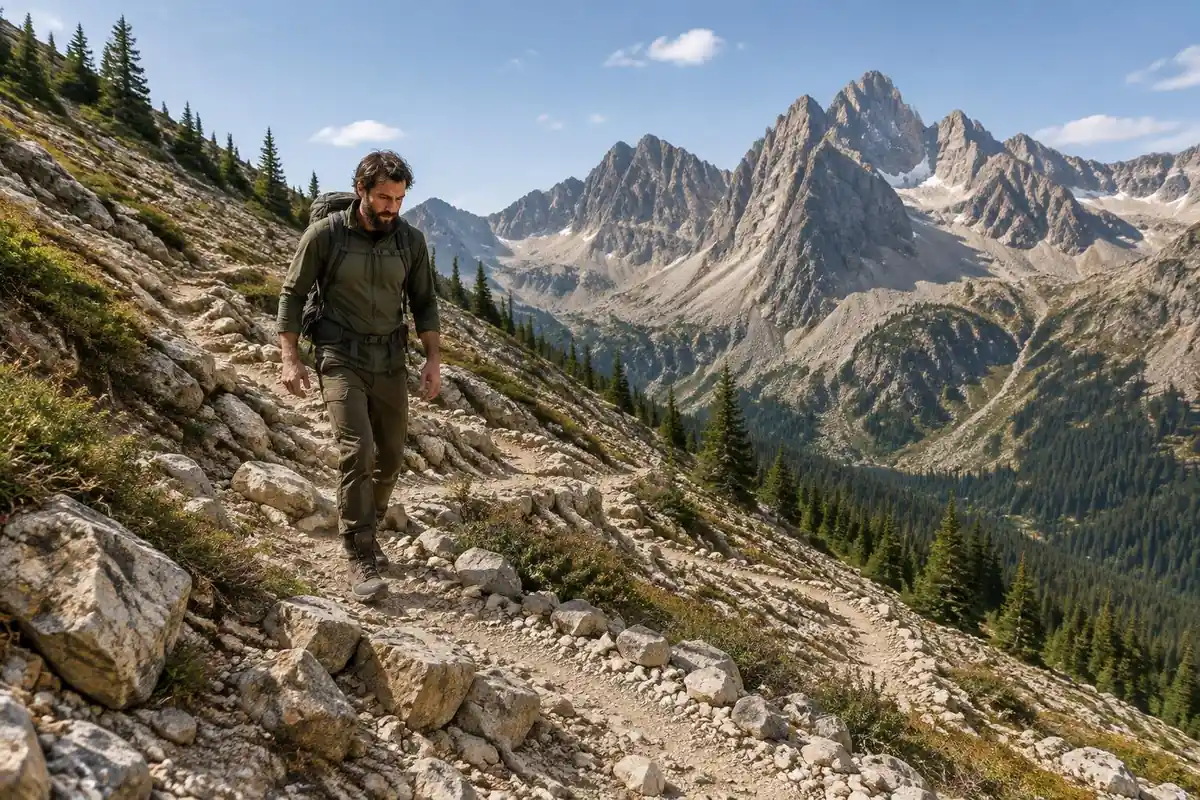
How to choose hiking boots
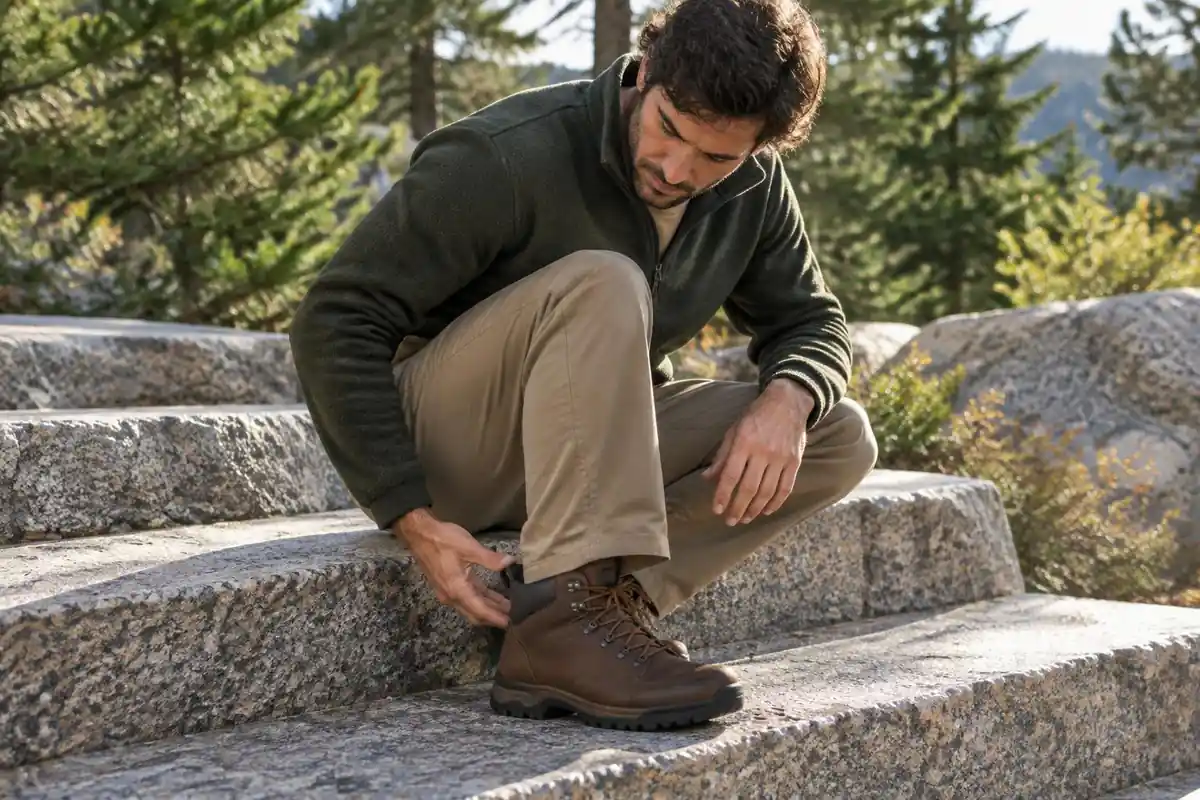
Men's and women's boots are often cut on different lasts, but brands differ enormously in forefoot width and instep height. Look for boots offered in wide or extra-wide, and size up if you wear thick socks or use aftermarket orthotics, which eat volume. Try boots at the end of the day when feet have swollen, and expect a thumb's width in front of your longest toe.
Low-cut shoes move fast and breathe well but leave your ankle exposed on uneven rock. Mid-cut boots sit just above the ankle bone and are the sweet spot for most loaded day hikes and weekend trips. High-cut boots add lateral stability and keep scree out, which matters with heavy packs or off-trail travel, at the cost of weight and freedom of movement.
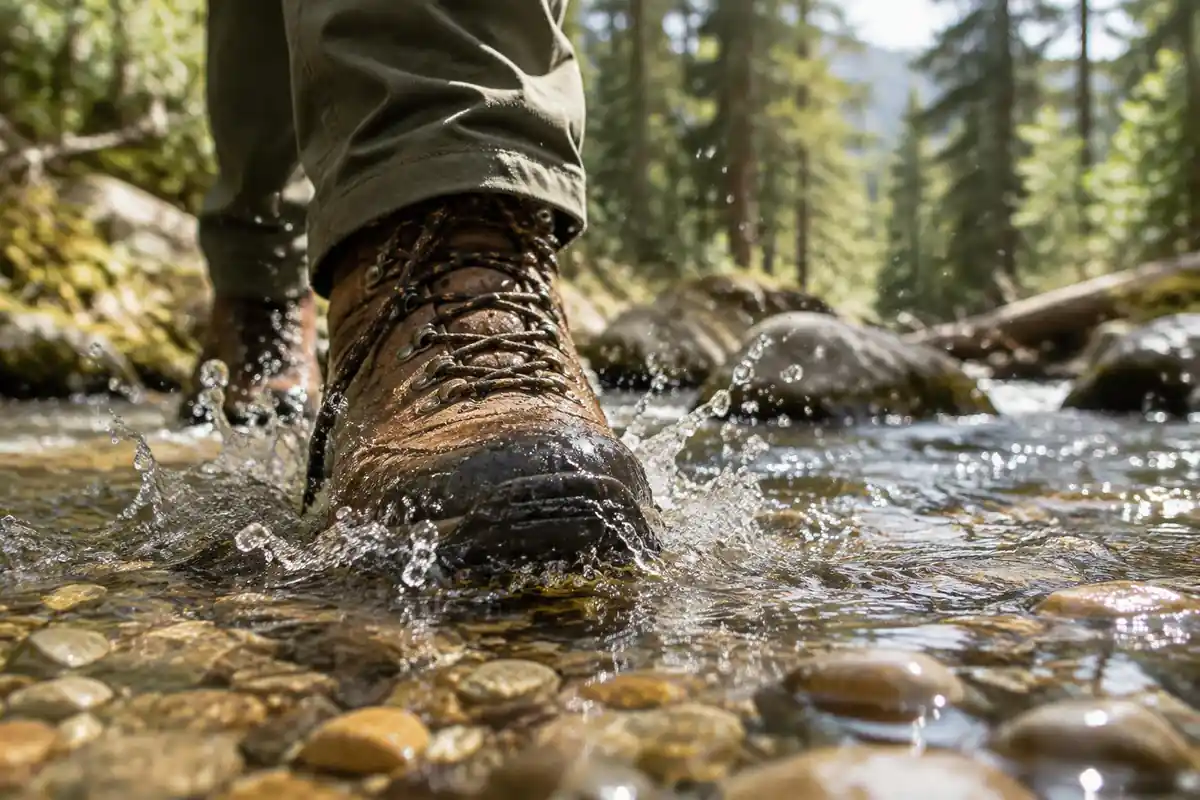
A waterproof membrane keeps out dew, puddles and wet brush, but it also slows drying and traps heat, and once water pours over the collar, a lined boot stays wet for days. Non-waterproof boots breathe better and dry fast, which suits hot climates and trails with repeated stream crossings. Choose waterproofing for cold, muddy, shoulder-season hiking and skip it for summer desert miles.
Sole stiffness should match the weight on your back. A flexible sole feels natural on smooth trail but lets rocks telegraph through and tires your feet under a heavy pack. A stiffer midsole, often with a nylon or partial shank, supports edging on rock and carries loads far better, though it feels clunky on easy ground. Match stiffness to your heaviest realistic pack, not your lightest.
Full-grain leather resists abrasion, molds to your foot over time and can be resoled on some models, but it is heavy and slow to break in. Split leather and synthetic mesh uppers are lighter, cooler and ready to wear almost immediately, though they wear through faster at flex points. Check the rand and toe cap too, since that is where rocky trails do the most damage.
Heel lock is the other half of fit: your heel should lift barely at all when you walk uphill, or blisters are inevitable. Lacing tricks and a surgeon's knot at the ankle help, but they cannot fix a heel cup that is too roomy. Synthetic boots need only short walks to settle in; stiff leather can take several weeks of gradual wear before it stops fighting you.
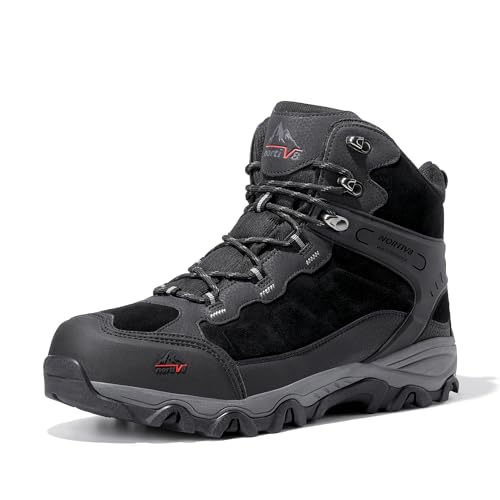
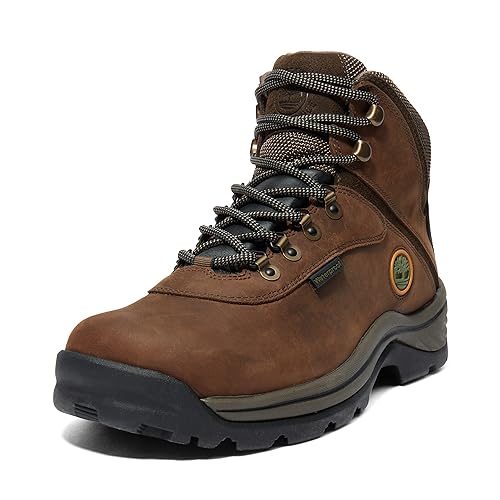
4 boots to compare
Real options that fit the criteria above. We don't publish prices or ratings — check the current price and reviews on Amazon.


Sole stiffness, pack weight and your feet
A loaded pack pushes your foot down into the boot on every step. In a study of long-distance hikers, forefoot pressure rose 5.41% with a pack weighing 10% of body weight and 8.73% at 20%, and packs heavier than about 10% of body weight produced a clear, load-dependent rise in pressure under the foot.4 That is the mechanism behind the page's advice to stiffen the sole as the load grows: a firmer midsole spreads the extra pressure over more of the foot instead of letting each rock press into one spot.
The American Academy of Orthopaedic Surgeons says a hiking shoe should provide stability on uneven ground and cushioning to absorb impacts.5 Heavier loads ask more of both. KEEN, a boot maker, makes the same point from the product side, saying a boot's extra stability and support can be welcome with a fully loaded pack.2 That is a manufacturer's view, not an independent finding, but it lines up with the pressure data.
The weight you pay for durability
Full-grain leather and tall collars add ounces, and weight on the feet costs far more energy than weight on the back. A review of load-carriage research found each kilogram added to the feet raises energy expenditure about 7 to 10%, versus about 4% per kilogram on the thigh.6 Lifting a heavier boot thousands of times a day adds up, so leather's durability pays off mainly where the terrain would chew through a lighter boot.
This page gives no break-in mileage, because no source in this site's library measures it. Treat any mileage number you see elsewhere as a rough guide, and let hot spots, not the odometer, tell you when a boot is ready.
Heel lock, blisters and when to stop
A 2023 systematic review found blisters and ankle sprains were the most common hiking injuries, and the lower limb was the most injured body area in all seven studies it reviewed.3 Military research also lists foot blisters among the common injuries of long load carriage, alongside stress fractures and knee pain.6 A heel that slides is a friction machine, which is why the page treats heel lock as half of fit.
The American Academy of Dermatology recommends shoes that are neither too tight nor too loose, nylon or moisture-wicking socks, and stopping when skin becomes red or painful.7 Moleskin or a soft bandage over a known problem spot helps. Most blisters heal on their own in one to two weeks, but see a doctor if you notice redness, pus or swelling that suggests infection.7
Orthotics, wide feet and measuring properly
OrthoInfo advises measuring feet while standing, because body weight spreads the foot, and sizing for the larger foot, since one is often bigger.1 Aftermarket orthotics take up room inside the boot, so bring them to the store and fit the boot with them in place. The target stays the same: about half an inch between your longest toe and the front of the boot.1 If a wide version gives you that gap without heel slip, it is the right boot, whatever the box says.
Common questions
Should I size up in hiking boots?
Not automatically. Feet swell over long miles and downhill sections drive your toes forward, so you want about half an inch in front of the longest toe with the boot laced snug, which is the toe room OrthoInfo recommends. If your usual size gives you that in hiking socks, you may not need to go up; if not, go up until it does. Fit with the hiking socks and any insoles you will actually use.
How long does breaking in hiking boots take?
It depends on the material. Synthetic and light leather boots often feel settled after a few short walks. Full-grain leather can need a good stretch of gradual wear before the upper softens around your foot. Build up slowly with errands, then short hikes, then longer days, and never take brand-new stiff boots on a big trip.
Do I need high-cut boots for a heavy pack?
Not necessarily, but they help. What matters more is a supportive, stiffer sole and a boot that holds your heel firmly, since a loaded pack shifts your balance and punishes sloppy footing. Strong ankles and good technique let plenty of hikers carry heavy loads in mid-cut boots. On rough, off-trail terrain, the extra collar height earns its weight.
This is general footwear & apparel guidance, not a lab review — it explains what to look for and how to choose so you can pick well. We publish no prices or ratings; current price, availability and reviews are shown on Amazon. Product links are affiliate links: we may earn a commission at no extra cost to you. See our affiliate disclosure.