
Adjusting Your Pack: Complete Guide
Comprehensive technical analysis of sizing, materials, installation requirements, and manufacturer standards for adjusting your pack.

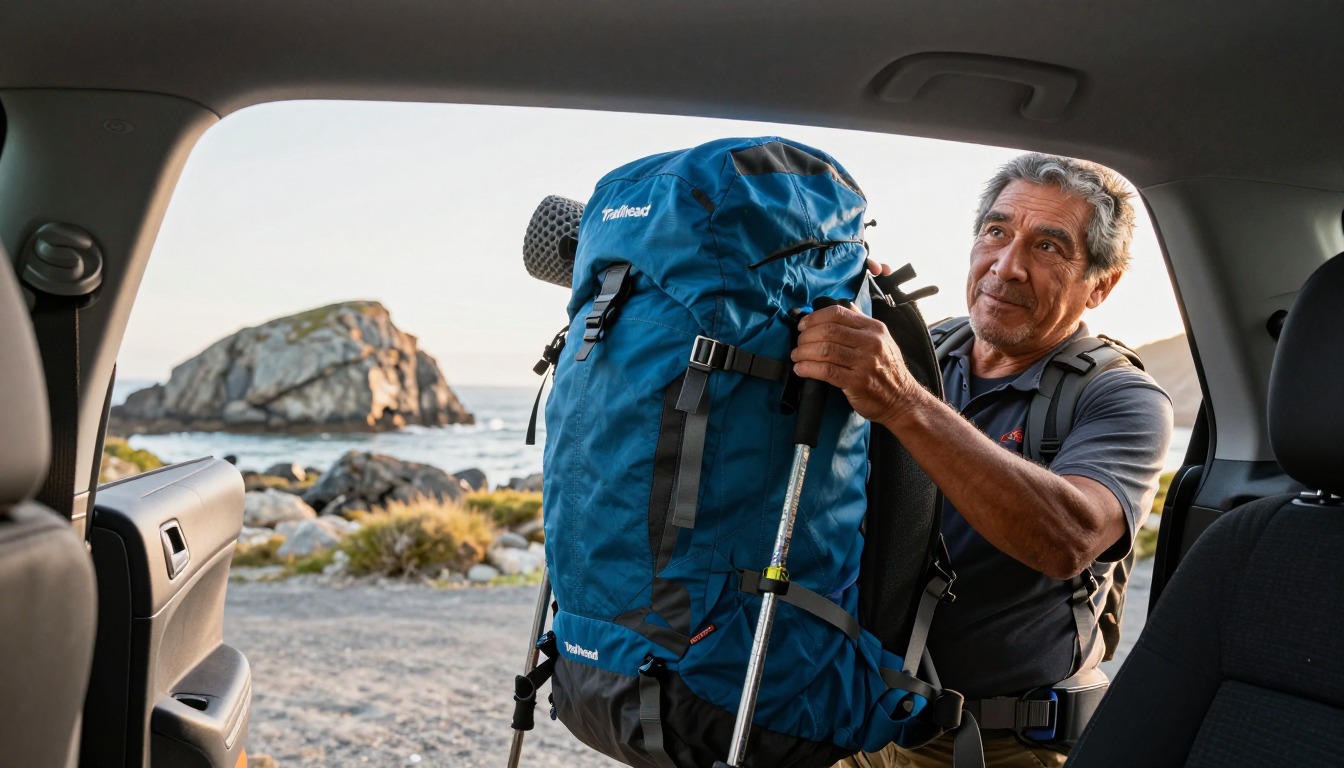
Adjusting a hiking backpack means tightening its straps in a fixed order — hipbelt first, then shoulder straps, then load-lifter straps, then the sternum strap, then hipbelt stabilizer straps — so a loaded pack transfers weight onto the hips instead of the shoulders. Skipping this order, or tightening shoulder straps before the hipbelt, pulls a pack's weight upward and defeats the point of a load-bearing suspension. The hipbelt, buckled and tightened first, gives every strap that follows a stable base to adjust from, which is why re-fitting a pack always starts there, not at the shoulders.
Adjust a loaded backpack in five steps, always in this order: hipbelt, shoulder straps, load-lifter straps, sternum strap, then hipbelt stabilizer straps. Each strap depends on the one before it being set correctly, so working out of order forces later straps to compensate for a base that isn't right yet.
Working this sequence backward is the most common fitting mistake. Tightening shoulder straps before the hipbelt is set pulls the entire load upward, forcing the shoulders to carry weight the hipbelt should be handling, and no amount of later adjustment to load lifters or the sternum strap fully corrects for that first-step error.
Load-lifter straps should pull the pack's upper frame toward the shoulders at roughly a 45-degree angle, connecting a point near the top of the shoulder straps to an anchor point higher on the pack body, typically near shoulder height or slightly above. This angle keeps the load's center of mass close to the spine without lifting the whole pack off the hipbelt.
A load lifter pulled too steep, closer to vertical, lifts weight straight up and off the hips, undoing the hipbelt's job even if the hipbelt itself is fitted correctly. A load lifter left too loose lets the top of the pack lean backward away from the body, which shifts the center of gravity rearward and makes the load feel heavier than its actual weight. The 45-degree target is a practical middle point: enough pull to draw the pack close, not enough to lift it off the hips.
Torso length affects how much load-lifter adjustment is available. On a pack sized correctly to a hiker's torso — measured from the C7 vertebra at the base of the neck to the top of the iliac crest — the load-lifter anchor point sits at the right height to hit that 45-degree angle without running out of webbing. A pack that's the wrong torso size for its wearer often can't reach a proper load-lifter angle at all, which is one reason correct sizing matters before any strap adjustment happens.
The sternum strap should sit across the upper chest, roughly one to two inches below the collarbone, adjusted along its webbing height track and buckled snugly enough to stop the shoulder straps from sliding outward without restricting chest expansion. It's the last strap to set in the tightening order, after the hipbelt, shoulder straps, and load lifters are already correct.
Most sternum straps slide up or down a short track sewn onto the shoulder straps, letting a hiker match the height to their chest and torso proportions. Positioned too high, near the collarbone or throat, it can rub the neck or restrict arm movement; positioned too low, near the ribs, it does less to keep the shoulder straps aligned and can compress the diaphragm on deep breaths during a climb.
Tension on the sternum strap should be light — snug enough that the shoulder straps stay put on the shoulders instead of drifting outward with each stride, but never tight enough to compress the ribcage or shorten breath. A sternum strap cinched too tight is a common cause of chest tightness on long climbs, and loosening it by an inch or two usually resolves that without affecting load transfer, since the sternum strap plays no role in carrying pack weight.
A hiking backpack that hurts almost always traces back to one of the first two adjustment steps — the hipbelt not carrying its share of the load, or the shoulder straps compensating for a hipbelt that isn't. Diagnosing pain by location points to the fix faster than re-tightening every strap at random.
| Pain location | Likely cause | Fix |
|---|---|---|
| Shoulders, top of traps | Hipbelt too loose or positioned wrong; shoulder straps carrying load meant for hips | Re-buckle hipbelt over the iliac crest, tighten before shoulder straps |
| Lower back | Pack weight too high or too far from the back; hipbelt riding too low | Repack heavy items closer to the back and mid-height; raise hipbelt onto the iliac crest |
| Hips, hip bones | Hipbelt over-tightened or sitting on the wrong point of the pelvis | Loosen slightly, recenter wings over the iliac crest, recheck the two-finger gap |
| Neck, collarbone | Sternum strap set too high or too tight | Slide sternum strap down its height track, loosen tension |
| Numb hands, tingling fingers | Shoulder straps too tight, restricting circulation near the underarm | Loosen shoulder straps once the hipbelt is confirmed to be carrying the load |
Most pain resolves by re-checking the adjustment order from the start rather than tightening the strap nearest the sore spot. A hiker with sore shoulders who only tightens the shoulder straps further, without confirming the hipbelt is doing its job, usually makes the problem worse. Working back through the full sequence — hipbelt, shoulder straps, load lifters, sternum strap, stabilizer straps — isolates which step introduced the discomfort. Persistent pain after a correct re-fit often points to the wrong torso length or hipbelt size, which no strap adjustment can fully correct.
Go Deeper
Detailed companion guides for adjusting your pack.
How to Adjust a Hiking Backpack (In Order)
The step-by-step order for tightening hipbelt, shoulder, load-lifter, sternum, and stabilizer straps so a loaded pack rides on your hips, not your shoulders.
Choosing Capacity
Related fit, sizing & packing guide.
Packing & Load Order
Related fit, sizing & packing guide.