
Best Men's Trail Running Shoes
Trail runners have quietly become the default hiking shoe for a lot of experienced walkers, and men's models now cover everything from smooth rail-trail miles to loose alpine scree. This page explains what actually separates one trail runner from another — cushioning, drop, lug pattern, and how a men's last shapes fit — so you can match a shoe to your terrain and your feet rather than to a marketing label.
Affiliate disclosure: this page contains affiliate links. Purchases made through them may earn us a commission at no extra cost to you. See our affiliate disclosure.
In plain English
Trail running shoes are sneakers made for dirt paths. They have grippy rubber soles, tougher fabric than a road shoe, and sometimes a stiff insert that blocks sharp rocks. Many hikers wear them instead of boots because they are light and comfortable from day one.
The catch is protection. A trail runner sits below your ankle and has a thinner sole, so it guards your foot less on rough, rocky ground. Think of a bike helmet next to a motorcycle helmet: both protect you, but one is built for much bigger hits.
Men's trail runners are usually a bit wider than women's, but every brand is different. Try them on late in the day with your hiking socks, and walk downhill in the store if you can. Your toes should not touch the front, and your heel should not slide.
This page contains affiliate links. Purchases made through them may earn a commission at no extra cost to you. See our affiliate disclosure.
Who it's for
Trail runners suit hikers who carry moderate loads and cover ground: day hikers, fastpackers, and thru-hikers who'd rather dry out quickly than stay waterproof. They're less convincing for heavy multi-day loads, sharp talus, or ankles with a history of rolling. Foot shape matters too — high-volume or wide feet need a roomier toe box than the standard men's last provides.

How to choose trail runners
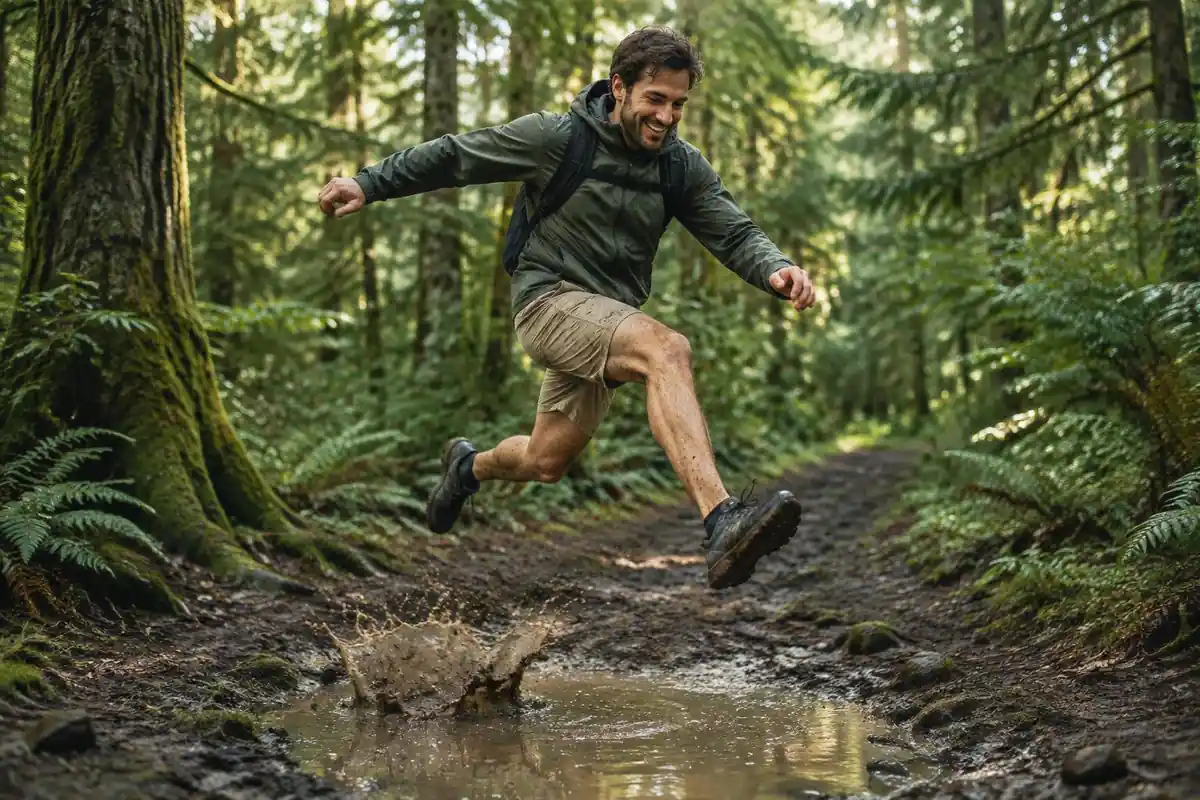
The pitch is simple: less weight on your feet, faster drying, and almost no break-in. Trail runners are typically lighter than boots, which run heavier for the added support. The trade-off is real — you give up ankle coverage, underfoot protection, and some durability. If your load is light and your ankles are sound, that's usually a good trade.
Men's and women's lasts often differ, but that still leaves a lot of variation between models. Look for wide options if your foot spreads under load, and leave room for swelling on long days: about half an inch in front of your longest toe is the usual target.
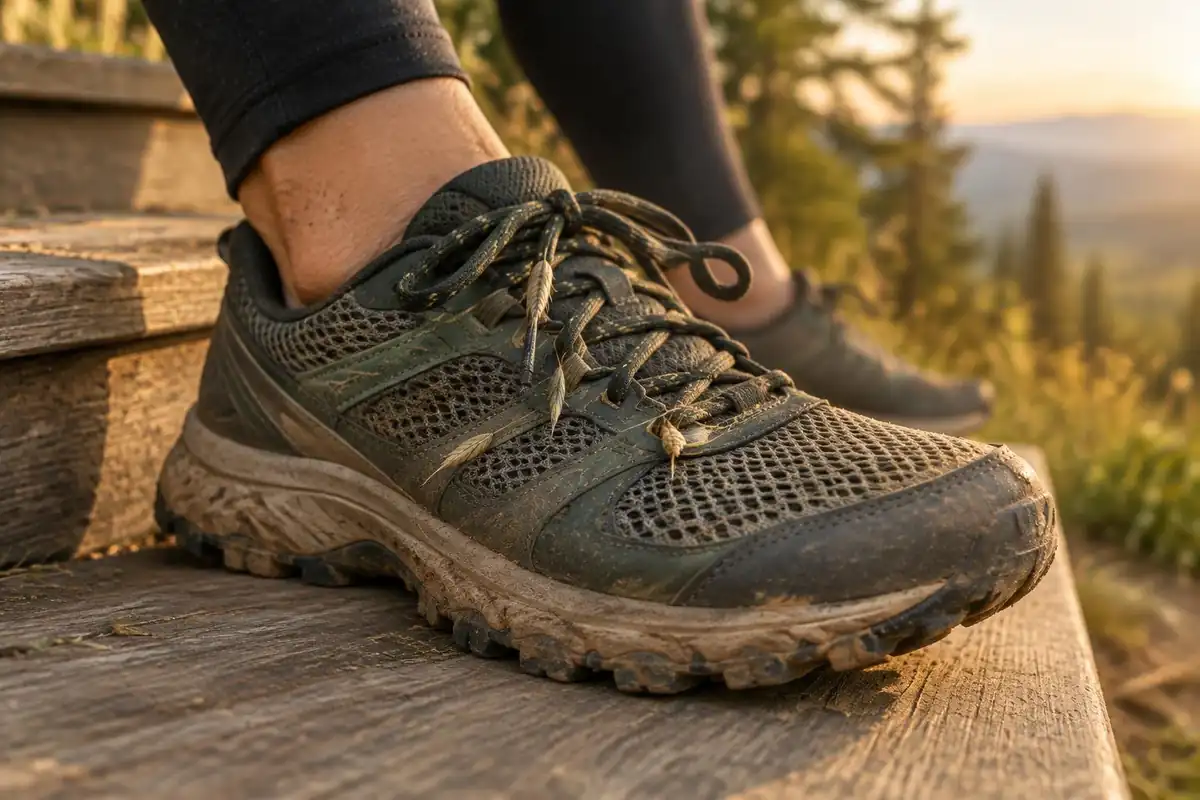
Match tread to terrain. Shallow, closely spaced lugs roll smoothly on packed dirt and rock but skate on mud. Deep, widely spaced lugs bite into soft ground and shed muck, and feel clumsy on pavement. Softer, stickier rubber grips wet slabs better but wears faster; harder compounds last longer on abrasive desert rock.
Drop is the height difference between heel and forefoot, and it varies by shoe. Changing it changes how your calf, Achilles and knee share the work, so change it gradually rather than all at once. Cushioning is a separate dial: plush stacks save your legs on long days, while lower stacks give you ground feel and stability on uneven rock.
A loaded pack pushes your foot harder into the shoe, so protection matters more than the spec sheet suggests. A rock plate or firm midsole keeps sharp stones from bruising your arch, and a real toe bumper saves toenails on rooty descents. Heavier loads also flatten soft foam faster, so a firmer midsole often feels better on day four than day one.
Trail runners wear out faster than boots, and faster still if you're carrying a heavy pack over abrasive rock. Midsole foam packs out before the upper looks worn, so the shoe can feel dead while it still looks fine. Thru-hikers commonly plan on several pairs across a long trail; day hikers may get a season or two out of one.
5 trail runners to compare
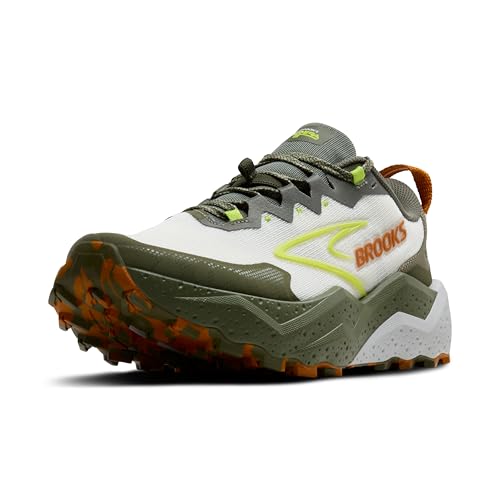
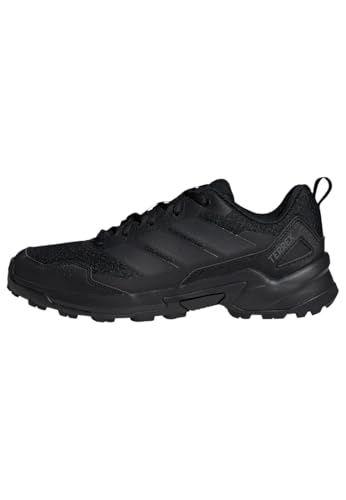
Real options that fit the criteria above. We don't publish prices or ratings — check the current price and reviews on Amazon.


What a loaded pack does to a light shoe
Some hikers carry full loads in trail runners, and it is often said that the limit is the foot and ankle rather than the shoe. The pressure data supports some caution. In long-distance hikers, forefoot pressure rose 5.41% with a pack at 10% of body weight and 8.73% at 20%, and packs heavier than about 10% of body weight produced a clear, load-dependent rise.5 A thin sole passes more of that pressure straight to your foot.
KEEN, a footwear maker, says a boot's extra stability and support can be welcome with a fully loaded backpack.2 Treat that as the manufacturer's view rather than a proven rule, since no neutral study in this site's library compares injury rates in boots and trail runners. What research does show is that injuries from long load carriage include foot blisters, stress fractures, metatarsalgia (pain in the ball of the foot) and knee pain.1 Building up load gradually gives your feet time to adapt.
The energy case, with real numbers
Foot weight has a measured cost. A review of military load-carriage research found each kilogram on the feet raises energy expenditure by about 7 to 10%, while a kilogram on the thigh costs about 4%.1 The same review found the energy cost of walking with a pack rises with load weight, body mass, walking speed and grade.1 On a long climbing day, a lighter shoe is one of the few changes that saves effort on every single step.
This page leaves out specific weights, lug depths and drop figures, because no neutral source in this site's library backs them. Check the spec sheet of any shoe you are weighing up, and treat claims about how drop shifts work between calf, knee and hip as plausible rather than proven.
Wet feet, cold feet
Mesh trail runners drain well, which is their big advantage at creek crossings in warm weather. In the cold, wet feet become a safety issue. NIOSH, the federal workplace-safety agency, says wet feet lose heat 25 times faster than dry feet and that trench foot can occur at temperatures as high as 60°F if feet stay wet.4 The National Park Service notes that wool or polypropylene socks keep feet warm even when wet.6
So the page's advice to skip waterproofing holds best in warm weather. In cold, wet conditions, carry dry socks, change into them at camp, and let your feet dry overnight. For blisters, dermatologists recommend moisture-wicking socks and warn that cotton soaks up sweat and increases friction and chafing.7
Common questions
Can I really hike with a full pack in trail runners?
Plenty of people do, including long-distance hikers carrying multi-day loads. The limit is usually your ankles and your foot's tolerance for underfoot impact, not the shoe falling apart. If you're new to it, build up gradually — strong ankles and a lighter base weight make the switch far more comfortable than simply buying cushier shoes.
Should I get a waterproof trail runner?
Usually not. Waterproof liners keep out light rain and dew, but once water comes over the collar at a creek crossing it stays in, and the shoe breathes less in heat. Non-waterproof mesh drains and dries as you walk. Waterproofing earns its place mainly in cold, wet shoulder-season conditions or persistent snowmelt.
How do I know when to replace them?
Watch the midsole, not the tread. If the foam feels flat, your feet ache sooner than they used to, or old niggles in the knees and shins return, the cushioning is spent. Visible compression creases along the midsole sidewall, a worn-through heel counter, or lugs rounded smooth on the outer edge all confirm it.
This is general footwear & apparel guidance, not a lab review — it explains what to look for and how to choose so you can pick well. We publish no prices or ratings; current price, availability and reviews are shown on Amazon. Product links are affiliate links: we may earn a commission at no extra cost to you. See our affiliate disclosure.