
Best Backpacking Tents (2026)
A backpacking tent is your shelter, storage locker, and refuge from weather all in one, so it's worth choosing carefully rather than grabbing whatever's cheapest. Unlike a car-camping tent, every ounce you carry matters, and the tradeoffs between weight, space, and durability shape how comfortable your trip feels when the rain starts and you're zipped in for the night. The right tent balances protection with pack weight for your specific trips.
Who it's for
Anyone sleeping outdoors overnight needs a reliable tent, but how much you spend on weight savings depends on your style. Weekend car campers can prioritize space and easy setup over ounces, while thru-hikers chasing long daily mileage need every gram trimmed. Three-season hikers want ventilation and mild-weather comfort; winter or alpine trips demand a sturdier, snow-capable design built to handle wind and load.
How to choose a tent
Freestanding tents use their own dedicated pole structure, so they pitch almost anywhere — including rock slabs or platforms — and are simple to reposition once staked loosely. Trekking-pole (non-freestanding) shelters skip the extra poles, shaving significant weight, but they need taut, well-staked guylines to hold their shape and are less forgiving on hard or uneven ground.
Trimming pack weight almost always means sacrificing interior space, headroom, or vestibule area for gear storage. A tent that feels roomy in the store can feel cramped after a full day of hiking when you're cooking under the vestibule in the rain. Decide how many nights you'll actually spend inside versus just sleeping, then weigh that comfort against the ounces on your back.
Tent capacity ratings assume sleeping pads laid shoulder to shoulder with almost no gap, so a listed two-person tent is genuinely snug for two adults plus gear. Many experienced backpackers size up — choosing a three-person tent for two people — to get elbow room, space to sit up, and somewhere dry to stash boots and packs during bad weather.
Three-season tents use double-wall construction — a mesh inner canopy plus a separate rainfly — which manages condensation well and suits spring through fall. Four-season and single-wall tents cut weight or add snow-shedding strength but trap more moisture inside, so a full night's breath and sweat can leave the walls damp by morning without a vestibule or vent left open.
Lighter fabrics (thinner denier nylon or composite blends) cut weight but demand careful footing and a groundsheet to avoid punctures over rocky terrain. Aluminum poles resist bending better than fiberglass and are easier to repair. Practice pitching a new tent at home first — pole design, clips versus sleeves, and stake angle all affect how fast you can set up in wind.
4 tents to compare
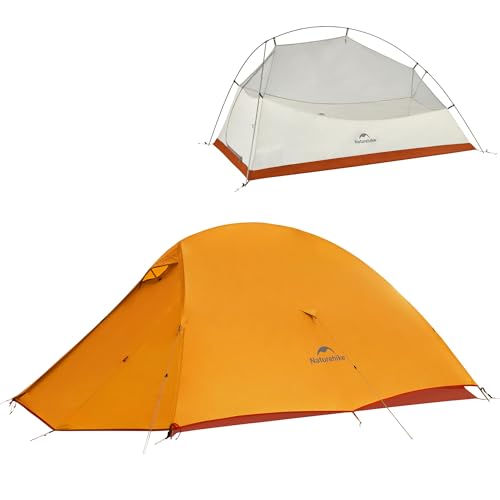
Real options that fit the criteria above. We don't publish prices or ratings — check the current price and reviews on Amazon.


Common questions
Do I need a footprint or groundsheet under my tent?
A footprint isn't strictly required, but it protects the floor fabric from sharp rocks, roots, and abrasive sand, extending the tent's lifespan significantly. Many manufacturers sell tent-specific footprints, though a lightweight polycryo or Tyvek sheet cut to size works just as well and often weighs less than the branded option for a fraction of the hassle.
How can I reduce condensation inside my tent?
Condensation forms when warm, moist air from breathing and evaporating sweat meets a cold tent wall, so ventilation is the fix. Pitch with vents and doors cracked open when weather allows, avoid camping right next to water or in low, damp hollows, and choose a site with some airflow rather than a sealed, windless pocket among dense trees.
Is a heavier tent always more durable?
Not necessarily — durability depends more on fabric quality, denier rating, and reinforced stress points than on raw weight. A well-made ultralight tent using quality materials can hold up for years of regular use, while a heavier tent with weak seams or flimsy stakes can fail sooner. Careful setup and site choice matter as much as the tent itself.
This is a general buying guide, not a lab review — it explains what to look for so you can choose well, and links to real products to compare. We publish no prices or ratings; current price, availability and reviews are shown on Amazon. Product links are affiliate links: we may earn a commission at no extra cost to you. See our affiliate disclosure.