
How to Train for Everest Base Camp
To train for Everest Base Camp, build an aerobic base with steady walking for about 4 to 8 weeks, add a weekly hill or stair session, then walk with a loaded pack, starting light and adding weight in small steps. Keep strength work to at least 2 days a week, rehearse with two loaded walks on back-to-back days, and taper in the final 1 to 2 weeks. Fitness helps, but a slow ascent does the real altitude work.
General fitness guidance, not medical or personal training advice. If you have a health concern, an injury, or you're returning to exercise after a long break, check with a doctor first.
What Everest Base Camp asks of your body
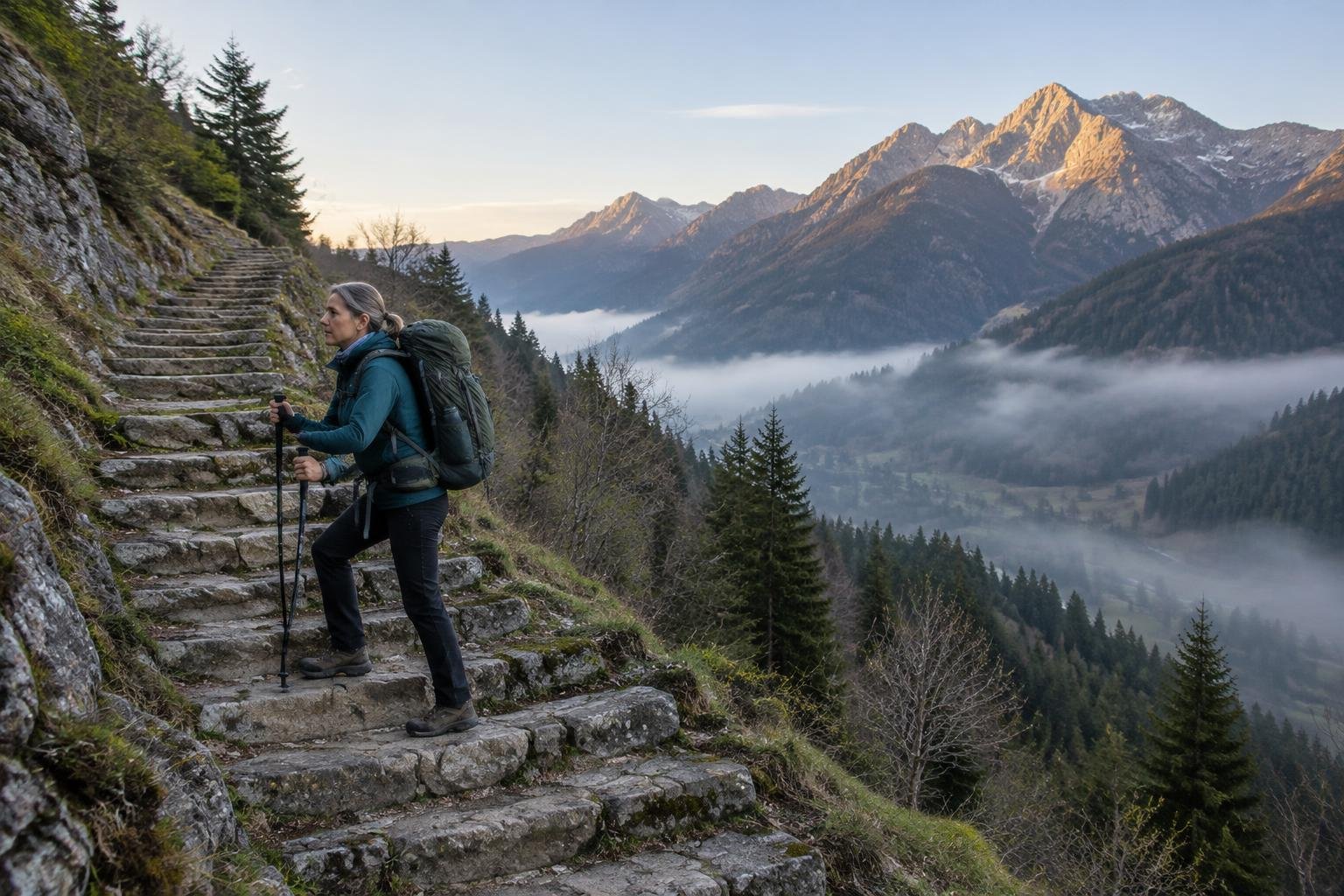
This is a walking trail, not a climb, but it is a working one. The round trip from Lukla is roughly 130 km (80 mi), with a net gain of about 2,500 m (8,200 ft) from Lukla at 2,860 m to Everest Base Camp at 5,364 m. Because the route keeps dropping to the river and climbing again, cumulative ascent is commonly cited at roughly 7,000 to 10,000 m (23,000 to 33,000 ft). Expect stone staircases up to Namche, then loose moraine higher up. The main hazards are altitude and multi-day fatigue across about a fortnight.
Start with a weekly base
The CDC suggests adults aim for 150 minutes of moderate-intensity activity a week, or 75 minutes of vigorous activity, or an equivalent mix, and it can be split across the week rather than done all at once. For a trip this long, treat that as your starting floor, not your finish line. Reach that weekly baseline first, then let your walking grow toward long days on your feet. If you have a health concern, ask a doctor before you ramp up.
The training plan, phase by phase
Aerobic base · Weeks 1 to 4
Walk most days at an easy, conversational effort and build toward the weekly CDC baseline. Add one longer walk each week. The goal here is not speed. You are teaching your body to spend hours moving without tiring, which is what a fortnight of trail days will ask of it.
Hills and stairs · Weeks 5 to 7
Keep your base walking and add one hill or stair session a week. The climb to Namche is a sustained staircase, so stairs and steady hill climbs are the closest match. Go at a pace you can hold, and gradually lengthen the session as it starts to feel manageable.
Loaded pack walks · Weeks 8 to 10
Start carrying your pack on your longer walks. Many people begin around 10 pounds, then add weight in small steps. A commonly quoted ceiling is about 20% of body weight. Break in your boots and sort out fit now, not on the trail.
Rehearse and taper · Weeks 11 to 12
A couple of weeks out, do two loaded walks on consecutive days to feel how tired legs behave on day two. Then taper in the final 1 to 2 weeks, cutting volume so you arrive rested rather than worn down. Allow roughly 8 to 12 weeks overall for a trip like this.
Strength work that helps on the trail
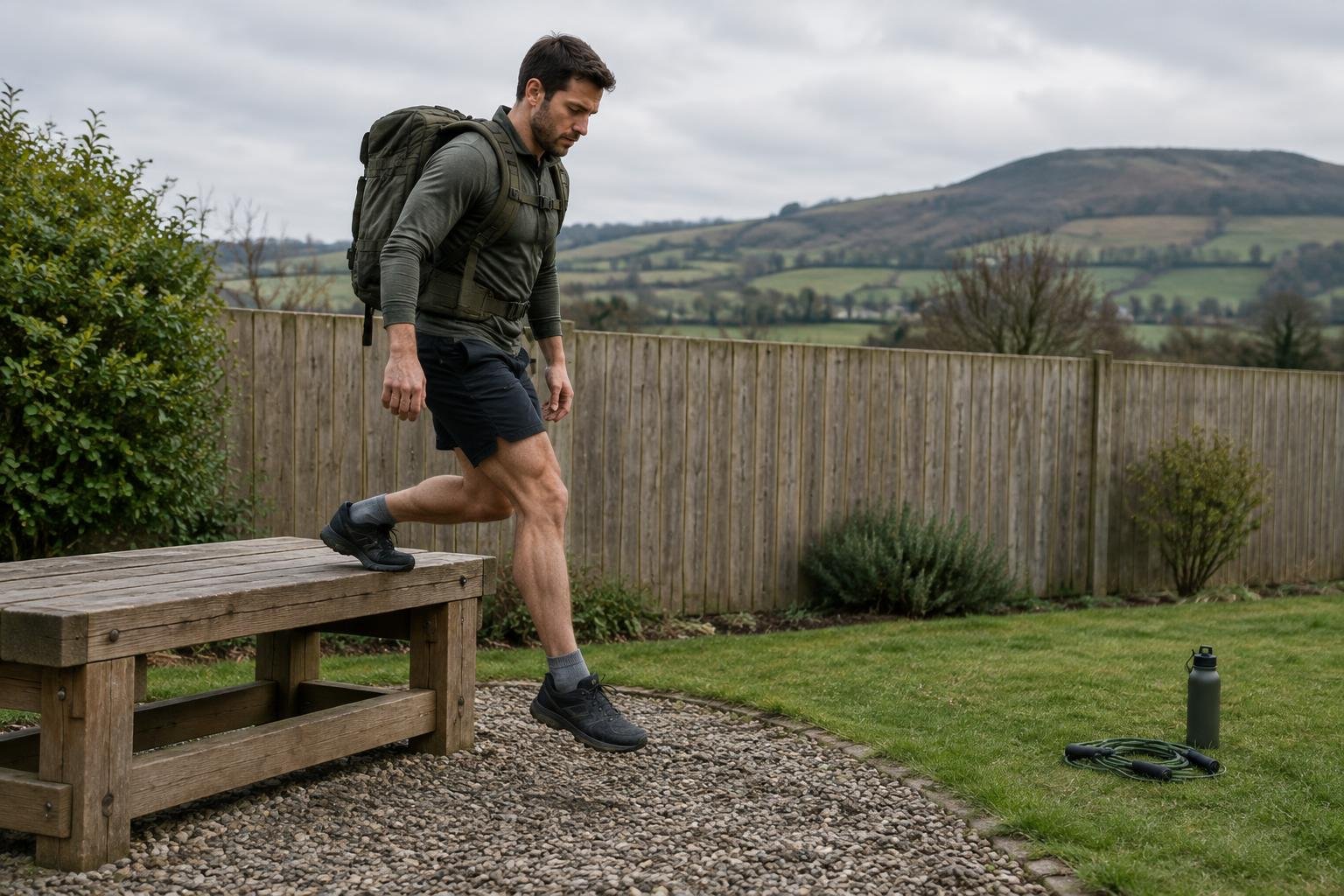
Include muscle-strengthening work on at least 2 days each week, covering all major muscle groups, as the CDC advises. For this route, put extra attention on legs, hips and core, since you will carry a pack up long staircases and hold your balance on uneven rock. Descents matter too. Stairs replicate downhill poorly, so add slow step-downs to build the control your quads need. Downhill loads the quads and causes delayed soreness, so practice it before the trip.
Pack walks and back-to-back days
Loaded pack walks are where the plan becomes specific to this trip. Start light, then add weight in small steps, keeping to the roughly 20% of body weight ceiling at most. Because this route runs across about a fortnight of walking days, the back-to-back rehearsal is especially useful. Do two loaded walks on consecutive days a couple of weeks out, and notice how your feet, shoulders and hips respond. Fix any pack-fit problems then, while there is still time.
Altitude: why a slow ascent matters
Altitude is the main hazard here, and fitness does not replace a slow ascent. Guidance says to avoid going from low elevation to sleeping at 9,000 ft (2,750 m) or more in a single day. Once sleeping above 3,000 m (9,800 ft), limit gains in sleeping altitude to about 500 m (1,600 ft) per night, and add an extra acclimatization night for every 1,000 m gained. Sleeping altitude matters more than the height reached by day, because low oxygen is worst during sleep. Spending 2 to 3 nights at roughly 8,000 to 9,000 ft (2,450 to 2,750 m) before going higher is protective against acute mountain sickness. The short ascent days and rest days built into this itinerary reflect exactly that thinking.
More in our guide to hiking at altitude and acclimatization.
Training mistakes to avoid
The most common training mistake is never walking with the pack, so the first loaded day happens on the trail. Another is skipping downhill work, which leaves quads sore and slow on the descent. Starting too late is a third: this trip warrants roughly 8 to 12 weeks, not a last-minute burst. Finally, assuming fitness replaces a slow ascent is risky, because the itinerary's rest days exist for a reason. Treat them as part of the plan, not padding.
Common questions
How long should I train for Everest Base Camp?
Allow roughly 8 to 12 weeks for a multi-day trip with a full pack. Spend the first 4 to 8 weeks building an aerobic base, then add hills, loaded pack walks and a taper. If you start from a low baseline, give yourself the longer end of that range.
Does being fit prevent altitude problems?
No. Training builds endurance for the walking, but it does not replace a slow ascent. What matters most is how high you sleep and how gradually you gain it, so respect the rest days and acclimatization nights built into the itinerary.
How heavy should my pack be in training?
Start light, with many people beginning around 10 pounds, and add weight in small steps. A commonly quoted ceiling for a loaded pack is about 20% of body weight. Train with the pack you intend to carry so the fit is familiar.
What strength work helps most?
The CDC advises muscle-strengthening on at least 2 days a week, working all major muscle groups. For this route, focus on legs, hips and core, and add slow step-downs to prepare your quads for the long descents back toward Lukla.
Sources
- Centers for Disease Control and Prevention — Physical Activity Guidelines for Adults: weekly aerobic and muscle-strengthening targets.
- CDC Yellow Book — High-Altitude Travel and Altitude Illness: ascent-rate guidance (consistent with Wilderness Medical Society recommendations).
- Nepal DNPWC & local committees — ntb.gov.np: official route information.
- Training and fitness for hiking (this site): the general training progression this plan builds on.
See our editorial policy and affiliate disclosure.