
Hiking at altitude: acclimatization basics
Thin air changes hiking more than most people expect, and the fix is almost always time rather than toughness. Here is how altitude affects the body in plain terms, how gradual ascent and rest days work, what early symptoms look like, and the clear line where a slow trip becomes a descent.
In plain English
Up high, each breath brings in less oxygen for your body to use. Your body can adjust, but it needs days, not hours. Going up too fast is a bit like jumping into cold water instead of wading in: the shock is the problem, not the water.
The first sign is usually a headache, sometimes with an upset stomach, tiredness or poor sleep. It is easy to blame the long hike, which is why people push on when they should not.
The rules are simple. Go up slowly, sleep lower than your highest point when you can, and never climb higher to sleep while you feel unwell. If you get worse, go down. Going down is the fix that works, and for serious symptoms it needs to happen right away, with medical help.
The short answer
Altitude sickness happens when you go up faster than your body can adjust to thinner air. Ascend gradually, sleep lower than your day's high point, and build in rest days. If symptoms appear, stop climbing, rest and hydrate; if they do not improve, descend; if they are severe, descend immediately and seek medical help.
Altitude is not a test of grit and it does not reward pushing through. The hikers who do well up high are usually the ones with the most patient itineraries, not the strongest legs.
What altitude sickness actually is
The air at elevation contains the same proportion of oxygen as it does at sea level, but the pressure pushing that oxygen into your blood is lower. Your body has to compensate — you breathe faster and deeper, your heart works harder, and over days your blood chemistry shifts to carry oxygen more effectively. Acclimatization is simply that adjustment happening, and it takes time you cannot substitute with fitness.
When you climb faster than that adjustment can keep up, you get the cluster of symptoms usually called acute mountain sickness: headache, nausea, tiredness out of proportion to the effort, dizziness and poor sleep. It is common, generally mild, and usually resolves once you stop gaining elevation. The serious forms are much rarer but far more dangerous, and they are why the descend-and-get-help rule below is not negotiable.
As for where it begins, many sources note that symptoms can start above roughly 8,000 feet (about 2,400 meters) — but treat that as a widely published rule of thumb rather than a line on a map. Susceptibility varies hugely between people, does not track with age or fitness, and can differ for the same person from one trip to the next.
Consult a doctor before a high-altitude trip, especially if you have any relevant health conditions or have had altitude problems before — and descend and seek medical help for worsening symptoms.
Gradual ascent and "climb high, sleep low"
The single most effective thing you can do about altitude is also the least glamorous: go up slowly. Two principles carry most of the weight.
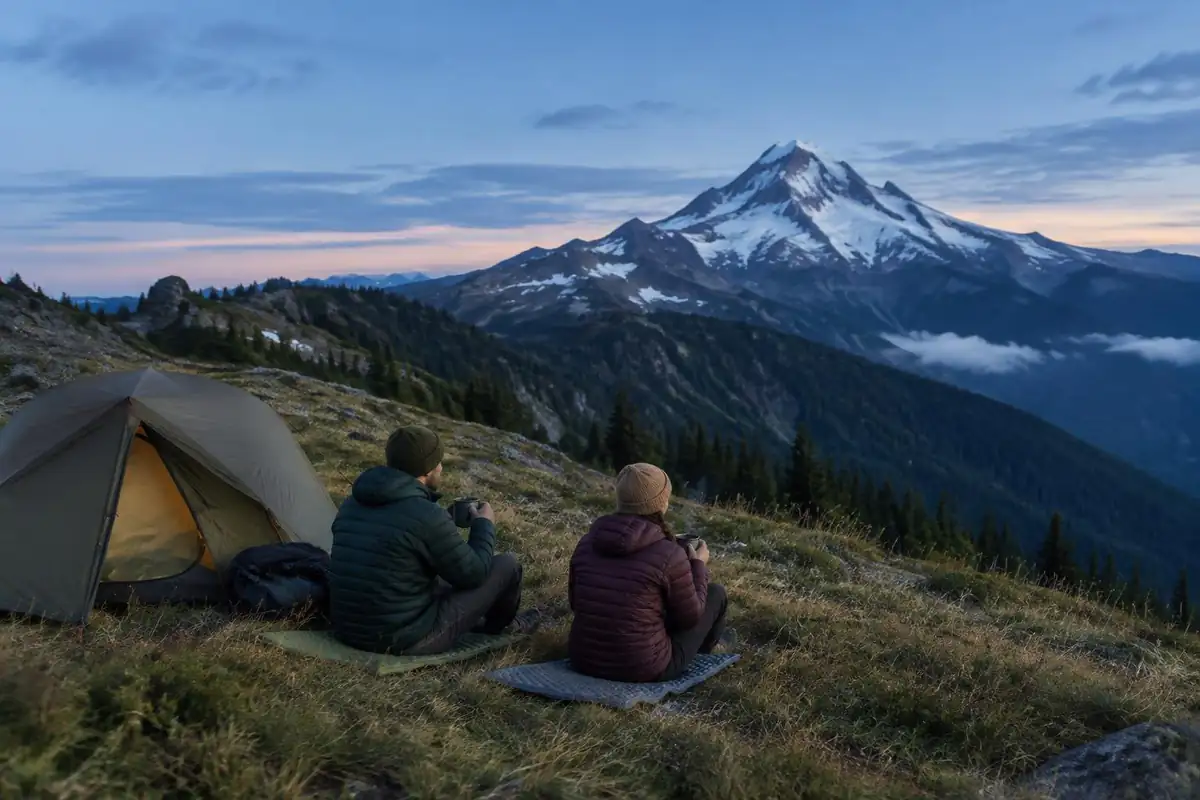
Gradual ascent means limiting how much higher you sleep each night once you are into thinner air, and adding rest days where you stay at the same elevation instead of gaining more. Guided itineraries for high peaks are built around this, which is why a commercial trip often takes several days longer than the raw distance suggests. That extra time is the safety feature, not padding.
Climb high, sleep low is the companion habit: spend part of the day at a higher elevation, then come back down to sleep. Your body gets a stimulus to adapt without spending the whole night under the strain of the highest point. On a day-hiking trip this often happens naturally — you top out at a pass and return to a lower trailhead or campsite.
- Arrive and rest. If you fly into a high-elevation town, give yourself a day or two of easy activity before any serious climbing.
- Limit how much higher you sleep. Plan modest nightly elevation gains once you are up high rather than one big jump.
- Build in rest days. A day at the same elevation is doing real work even if the map shows nothing.
- Top out high, sleep lower. Where the terrain allows, make your high point a day trip rather than a campsite.
- Keep the schedule soft. An itinerary with no spare days forces bad decisions when someone feels unwell.
Ordinary trail fitness will not prevent altitude sickness, but it does mean you are not fighting the terrain and the elevation at once. Our guide to training and fitness for hiking covers building that base before a big trip.
Recognizing the early symptoms
Altitude symptoms are easy to mistake for a rough night or simply a hard day, which is exactly why people talk themselves past them. The classic early signs:
Take seriously
- Headache, often the first and most reliable sign.
- Nausea or loss of appetite at a camp where you would normally be hungry.
- Fatigue and weakness well beyond what the day's effort explains.
- Broken, restless sleep, or waking repeatedly short of breath.
- Dizziness or light-headedness when you stand up.
Don't
- Assume it is "just the hike" and keep gaining elevation.
- Stay quiet about symptoms because you don't want to slow the group.
- Let a summit deadline decide whether you go higher.
- Leave a struggling person alone, at any elevation.
- Wait to see if a worsening symptom sorts itself out overnight.
The group dynamic matters as much as the symptoms. Ask each other directly, and treat an admission that someone feels rough as useful information rather than a complaint.
General self-care when symptoms appear
The sensible response to mild symptoms is straightforward, and nothing here replaces a conversation with your own doctor.
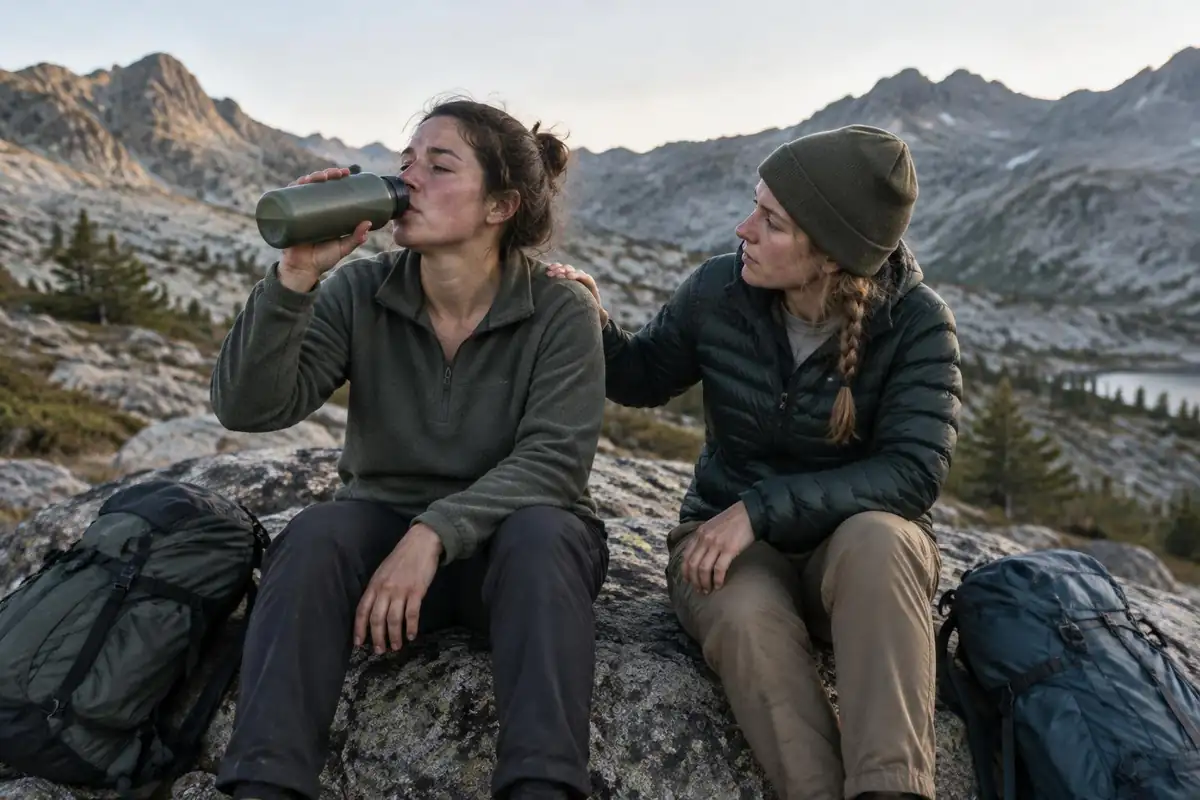
- Stop ascending. Stay at the elevation you are at until you feel better. This is the core rule.
- Rest. Take the day off, or make it a short and easy one. Sleep is disrupted at altitude, so expect recovery to feel slow.
- Hydrate and eat. You lose more fluid than you realize through faster breathing and dry air, and appetite often drops just when you need calories.
- Avoid alcohol, particularly on the first nights at a new elevation.
- Do not ascend further if symptoms are not improving. "Not improving" counts as a reason to go down, not a reason to wait longer.
- Descend if symptoms worsen. Losing elevation is the reliable response, and it usually works quickly.
A rest day is also a good time to deal with the ordinary trail problems altitude makes worse — dehydration, skipped meals and the blisters that come from too many miles in a row. The first aid and blisters guide covers the foot care and trail-kit side of that.
When this becomes an emergency
There is a clear line between an uncomfortable day and a genuine emergency, and it is worth knowing before you are tired, high and reluctant to give up the trip. Severe symptoms mean descend immediately and seek medical help. Treat any of the following as a reason to go down at once and get professional care — without waiting for morning, and without leaving the person on their own:
- Confusion, clumsiness or loss of coordination. Someone stumbling, slurring, or unable to walk a straight line is an emergency.
- Breathlessness at rest. Being winded while climbing is normal; being breathless while sitting still is not.
- A severe headache that does not settle, or persistent vomiting that stops someone keeping fluids down.
- Any symptom that is clearly getting worse rather than holding steady or improving.
- Anything you do not understand. Uncertainty high on a mountain is itself a reason to descend.
Descent is the response. Go down far enough to make a real difference, stay with the person, and get them to medical care. In a genuine emergency, call your local emergency number — 911 in the US — or activate a satellite messenger or beacon. Plan that before you leave: know the nearest lower shelter or trailhead, and tell someone at home your route and return time.
The trips where this matters most
Plenty of hiking happens low enough that altitude never comes up. But the destinations people most want to hike are exactly the ones where it does — Everest Base Camp, Kilimanjaro, the Annapurna circuit, Mount Whitney and K2 Base Camp all sit in terrain where acclimatization is the trip's central planning problem, not a footnote. On routes like those the schedule itself is the safety equipment.
If you are researching a trip like that, look at the itinerary before the gear list: how fast does it gain elevation, where are the rest days, and what happens if someone has to go down? Our places to stay section covers the lodges, base camps and trailhead bases around these destinations, and the pattern is consistent — the trips that work are the ones that give the body time.
The same principles scale down. A weekend in the Rockies or the Sierra can put you above that commonly cited threshold on day one. Arrive a day early, keep the first day short, drink more than feels necessary, and give yourself permission to turn around. The rest of the Trail Smarts section covers the planning habits that make that easy rather than disappointing.
This is general trail-craft, not medical or emergency advice, and nothing here is a diagnosis or a substitute for care from a qualified professional. Consult a doctor before a high-altitude trip, especially if you have any relevant health conditions. Descend and seek medical help for worsening symptoms; in a genuine emergency call your local emergency number (911 in the US).
Training plans for high-altitude treks
Fitness does not replace a slow ascent, but a good base makes the days themselves easier. These plans pair the CDC and Wilderness Medical Society ascent guidance with a structured build-up for each trek.
Where the 8,000-foot figure comes from
The threshold on the page is not folklore. The CDC's Yellow Book says any unacclimatized person sleeping at 8,000 feet or higher is at risk of altitude illness,1 and the National Park Service uses the same 8,000-foot figure for hikers.2 A 2025 peer-reviewed summary of the Wilderness Medical Society guidelines puts increased risk above 2,500 meters, about 8,200 feet.3 The numbers cluster closely, but notice the key word in the CDC version: sleeping. Where you spend the night matters more than where you stand at midday.
The CDC also states that physical fitness and training do not protect against altitude illness.1 A strong hiker can simply outpace their own acclimatization, gaining elevation faster than their body can adjust.
Turning 'go slow' into numbers
The CDC gives a concrete pacing guide: above about 9,850 feet, sleeping altitude should rise no more than about 1,600 feet per day, with an extra acclimatization day for every 3,300 feet gained.1 Lay an itinerary against that and many fast commercial treks look aggressive, which is exactly the check the page suggests doing before the gear list.
For timing, headache typically starts 2 to 12 hours after arrival at altitude.1 A headache the evening you reach a new camp fits that pattern and deserves attention. The response has two firm rules in the CDC guidance: never go higher to sleep while you have symptoms, however mild, and know that acute mountain sickness improves rapidly with a descent of 1,000 feet or more.1
Look-alikes worth ruling out
Not every headache at camp is altitude. Carbon monoxide causes headache, dizziness, weakness and upset stomach, the same early symptoms,4 and the CPSC notes that CO risk from camping stoves and heaters is higher at high altitude and can be mistaken for a cold or flu.5 Never run a stove inside a closed tent.
Altitude also raises sun exposure. The EPA says UV intensity rises about 6% per kilometer of elevation,6 and snow reflects UV back up at you.7 Sunburn and dehydration can make an altitude headache feel worse, but they are not an excuse to dismiss one. If symptoms are severe or worsening, descend and get medical help.
Frequently asked questions
At what elevation does altitude sickness start?
Many sources note that symptoms can start above roughly 8,000 feet (about 2,400 meters), though it varies enormously between people and between trips. Some hikers feel it lower, some far higher, and the same person can react differently on two different weeks. Treat that figure as a prompt to slow down, not a guarantee of safety below it.
How long does it take to acclimatize to altitude?
Most of the early adjustment happens over the first one to three days at a given elevation, with fuller adaptation taking a week or more. That is why itineraries for high trips build in rest days rather than climbing every day. There is no way to rush it, and fitness does not shorten it.
Does being fit protect you from altitude sickness?
No. Fitness helps you cover ground and recover, but it does not decide how your body handles thin air, and strong hikers get symptoms regularly. If anything, fit hikers are at risk of ascending faster than is wise because the climbing itself feels easy. Ascent rate matters far more than fitness.
Can I keep hiking with a mild altitude headache?
The widely repeated rule of thumb is not to ascend further while you have symptoms. Stay at the elevation you are at, rest and hydrate, and see whether things settle. If the headache or nausea improves you can usually continue gradually; if it does not improve, or it worsens, go down.
Should I talk to a doctor before a high-altitude trip?
Yes. Consult a doctor before a high-altitude trip, especially if you have any relevant health conditions, take regular medication, are pregnant, or have had altitude problems before. A clinician who knows your history is the only appropriate source for personal medical guidance, and that conversation is best had well before you book.