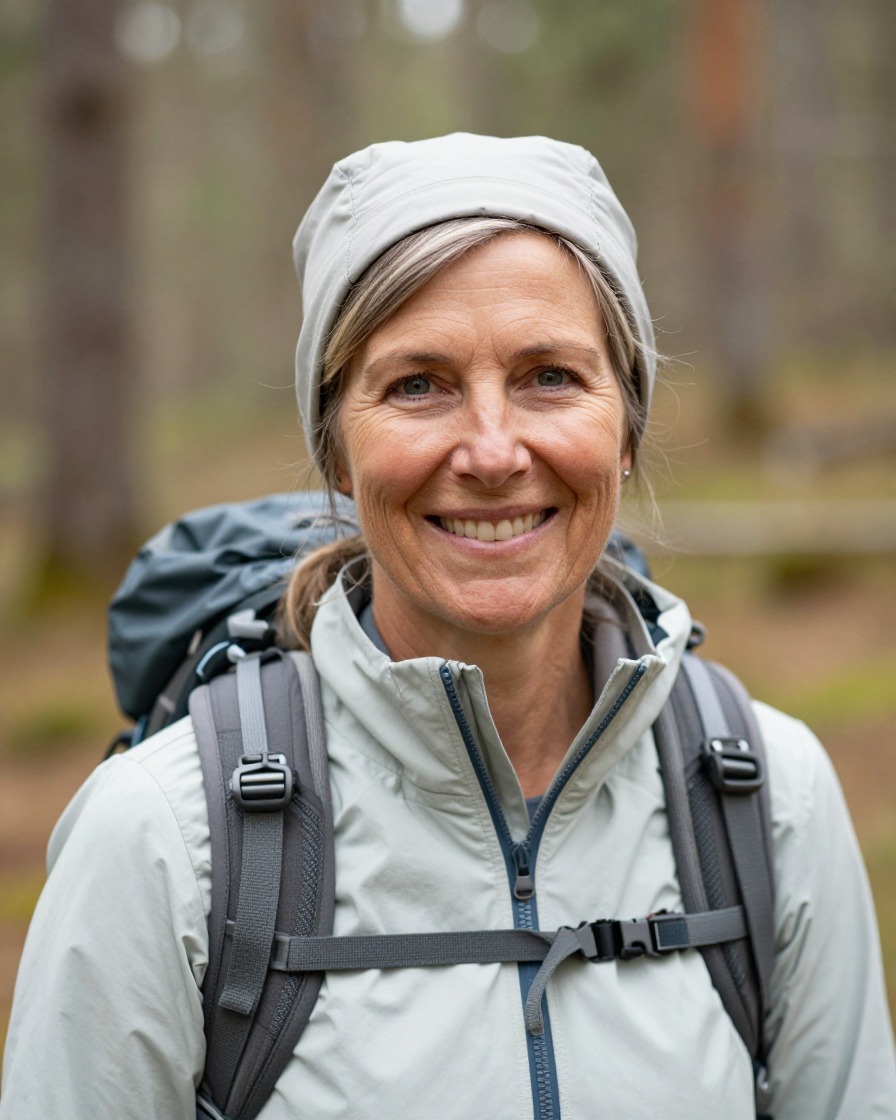
Priya Anand is the Senior Backpacking Gear Writer at Hiking Backpack Hub, focused on women’s-specific and ultralight packs, pack materials, and the fit details that make a load ride well. With eight-plus years of lightweight backpacking and hands-on time across frameless and women’s-fit packs, Priya works from published fabric and fit specs cross-checked against owner reviews to help readers carry less and fit better.
Priya Anand is the Senior Backpacking Gear Writer at Hiking Backpack Hub, where they own the coverage that most shoppers find hardest to navigate: women's-specific fit, ultralight and frameless packs, and the materials that decide how light a pack can go before it stops lasting. Their writing starts from a simple premise learned over years of lightweight backpacking — the best pack is the lightest one that still fits your body and carries your real load comfortably, and finding it is a fit problem before it is a gear problem.
Priya has been backpacking in a lightweight and ultralight style for more than eight years, carrying a three-season base weight under twelve pounds. That experience is the backbone of the site's ultralight guidance, which they are careful to keep honest. Going frameless or sub-two-pounds is not free: it trades load ceiling, structure and durability for weight saved, and it only works once a hiker's base weight is genuinely low. Priya writes those trade-offs plainly so readers reach for an ultralight pack when it fits their kit, not because a spec sheet made it sound aspirational.
A large part of Priya's work is fit, especially for bodies the industry has historically served worst. They have dialed in packs for hikers with short and long torsos, narrow shoulders and wider hips, and they explain what a women's-specific fit actually changes — a shorter torso range, contoured shoulder straps set closer together, and a hipbelt shaped for the pelvis rather than simply scaled down. Crucially, they frame women's-fit packs as a geometry, not a gendered rule: plenty of men with shorter torsos fit them better, and plenty of women fit unisex frames, and the site says so.
Materials are Priya's other specialty, because fabric is where weight and durability collide. They read the spec sheets most shoppers skip — denier ratings, coatings, and the various weights of Dyneema Composite Fabric — and translate them into what a hiker actually feels: which fabrics shrug off granite and which abrade, which resist water and which wet out, and why the lightest pack in a lineup is often the one you have to baby. That grounding lets the site compare a Dyneema ultralight pack and a burly Cordura workhorse on their real merits instead of on price alone.
Priya also handles the systems that turn a pack from a sack into organized, comfortable load: how to pack by zones so weight rides against the spine, how compression sacks and packing cubes earn or waste their place, how hydration reservoirs and bottle setups compare on the move, and how to attach the gear that will not fit inside without unbalancing the load. These are the details that separate a pack that carries well from an identical pack that does not, and they are where a lot of reader questions actually live.
On method, Priya is as transparent as the rest of the team. They evaluate packs from published fabric and fit specifications and manufacturer guidance, then cross-check those claims against the aggregated experience of owners who have carried the pack for a season or three — the reviews that surface a shoulder strap that chafes, a mesh pocket that blows out, or a fabric that delaminates. The site does not run destructive lab tests and never claims to; where Priya has used a pack themselves they say so, and where they have not, the documented evidence carries the weight.
Like everyone at Hiking Backpack Hub, Priya writes independently of what earns commission. Recommendations are not for sale, honest drawbacks are named, and a lighter or cheaper pack wins when it deserves to. What readers can expect from their guides is patient, specific help with the parts of pack-buying that are easy to get wrong — fit for a real body, weight that is worth the money, and materials that will still be intact at the end of the trail.
Priya's articles are reviewed for accuracy and clarity by Dana Okoro, Editorial Director. Our guides are general information, based on real trail use, published manufacturer specifications and aggregated owner reviews — not first-hand lab testing. See our editorial policy, team and about page.