
Hyperlite Mountain Gear Backpacks: Complete Guide
Comprehensive technical analysis of sizing, materials, installation requirements, and manufacturer standards for hyperlite mountain gear backpacks.

Recommended Products
See the full ranking →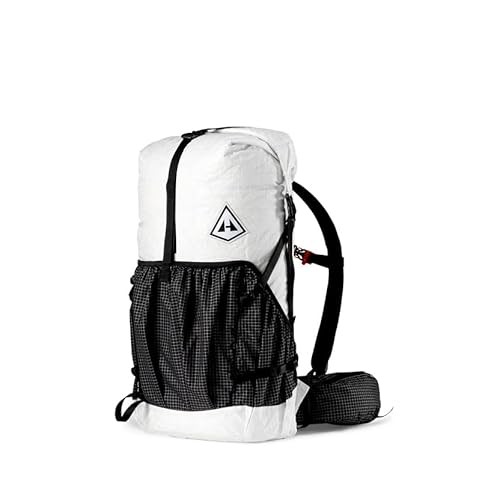


Hyperlite Mountain Gear is a hiking-backpack brand built around Dyneema Composite Fabric (DCF) construction, roll-top closures, and a minimalist suspension aimed at hikers who keep their pack weight low. The Maine-based company makes its packs in the United States and sells them mostly direct-to-consumer, a model shared by other cottage ultralight-gear makers. This hub reviews Hyperlite's core pack lines — Southwest, Windrider, and Junction — and explains how the brand's fit system, materials, and warranty compare to backpacks built on traditional aluminum frames and heavier nylon fabrics.
Hyperlite Mountain Gear is known for building backpacks from Dyneema Composite Fabric, a non-stretch, laminated material that sheds water and weighs a fraction of the nylon most backpacks use. The brand pairs DCF construction with roll-top main compartments, minimal frame hardware, and a design philosophy that treats every gram as a decision, not an afterthought.
DCF, formerly marketed as Cuben Fiber, is built from a grid of ultra-high-molecular-weight polyethylene fibers laminated between polyester film layers. It doesn't absorb water the way woven nylon does, so a Hyperlite pack's fabric stays close to its dry weight in rain. The trade-off is abrasion sensitivity: DCF holds up well against sustained UV exposure and moisture but can be more vulnerable to sharp punctures than heavier ripstop nylon, which is why Hyperlite reinforces high-wear zones like the pack bottom and shoulder-strap attachment points with denier-heavier fabric patches.
The roll-top closure is the other signature. Instead of a floating lid, zippers, or a drawcord-and-buckle top, the entire main compartment rolls down and clips shut, which removes hardware weight and creates a closure that sheds rain without a separate pack cover. Rolling the top down fewer or more times also lets the same pack compress for a half-full load or expand past its stated liter volume for a food-heavy resupply carry. This construction and closure system is why Hyperlite packs show up disproportionately often among thru-hikers on the Pacific Crest Trail, Appalachian Trail, and Continental Divide Trail, where cumulative pack weight matters over thousands of miles.
Hyperlite Mountain Gear packs fit through a lightweight suspension built around a removable aluminum stay and a thin, contoured foam back panel, rather than the rigid perimeter frame and thickly padded hipbelt found on traditional backpacks. The system transfers load efficiently at moderate pack weights but depends on the hiker sizing the pack correctly and keeping the total carried load within the suspension's intended range.
Because the frame is minimal by design, fit precision matters more on a Hyperlite pack than on a heavily padded competitor. Hyperlite sizes its packs by torso length, so measuring your own torso — the distance from the C7 vertebra at the base of your neck to the iliac crest at your hips — before buying is the difference between a pack that rides on your hips correctly and one that doesn't. As with any well-fitted backpack, the hipbelt should carry roughly 80% of the load, with the shoulder straps stabilizing rather than bearing weight; on a minimal-frame pack like Hyperlite's, getting that hipbelt-to-hip contact right matters even more because there's less padding to compensate for a poor size match. The foam back panel doubles as a sit pad on some models, one more place the brand trims weight by making a single piece of gear do two jobs. Hyperlite generally recommends keeping total pack weight, including food and water, within a load range suited to its suspension — these packs are built for hikers running lighter overall kits, not for hauling expedition-heavy loads.
The right Hyperlite Mountain Gear pack depends on how you want to access gear on trail and how much structure you need. The Southwest and Windrider share the same core volume and suspension but differ in pocket fabric, while the Junction adds a more structured back panel and additional organization for hikers who want more support without leaving Hyperlite's ultralight range.
| Pack | Pocket style | Best suited to |
|---|---|---|
| Southwest | Solid, opaque exterior pockets | Off-trail travel, bushwhacking, keeping gear contents hidden and protected from snags |
| Windrider | Mesh exterior pockets | Fast-drying wet gear storage, quick visual ID of contents, warm-weather trail use |
| Junction | Solid pockets plus added framesheet structure | Hikers who want more back support and organization while staying in DCF |
All three lines use the same roll-top main compartment and DCF-based construction, so the decision mostly comes down to whether you want mesh or solid side and front pockets, and whether you want the added structure the Junction's framesheet provides. Hikers moving through dense brush or scrambling terrain often prefer the Southwest's solid pockets, since mesh can snag and tear on branches. Hikers who prioritize drying out wet gear quickly, or who like being able to see pocket contents at a glance, often prefer the Windrider.
Hyperlite Mountain Gear backs its packs with a warranty against manufacturing defects and offers repair services for gear that's seen hard trail use, consistent with the direct-to-consumer support model common among cottage ultralight brands. Because Hyperlite sells primarily through its own site rather than a wide retail network, warranty claims and repairs are centralized with the company that built the pack.
Based on published specs and trail use, DCF packs generally hold their shape and dry weight better over time than nylon packs, since the laminate doesn't stretch or sag the way woven fabric can. Owners should still expect to handle the fabric with some care around sharp rocks, crampon points, and dense brush, and to use the reinforced high-wear panels as intended rather than dragging the pack over abrasive surfaces. Hyperlite's repair program exists in part because DCF is a repairable material — a punctured panel can typically be patched rather than requiring a full pack replacement.
Go Deeper
Detailed companion guides for hyperlite mountain gear backpacks.
Best Hyperlite Mountain Gear Backpacks
Buyer's guide: best hyperlite mountain gear backpack.
Hyperlite Southwest 55 Review
An honest look at the Hyperlite Southwest 55: its Dyneema Composite Fabric build, roll-top design, torso-based fit, and how it compares to the Windrider 55.
Gossamer Gear Backpacks
Related brands & model reviews guide.
ULA & Zpacks (Cottage UL)
Related brands & model reviews guide.