



What is the Hyperlite Southwest 55?
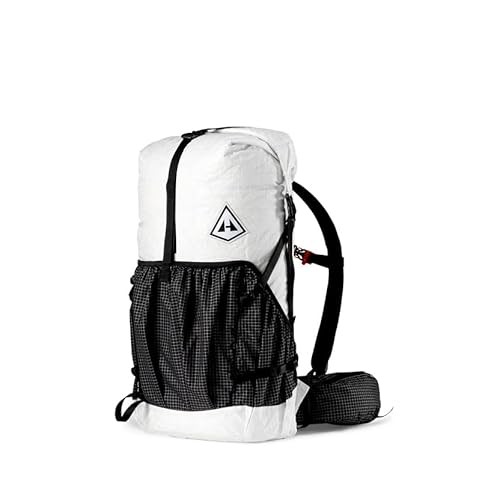
The Hyperlite Southwest 55 is a roughly 55-liter backpack built from Dyneema Composite Fabric with a roll-top main compartment and solid, opaque exterior pockets. It's sized for multi-day and thru-hiking trips and uses Hyperlite's lightweight suspension of a removable aluminum stay paired with a contoured foam back panel instead of a traditional internal frame.
The main compartment rolls shut rather than closing with a zipper or floating lid, which keeps the top weatherproof and lets the pack compress down for a lighter load or expand for a bulky food carry after a resupply. A front pocket and side pockets, all solid fabric rather than mesh, hold items you want quick access to without opening the main compartment — a rain jacket, water filter, or snacks. Hipbelt pockets, side compression straps, and an ice-axe loop round out the external organization. Like other Hyperlite packs, the Southwest 55 is sized by torso length, so getting your own torso measurement right before buying matters more than it would on a pack with a fully adjustable frame. The removable foam back panel also serves as a sit pad on breaks, one more example of the pack doing double duty to keep overall gear weight down.
How does the Southwest 55 compare to the Windrider 55?
The Southwest 55 and Windrider 55 share the same DCF construction, roll-top closure, volume, and suspension; the difference is pocket fabric. Windrider uses mesh side and front pockets, while Southwest uses solid fabric pockets that hide contents and resist snagging on brush.
Mesh pockets on the Windrider dry out faster after rain or stream crossings and let you see what's inside at a glance, which some hikers prefer for wet gear like a rain jacket or water bottles. Solid pockets on the Southwest hold up better when you're bushwhacking or moving through dense scrub, since there's no mesh to tear, and they keep gear contents out of sight. Neither pocket style changes the pack's core carrying capacity or frame, so the choice comes down to the terrain and climate you hike in most.
Who is the Southwest 55 best for?
The Southwest 55 suits thru-hikers and multi-day backpackers running a lighter overall kit who want a durable, weatherproof pack without the weight of a traditional framed backpack. It's a common choice among hikers on long-distance trails like the Pacific Crest Trail, Appalachian Trail, and Continental Divide Trail, where cumulative pack weight matters over months on trail.
It also fits hikers who spend time off established trails, since the solid pockets resist tearing on branches and brush better than mesh alternatives. Because the suspension is minimal by design, the Southwest 55 is best matched to hikers who have already dialed in a lighter base weight rather than those carrying heavy camera gear, bulky winter equipment, or other load-heavy kit.
What are the trade-offs of the Southwest 55?
The main trade-offs are load capacity and fabric durability. The minimal aluminum-stay-and-foam suspension carries lighter loads comfortably but doesn't offer the same support as a rigid frame once total pack weight climbs, so heavier loads can feel less stable than they would in a traditionally framed 55-liter pack.
DCF is also more sensitive to punctures than heavier ripstop nylon, even though it resists water and holds its shape well over time. Hikers who regularly scramble over sharp rock or bushwhack through thorny brush should expect to handle the fabric with more care than they would with a nylon pack, and to rely on Hyperlite's repair program if a panel does get punctured. The solid pockets that make the Southwest 55 durable off-trail also mean wet gear stored in them dries more slowly than it would in the Windrider's mesh pockets.