
Best Dyneema Backpack
Best Dyneema Backpack, ranked from aggregated owner ratings and reviews, not first-hand testing. Real pros, cons, and who each pick is best for.

Our Top 3 Picks
Quick Comparison
| Product | Best for | Buy | |
|---|---|---|---|
| Telomat 3F UL GEAR 30L+10L UHMWPE Ultralight Waterproof Hiking Backpack | Top Overall Pick | See Amazon | View |
| 3F UL GEAR Tutor 30‑40L Ultralight Dyneema Internal Frame Hiking Backpac | Best Value | See Amazon | View |
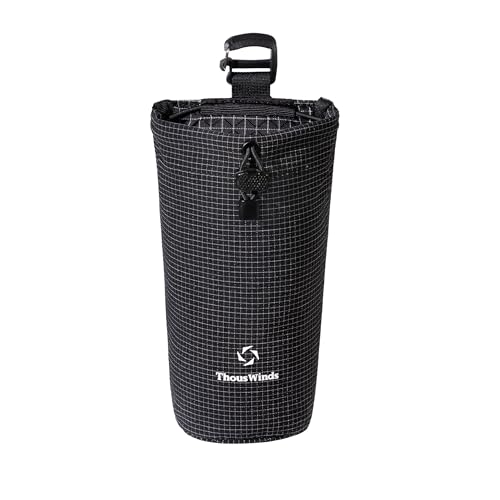
| Thous Winds Backpack Shoulder Strap Pouch 36g Ultralight Dyneema Fabric | Best Ultralight | See Amazon | View |
| 3F UL Gear QiDian Pro Frameless Ultralight Backpack for Men | Most Breathable | See Amazon | View |
Choosing the best Dyneema backpack means understanding what the fabric changes about a pack — weight, water behavior, and puncture tolerance — rather than assuming every DCF pack performs identically just because it shares a fabric name.
What does Dyneema Composite Fabric actually add to a pack?
DCF cuts pack weight substantially compared to an equivalent-capacity nylon pack, because the laminate carries load in straight fiber lines instead of a woven interlace and the UHMWPE fiber itself doesn't absorb water, so the pack doesn't gain weight in rain the way nylon can. That weight and water advantage is the entire reason to choose DCF over nylon or Cordura — it doesn't add durability in every sense, just a specific kind of it (tear and stretch resistance along the fiber grid), while trading away some resistance to sharp punctures and scuffing that a tightly woven nylon handles more gracefully.
Laminate DCF vs. hybrid woven-Dyneema fabrics
Some packs use pure laminate DCF (fiber grid between polyester films) throughout the body, while newer designs use a hybrid fabric — a woven Dyneema-fiber grid bonded to a nylon or polyester face fabric, sold under names like Ultra. The hybrid approach adds a small amount of weight back but improves sewability and gives the pack a more conventional, puncture-tolerant face than pure laminate DCF. Neither approach is strictly better; a pure-laminate pack is lighter, a hybrid-fabric pack tends to handle abrasion and repeated flexing at seams slightly better over years of use. Check which construction a specific model uses rather than assuming "Dyneema" means the same build across brands.
How much does seam sealing matter?
Seam sealing matters more on a DCF pack than on a nylon pack, because the fabric itself doesn't absorb water — so if water gets in anywhere, it's almost always through a seam, zipper, or closure rather than the panel itself. Taped or welded seams on the main compartment meaningfully improve water resistance over simple stitched seams, which is a detail worth checking on the specific model rather than assuming all DCF packs seal the same way. A roll-top closure, standard on most DCF packs, needs several full rolls to seal well against driving rain; a couple of loose rolls leaves a gap.
Who should choose a DCF pack over nylon or Cordura?
A DCF pack suits hikers already minimizing base weight elsewhere in their kit — typically thru-hikers, fastpackers, and ounce-counting weekend backpackers — who are willing to pay a premium for the weight savings and handle the pack carefully around sharp rock, thorny brush, and pack-frame friction points that can puncture the fabric. A hiker who regularly bushwhacks off-trail, scrambles over talus with the pack scraping rock, or wants one durable pack that tolerates rough handling without much thought is usually better served by Cordura or a heavier nylon, since the weight savings matter less than the durability trade-off in that use case.
What should you check before buying?
Compare these points across specific DCF models before deciding:
- Fabric construction — pure laminate DCF vs. a hybrid woven-Dyneema face fabric
- Seam treatment — taped/welded seams vs. standard stitched seams
- Closure style — roll-top, buckle-and-drawcord, or a hybrid with a zippered lid
- Frame type — most DCF packs are frameless or single-stay, so check the stated max comfortable load against your typical pack weight
- Denier of the face fabric — higher-denier hybrid fabrics trade a little weight for more scuff resistance on the panels that contact rock most often
Full Ranking, Reviewed

Best for Dyneema (DCF) backpacks
- 10–30 L capacity
- Ventilated back panel
- Ultra-Lightweight & Portable Design
- Airflow channels help your back stay cooler under load
- Low carry weight pays off on big-mileage days
- Check the size and colour options on the live listing, as availability shifts.
Verdict: This 10–30 L hiking pack offers a breathable back, making it the one we would grab first for Dyneema (DCF) Backpacks.

Best for Dyneema (DCF) backpacks
- 25–40 L capacity
- Nylon shell
- 24 oz empty
- Ventilated back panel
- Ventilated back panel cuts sweat on long climbs
- Padded hip belt shifts load onto your hips, not your shoulders
- Light enough that you forget you are wearing it
- Colours and exact capacity options change often on Amazon — confirm the current variant on the listing before buying.
Verdict: This 25–40 L hiking pack pairs a breathable back with real hip-belt support, making it well worth a look for Dyneema (DCF) Backpacks.
Best for Dyneema (DCF) backpacks
- Nylon shell
- Padded hip belt
- Compact size smart capacity
- Supportive hip belt takes weight off the shoulders
- Low carry weight pays off on big-mileage days
- Check the size and colour options on the live listing, as availability shifts.
Verdict: This hiking pack offers real hip-belt support, making it an easy shortlist pick for Dyneema (DCF) Backpacks.

Best for Dyneema (DCF) backpacks
- 10–56 L capacity
- 210D nylon shell
- 31 oz empty
- Ventilated back panel
- Breathable mesh back keeps air moving against your spine
- Supportive hip belt takes weight off the shoulders
- Low carry weight pays off on big-mileage days
- The 10–56 L size is a versatile in-betweener rather than a specialist at either end.
- The fabric is water-resistant rather than fully waterproof, so a pack liner helps in sustained rain.
Verdict: This 10–56 L hiking pack pairs a breathable back with real hip-belt support, making it well worth a look for Dyneema (DCF) Backpacks.
Frequently Asked Questions
Is a Dyneema backpack worth the extra cost?
It depends on how much you value the weight savings. Ounce-counting thru-hikers and fastpackers with a low base weight see the most benefit; a weekend hiker who isn't optimizing pack weight elsewhere often gets more practical value from a nylon or Cordura pack at a lower price.
Do Dyneema backpacks need a pack liner too?
Yes, generally. DCF's fabric doesn't absorb water, but standard zippers and imperfectly sealed seams still let water in during sustained rain, so most experienced DCF-pack users still carry a liner for guaranteed dry gear inside the main compartment.
How do you avoid puncturing a DCF pack?
Avoid setting the pack down on sharp rock or letting it drag against jagged edges while scrambling, and be mindful around crampon points, trekking-pole tips, and pack-frame stays that can press into the fabric under load. Most punctures happen from a single sharp contact point, not general wear.