

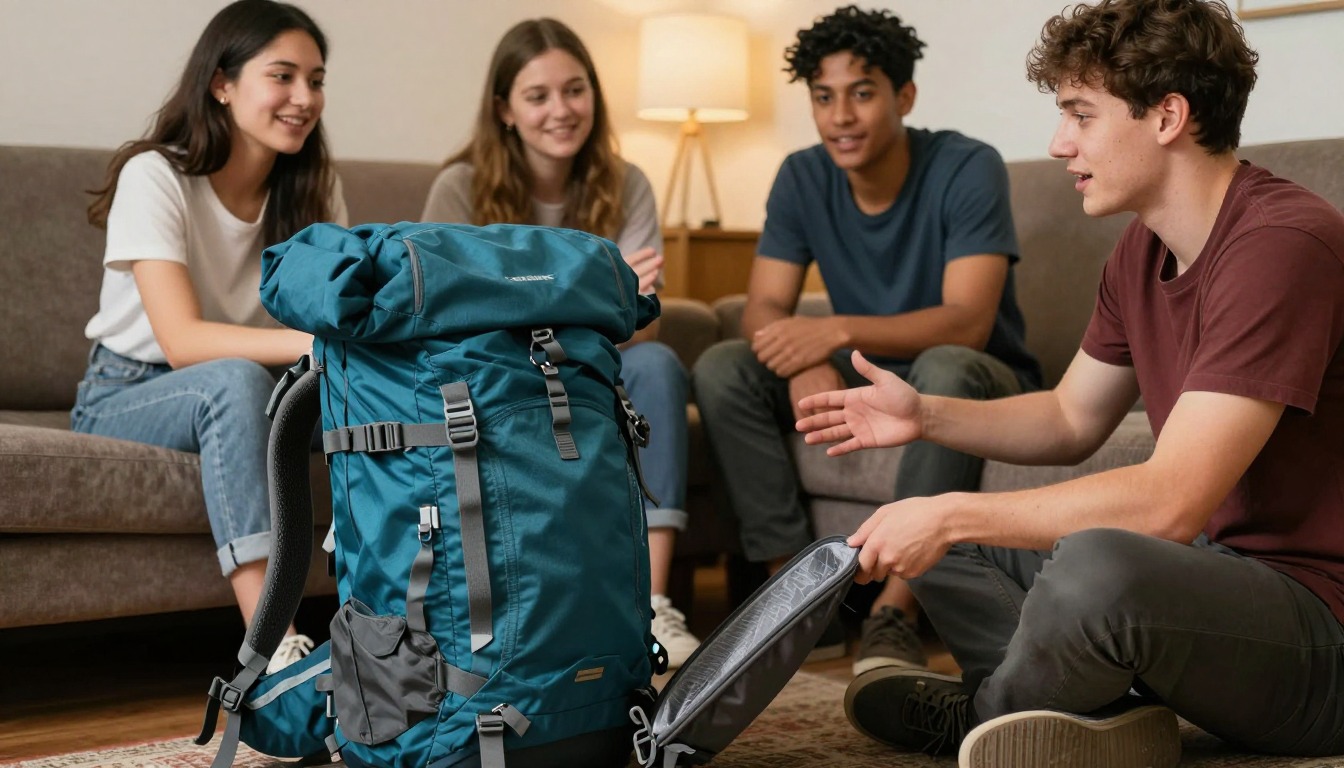


A roll-top closure replaces the zipper or drawstring found on most backpacks with a simple length of extra fabric at the top of the main compartment. To close it, a hiker folds that fabric down over itself two or more times, then clips the sides shut with side-release buckles — the same basic mechanism used on dry bags for kayaking and rafting.
How rolling affects volume and sealing
A roll-top's volume adjusts to the load: a partially full pack rolls down further and closes lower on the body, while a full pack rolls the minimum needed for a secure seal, typically three full rolls. More rolls mean a tighter, more water-resistant seal, since each fold adds another layer the water has to work past. That adjustability lets one pack size handle a range of load sizes without the sagging, half-empty look a fixed-volume top can have.
Roll-top vs a zippered top
| Feature | Roll-top | Zippered top (panel-load or top-load with a top zip) |
|---|---|---|
| Weight | Lighter — no zipper, tape, or hardware | Heavier — zipper, backing tape, sometimes a storm flap |
| Water resistance | Very high when rolled 3+ times | Moderate; zipper is a weak point even when coated |
| Access speed | Slower — must unroll and re-roll | Faster — unzip and reach in |
| Volume flexibility | High — rolls down to match load size | Fixed by the compartment's built dimensions |
Who uses roll-top packs
Roll-tops are most common on ultralight backpacking packs, packable daypacks, and packs marketed for wet-weather or water-adjacent trips like kayak approaches and rainy coastal trails. Brands including Granite Gear, Hyperlite Mountain Gear, and Gossamer Gear build roll-tops into several of their core packs specifically to cut the weight a zipper or floating lid would add. The trade-off is that roll-tops typically skip the small top-lid pocket found on traditional top-loaders, so hikers who want a dedicated spot for frequently needed items usually rely on a front stretch-mesh pocket or hipbelt pockets instead.
Is a roll-top waterproof?
A roll-top is highly water-resistant when rolled the recommended number of times, but it isn't fully waterproof unless the fabric itself is a taped, seam-sealed material like the kind used on true dry bags. Most hiking-pack roll-tops use a coated but not fully seam-sealed fabric, so they resist splashes, rain, and brief submersion far better than a zippered top but shouldn't be treated as a guaranteed dry compartment for a full water crossing.