
Best Backpack For Rainy Hikes
Best Backpack For Rainy Hikes, ranked from aggregated owner ratings and reviews, not first-hand testing. Real pros, cons, and who each pick is best for.

Affiliate disclosure: this page contains affiliate links. Purchases made through them may earn us a commission at no extra cost to you. See our affiliate disclosure.
In plain English
Most hiking backpacks are water-resistant, not waterproof. That means they shed a light shower, but in a long, steady rain the water slowly finds its way in. It usually leaks through the stitching and the zippers, not straight through the cloth.
The simplest fix is a waterproof bag inside your backpack, like putting your clothes in a plastic bin inside a cardboard box. Even if the box gets soaked, the bin keeps things dry. A rain cover is different: it is a stretchy shower cap that goes over the outside of the pack. It helps, but wind can blow it around and the side against your back stays uncovered.
Staying dry is not only about comfort. Being wet and cold for hours can make your body temperature drop to a dangerous level, even when it is not freezing outside. That is why the warm clothes in your pack should always be kept in the driest spot.
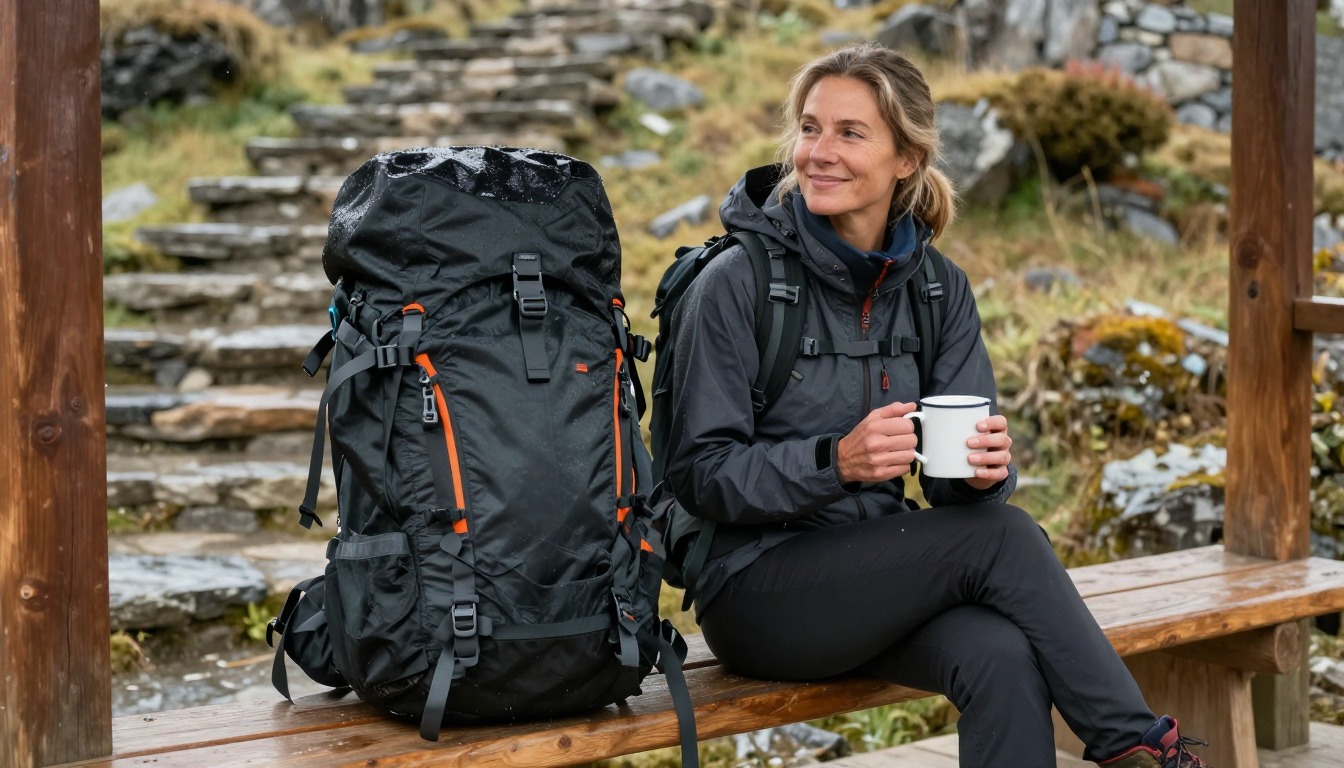
Our Top 3 Picks
Quick Comparison
| Shell | Extras | Buy | ||||
|---|---|---|---|---|---|---|
| 1 | Earth Pak Waterproof BackpackTop Overall Pick | — | — | — | — | View |
| 2 | Exped Typhoon 25 Liter BackpackBest Value | 25 L | — | 210D ripstop nylon | — | View |
| 3 | Dare 2b Mens Ardus Tarpaulin Waterproof Backpack 30 litresAlso Great | 30 L | — | Polyester | — | View |
| 4 | CAQYPVH Waterproof Backpack Dry Bag Rucksack Daypack With And ErgonomicSolid Alternative | 25 L | — | — | — | View |
What actually keeps gear dry in a rainy-climate pack?
An internal pack liner or an external rain cover — not the pack's outer fabric — is what actually keeps gear dry in sustained rain, since even DWR-treated nylon or polyester eventually wets out once rain lasts more than an hour or two. Coated fabric slows water absorption; it doesn't stop it indefinitely.
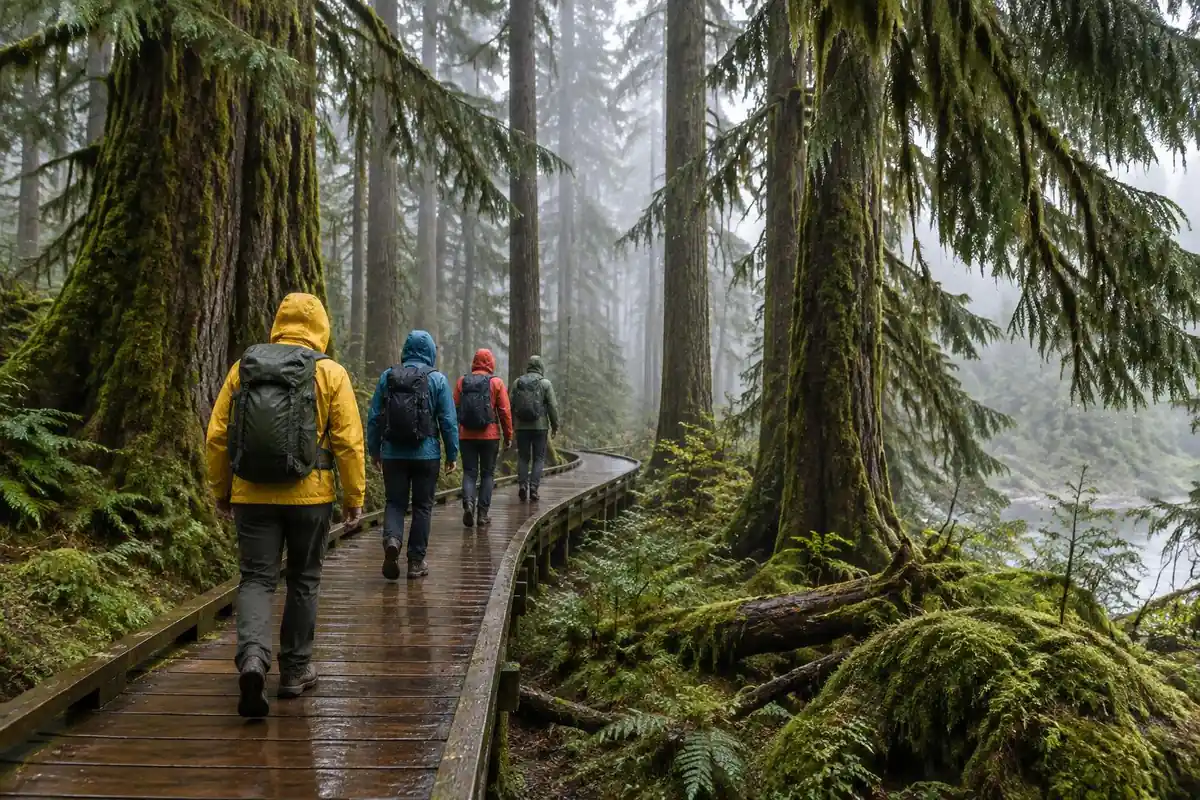
A liner, most simply a heavy-duty bag lined inside the main compartment before gear goes in, protects contents even after the outer shell soaks through completely. An external rain cover stretched over the outside of the pack adds a second line of defense and keeps the fabric itself from absorbing as much water, but it typically leaves the back panel uncovered, since that section rests against the hiker. Many experienced rainy-climate hikers run both together: a liner for guaranteed dryness, a cover to keep the pack itself lighter and cleaner in a multi-day downpour.
How much does zipper and closure design matter in wet conditions?
Zipper and closure design matters as much as fabric choice in wet conditions, since most water intrusion on a rain-soaked pack happens at seams and zipper teeth rather than through the fabric itself. A water-resistant coil zipper with a storm flap, or a roll-top closure on the main compartment, both reduce how much water gets past the closure compared with a standard uncoated zipper.
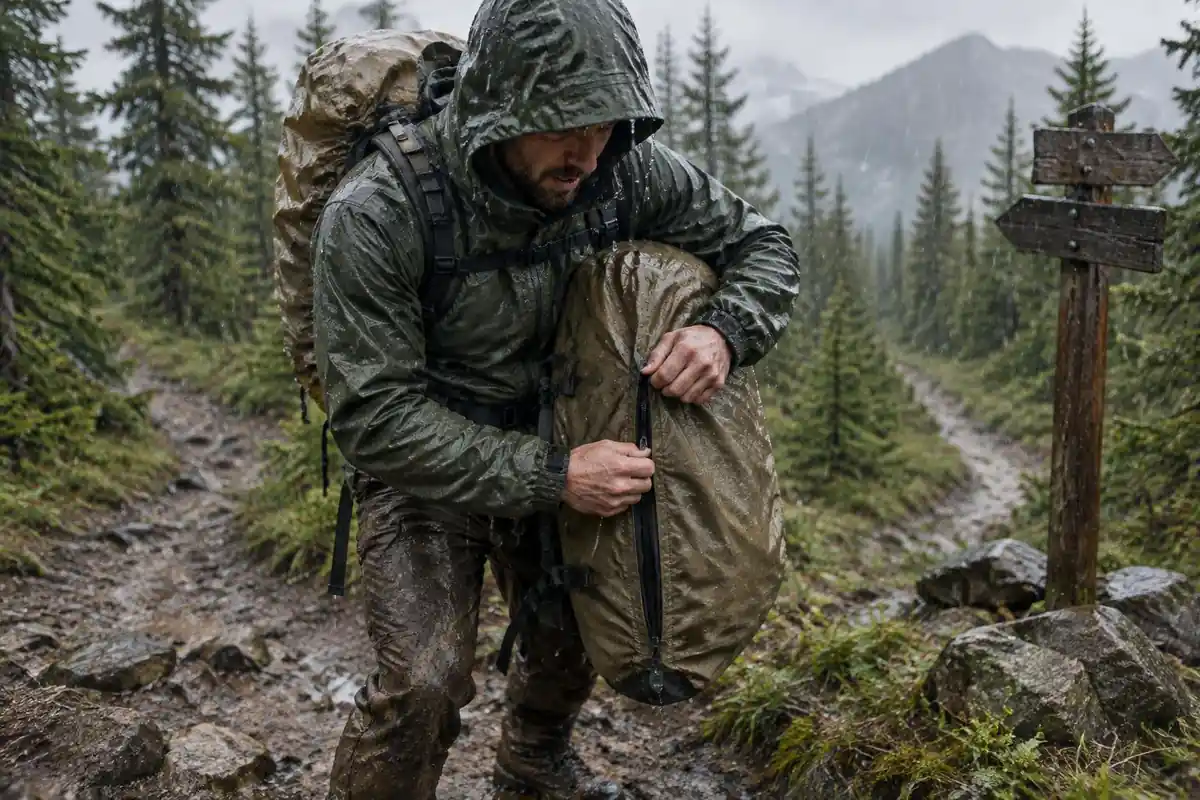
- Roll-top main compartments seal by folding and buckling rather than zipping, which shrugs off rain better than any zipper design
- Storm-flap-covered zippers add a fabric flap over the zipper track that sheds direct rain before it reaches the teeth
- Welded or taped seams at major stress points reduce pinhole leaks that develop on stitched-only seams over repeated wet trips
- Zippered pockets with a top-loading orientation collect less standing water than side-loading pockets in sustained downpours
Should a rainy-climate pack prioritize ventilation or water resistance in the back panel?
A rainy-climate pack should lean toward a closed-cell foam back panel over an open suspended-mesh panel, since foam sheds water better in sustained rain even though it sacrifices some of the airflow a mesh panel gives in dry heat. This is the direct opposite trade-off from a summer desert setup, where ventilation usually wins.
Humid, rainy climates often mean a hiker sweats even in cool, wet conditions because of high ambient moisture, so a foam panel with some drainage channeling — rather than a flat, sealed panel — offers a middle ground: less standing water than open mesh, but not fully airtight against the back either.
Who does a rainy-climate setup suit, and who can skip it?
A dedicated rainy-climate setup suits hikers doing multi-day trips in consistently wet regions, where rain is a near-daily occurrence rather than an occasional afternoon shower. A day hiker checking a forecast with a low rain chance can usually get by with a basic external cover and skip a dedicated liner system, since gear is only exposed for a few hours at most.
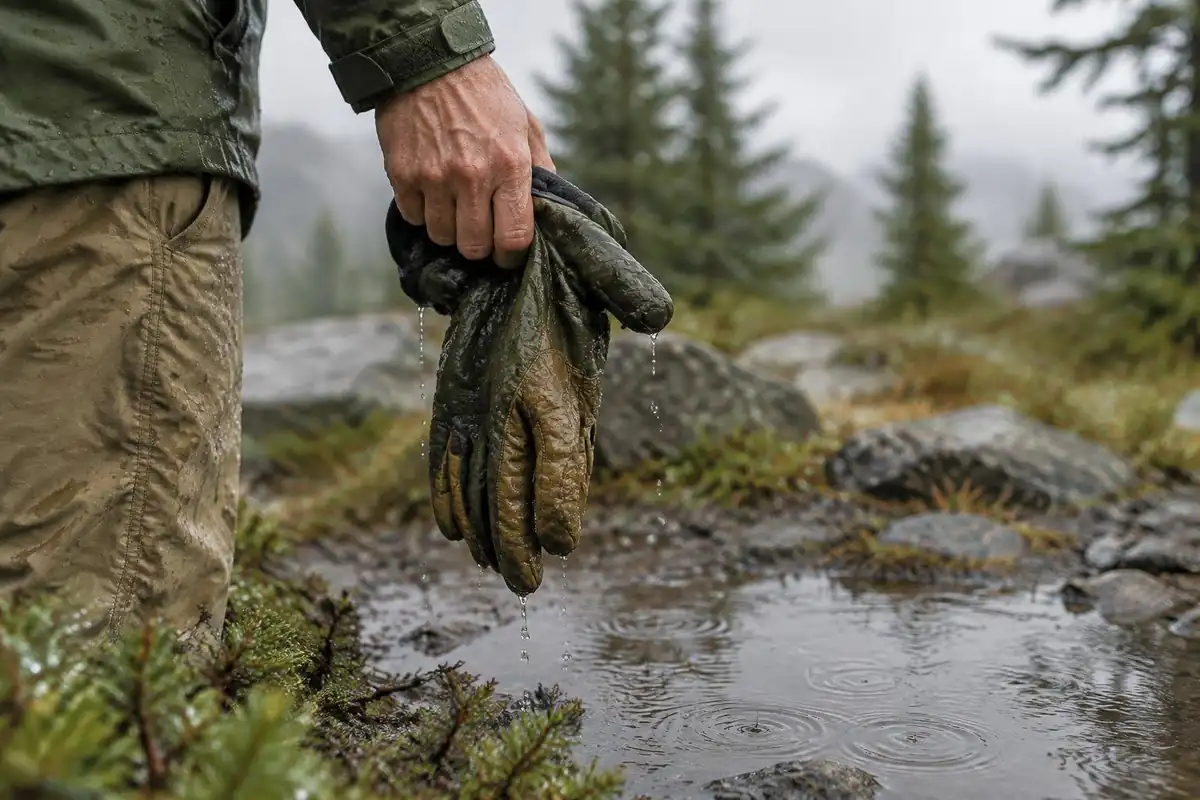
Multi-day hikers in wet climates face a different math: gear that gets wet on day one often stays wet for the rest of the trip, since there's rarely a dry, sunny stretch long enough to re-dry a sleeping bag or insulated layer on trail. That's why an internal liner — cheap, simple, and close to failure-proof — is the higher-value choice for anyone spending consecutive days in a rainy climate, even if it seems like overkill on a clear-forecast day.
Full Ranking, Reviewed

Best for Backpacks for Rainy Hikes
- Complete Waterproof Protection
- Waterproof build keeps contents dry through real weather
- Easy To Use
- Colours and exact capacity options change often on Amazon — confirm the current variant on the listing before buying.
Verdict: This hiking pack keeps things refreshingly simple, making it our overall pick for Backpacks for Rainy Hikes.

Best for Backpacks for Rainy Hikes
- 25 L capacity
- 210D ripstop nylon shell
- Two ways to close it
- Ripstop fabric shrugs off scrapes and snags on the trail
- Waterproof build keeps contents dry through real weather
- Check the size and colour options on the live listing, as availability shifts.
Verdict: This 25 L hiking pack offers a tough ripstop shell, making it a strong option for Backpacks for Rainy Hikes.

Best for Backpacks for Rainy Hikes
- 30 L capacity
- Polyester shell
- Heat sealed seams
- Waterproof build keeps contents dry through real weather
- Roll top closure with clip fastening
- Colours and exact capacity options change often on Amazon — confirm the current variant on the listing before buying.
Verdict: This 30 L hiking pack keeps things refreshingly simple, making it an easy shortlist pick for Backpacks for Rainy Hikes.

Best for Backpacks for Rainy Hikes
- 25 L capacity
- Waterproof Function
- Waterproof build keeps contents dry through real weather
- Roll-Top Design
- Colours and exact capacity options change often on Amazon — confirm the current variant on the listing before buying.
Verdict: This 25 L hiking pack keeps things refreshingly simple, making it a strong option for Backpacks for Rainy Hikes.
What waterproof ratings do and don't tell you
Fabric waterproofing is measured as hydrostatic head: the height of a column of water a fabric can hold back before it leaks. Sea to Summit explains that if water breaks through at 1 meter, the rating is 1,000 mm.1 MSR describes the test as pressing a water column against fabric until three drops pass through.2 That is a fabric test. It says nothing about the stitching, zippers or the opening at the top, which is where a finished pack usually leaks.
The makers say so themselves. Deuter notes that even when fabric is waterproof, sustained downpours can let moisture through zippers and seams.3 REI says pack fabrics usually have a waterproof interior coating but water can still seep through seams and zippers.4 This is why a roll-top or welded-seam pack is a different category from a coated pack with a zippered lid, even if both list a waterproof fabric.
The page says DWR-treated fabric wets out once rain lasts more than an hour or two. The library has no source that puts a time on it, so read that as a general guide. Nikwax describes DWR as an invisible finish that makes water bead and roll off, and says ordinary laundry detergents leave a residue that attracts water.5 Deuter's field test is simple: drop water on the fabric, and if it soaks in instead of beading, the pack needs reproofing.3
Liner, dry bags or rain cover: matching the method to the trip
The two main approaches solve different problems. Deuter suggests dry bags inside the pack for alpine use, because they keep straps and attachment points free, and a rain cover for hiking packs.3 REI adds that waterproof stuff sacks inside the pack can work better than a cover in wind.4 A single large liner is quicker to pack; several smaller dry bags let you open one without exposing everything else in a downpour.
Which items go in the driest place matters more than the method. CDC says hypothermia can develop even above 40°F when a person is chilled by rain, sweat or cold water, and lists hikers among the people at higher risk.6 CDC's Yellow Book says the priority in cool conditions is staying dry by layering and changing out of damp clothing quickly.7 A dry warm layer and sleep clothes are the items to protect first. Wet feet are a separate problem: NIOSH says wet feet lose heat 25 times faster than dry feet, and trench foot can occur at temperatures as high as 60°F if feet stay wet.8
Drying and caring for a wet pack
Care after a wet trip affects how long the pack keeps shedding water. Gregory says to air dry packs away from heat and direct sunlight with zippered pockets open, and not to use a dryer, which can damage protective coatings.9 Nikwax says UV exposure destroys water repellency and reduces fabric tear strength, which is another reason to dry packs in shade.10
When a pack stops beading water, reproofing is the fix. Nikwax's instructions for its spray-on product are to clean the pack first, spray evenly onto clean, wet fabric, then air dry only, letting it dry fully before use or storage.10 Follow the pack maker's own cleaning advice first, since brands differ on whether a pack can be soaked or washed.
Frequently Asked Questions
Does a pack's waterproof rating mean gear inside stays dry in rain?
Not reliably. A water-resistant or DWR-coated fabric slows absorption but wets out under sustained rain, and seams and zippers leak regardless of the fabric's rating. An internal liner or external cover, not the fabric spec, is what actually protects gear inside.
Is an external rain cover or an internal liner better for wet climates?
Both address different problems. A liner guarantees dry contents even if the pack itself soaks through; a cover reduces how wet the pack gets but usually leaves the back panel exposed. Multi-day hikers in consistently wet climates often use both together.
Related Buying Guides
Planning a hiking trip? Compare hotels, lodges and guesthouses.
Book on Booking.com Book on AgodaAffiliate links: we may earn a commission at no extra cost to you.