By Priya Anand, Backpacking Gear Research Writer · Published September 14, 2026, 6:03 PM ET
Direct Answer
A 3-day hike (two nights on trail) typically needs 45 to 60 liters, covering base gear — shelter, sleeping bag, pad, stove — plus roughly 4.5 to 7.5 liters of food volume for the trip. Bulkier gear or a bear canister can push the same trip toward 60 to 65 liters.
Affiliate disclosure: this page contains affiliate links. Purchases made through them may earn us a commission at no extra cost to you. See our affiliate disclosure.
In plain English
A 3-day hike usually means two nights sleeping outdoors: you start walking one morning, camp twice, and walk out on the third day. Everything you need for those two nights rides on your back.
Backpack size is measured in liters, like a soda bottle. For a trip like this, most people use a pack between 45 and 60 liters, roughly the size of a carry-on suitcase or a bit bigger, shaped to fit your back. Most of the space goes to the things that keep you warm and dry at night: a tent, a sleeping bag and a pad to sleep on. Food for three days takes up surprisingly little room by comparison.
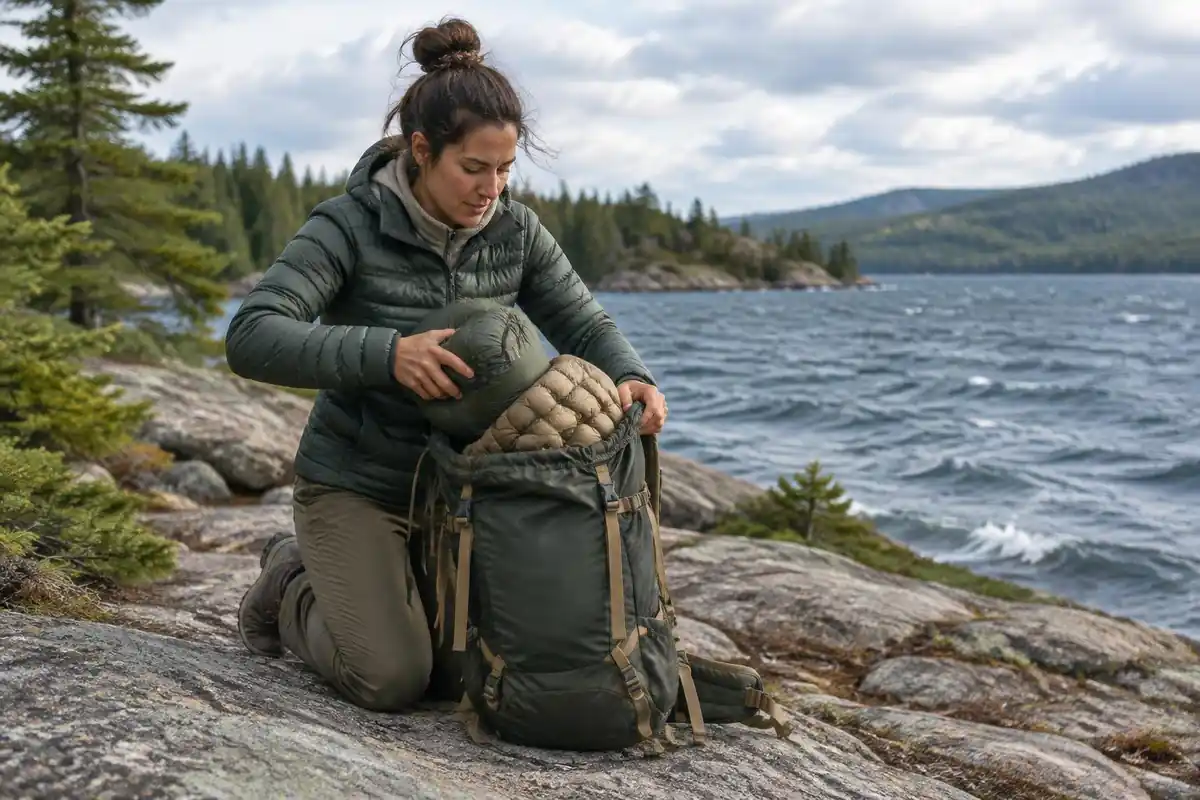
If you can, lay all your gear out on the floor first. It's much easier to choose a pack size when you can see how much stuff you actually have.
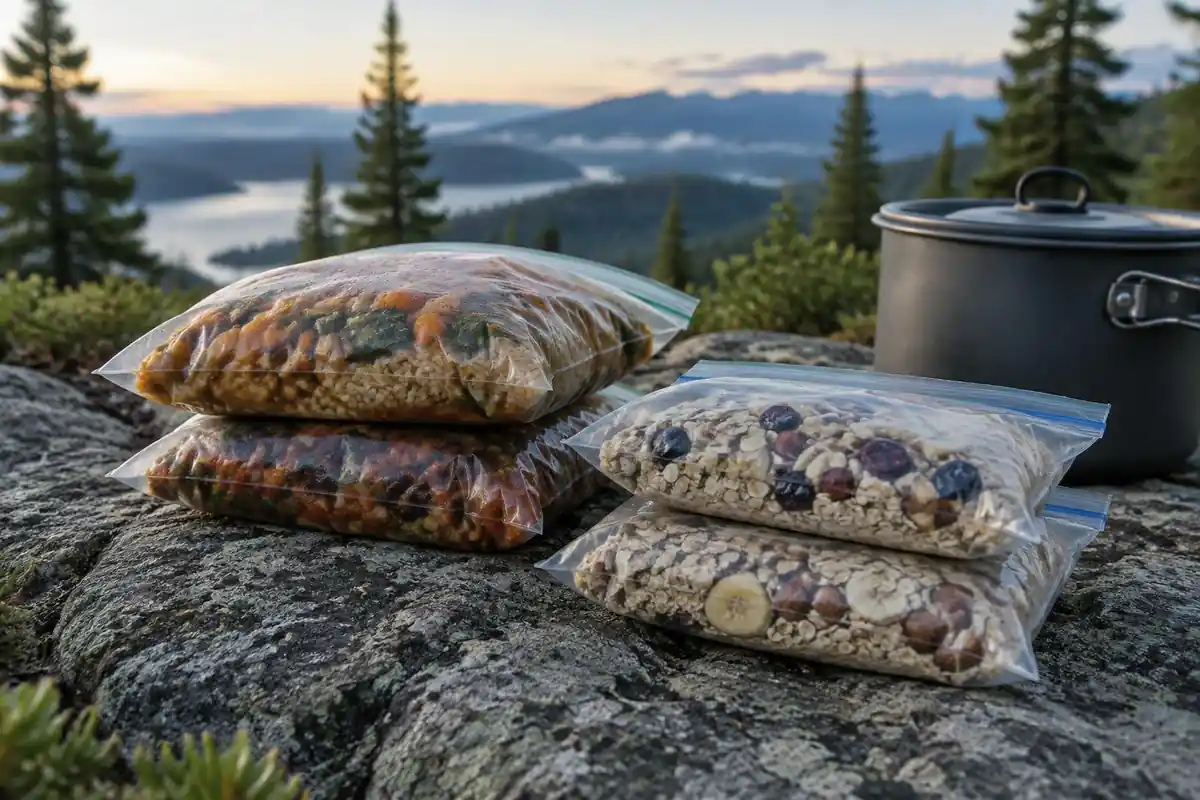
A 3-day hike, meaning two nights on trail, typically needs 45 to 60 liters of pack capacity. That covers the same base gear list any overnight trip carries — shelter, sleeping bag, pad, stove and cook kit — plus roughly 4.5 to 7.5 liters of food volume across the trip, using the common estimate of 1.5 to 2.5 liters of pack space per day of food.
This capacity sits between a one-night trip, which typically needs 30 to 50 liters, and a longer multi-day trek, which climbs past 55 liters. A 3-day hiker carrying a bulkier synthetic sleeping bag, a required bear canister, or extra cold-weather layers should plan toward the top of the 45-to-60-liter range rather than the bottom.
How does a 3-day hike compare to other trip lengths?
Trip length
Nights
Typical capacity
Overnight
1
30–50L
3-day hike
2
45–60L
5-day trek
4
55–65L
Week-long
6–7
65–75L
Hikers with a lighter, more compressible gear setup often fit a 3-day hike into the lower half of this range, closer to 45 liters, while a standard three-season kit with room to spare more often lands closer to 55 or 60 liters. Fit matters as much as raw liters here — a correctly sized pack in the 45-to-60-liter range will carry a 3-day load more comfortably than an oversized pack with the same rated capacity that's only half full.
How this range compares with other guidance
The page's 45 to 60 liters overlaps with, but runs a little higher than, the Washington Trails Association's guidance: a 45 to 50 liter pack should fit gear for a standard one- or two-night trip, and 50 to 70 liters suits 3 to 7 nights.1 The page's comparison table also puts an overnight at 30 to 50 liters, while WTA's one-to-two-night figure is 45 to 50. Both can be right; the lower numbers assume compact, lightweight gear.
Makers position similar sizes in different ways. Kelty describes its 65-liter Asher 65 as a pack for 2 to 3 days in the backcountry,2 while REI says its 55-liter Flash 55 is comfortable with loads up to 35 lbs.3 A two-night trip can reasonably go in either, which is why weighing and laying out your own gear tells you more than any table.
Water is the heaviest variable
On a short trip, food is a small share of pack volume, but water can dominate the weight. In Guadalupe Mountains National Park, the NPS says to carry one gallon of water per person per day, at about 8 pounds per gallon, which comes to about 24 pounds of water for a three-day, two-night trip.4 Where streams are reliable you can carry far less, but the CDC says even clear mountain water is generally not safe untreated,5 so leave room for a filter, chemical treatment or both.
Carrying all your water rather than refilling changes the pack you need. A liter of water weighs about one kilogram,6 so several extra liters call for a pack with a real frame and hip belt, even if its volume is modest. In dry country, check the pack's rated load against your gear, food and full water weight before you trust the liter number.
When a bear canister is part of the kit
Canister rules turn a soft food bag into a rigid block that doesn't compress. Rocky Mountain National Park requires a bear canister for all wilderness overnights and asks you to show it to get a permit.7 In New York's Eastern High Peaks Wilderness, overnight campers must use one from April 1 to November 30; typical canisters there are about 8 by 12 inches and hold up to five days of food for one person.8
For two nights, a small canister has room to spare, and that space is useful: bears treat scented items such as toiletries, sunscreen and trash as food, so they belong in the canister too.9 If the canister won't fit inside the pack, that's often the deciding reason to move from 45 liters toward the top of the range. Rules vary by park and change over time, so check current requirements before you go.