

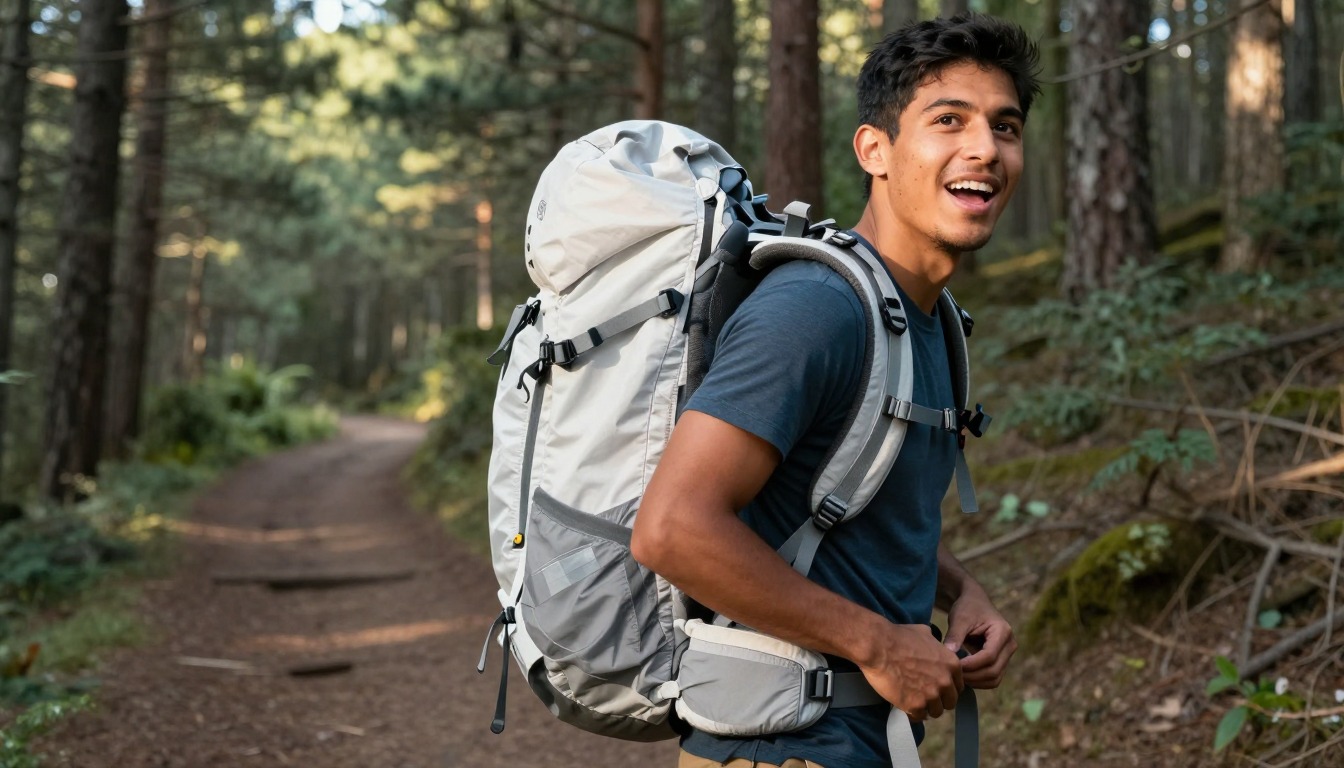


The baseline answer is the ten essentials plus trip-specific food and water: navigation, sun protection, insulation, illumination, first-aid supplies, fire, a repair kit, nutrition, hydration, and emergency shelter. These ten categories apply whether the hike is two hours or two weeks; only the specific items and quantities inside each category change.
Day hike vs overnight
A day hike needs the ten essentials plus enough water and snacks for the planned hours outdoors, all fitting a daypack under 25 liters. An overnight trip adds a tent or tarp, a sleeping bag and pad, and a stove with fuel, which usually moves the pack into the 35–55 liter range.
Packing by category
- Navigation and safety: map, compass, phone with offline maps, first-aid kit
- Hydration: bottles or reservoir, plus a filter for refills on longer routes
- Food: trail snacks, plus a packed meal for hikes over four hours
- Clothing: a rain shell or insulated layer, even when the forecast looks clear
- Tools: a headlamp, a knife or multi-tool, and basic repair tape
What not to over-pack
Duplicate tools, oversized first-aid kits, and "just in case" items outside the ten essentials add weight without adding safety margin. A second knife, a full-size first-aid kit built for a group, or a week of spare clothing for a one-night trip are common sources of unnecessary weight that don't improve safety.
Weighing gear before a trip and cross-checking it against a base-weight target, as described in pack weight and base weight, keeps the pack useful instead of just heavy. Packing everything into stuff sacks by category, rather than loose in the main compartment, also makes it obvious at a glance if something on the list got left behind.