

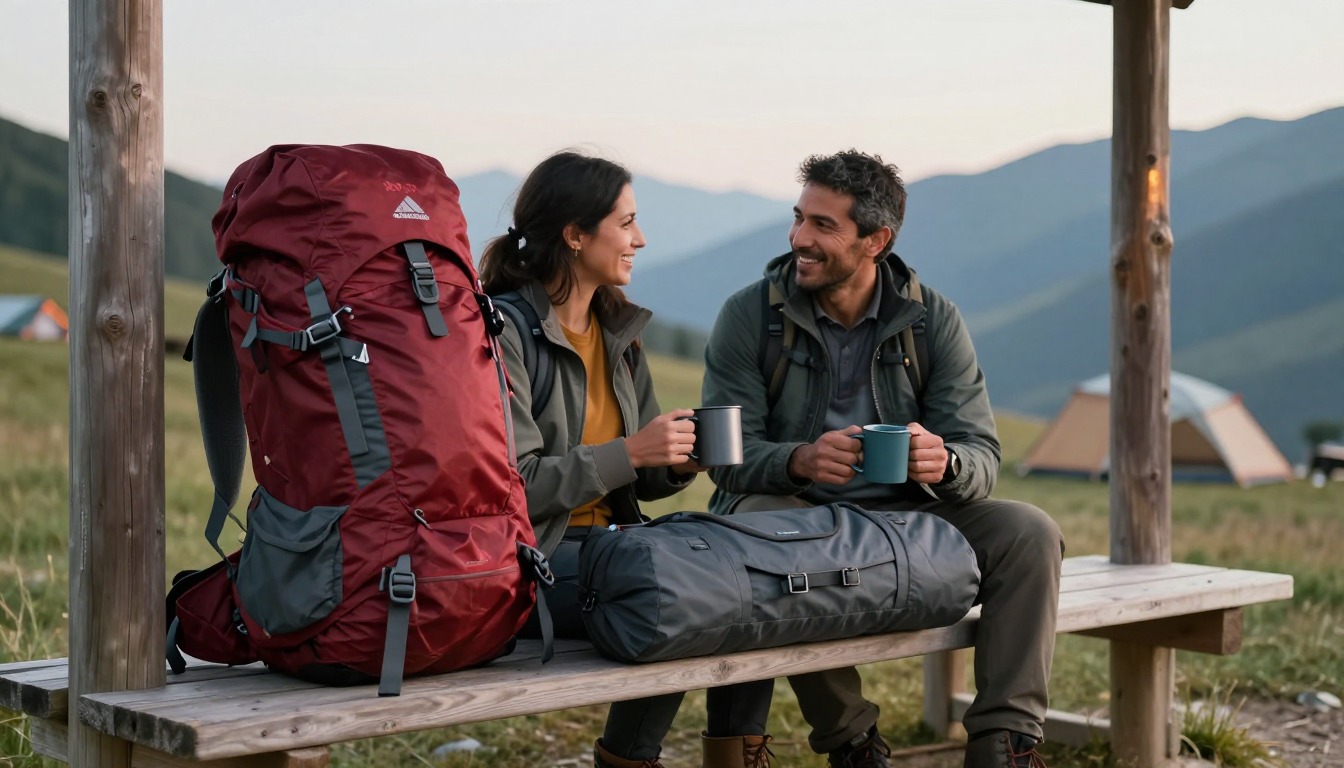


Start with the day-hike core, since none of it goes away on an overnight trip: navigation, sun protection, a first-aid kit, a repair kit, a headlamp, and enough water and food for the hours actually spent moving. The overnight-specific additions layer on top of that base.
What an overnight trip adds
| Category | Added gear |
|---|---|
| Shelter | Tent, tarp, or bivy, plus stakes and guylines |
| Sleep system | Sleeping bag or quilt rated for the expected low temperature, plus a pad |
| Cooking | Stove, fuel canister, pot, and a spork |
| Food | A full breakfast, lunch, dinner, and snacks for each day out |
| Clothing | A full layer change and clothing set kept dry for sleeping |
| Water | Extra carry capacity, plus a filter or purification tablets |
Sizing the pack
This gear typically needs a 35–55 liter pack for a one- to three-night trip, sized up toward 65 liters for colder conditions or longer food carries; see trip length and capacity for the fuller breakdown. A well-adjusted hipbelt is what makes the added weight manageable, since a correctly fitted belt carries the majority of a loaded pack's weight rather than the shoulders.
Weight target
Keep the fully loaded pack, including food, water, and fuel, under about 20% of bodyweight as a general ceiling. Trimming toward that number usually means cutting duplicate tools and oversized food margins rather than dropping a ten-essentials category.