

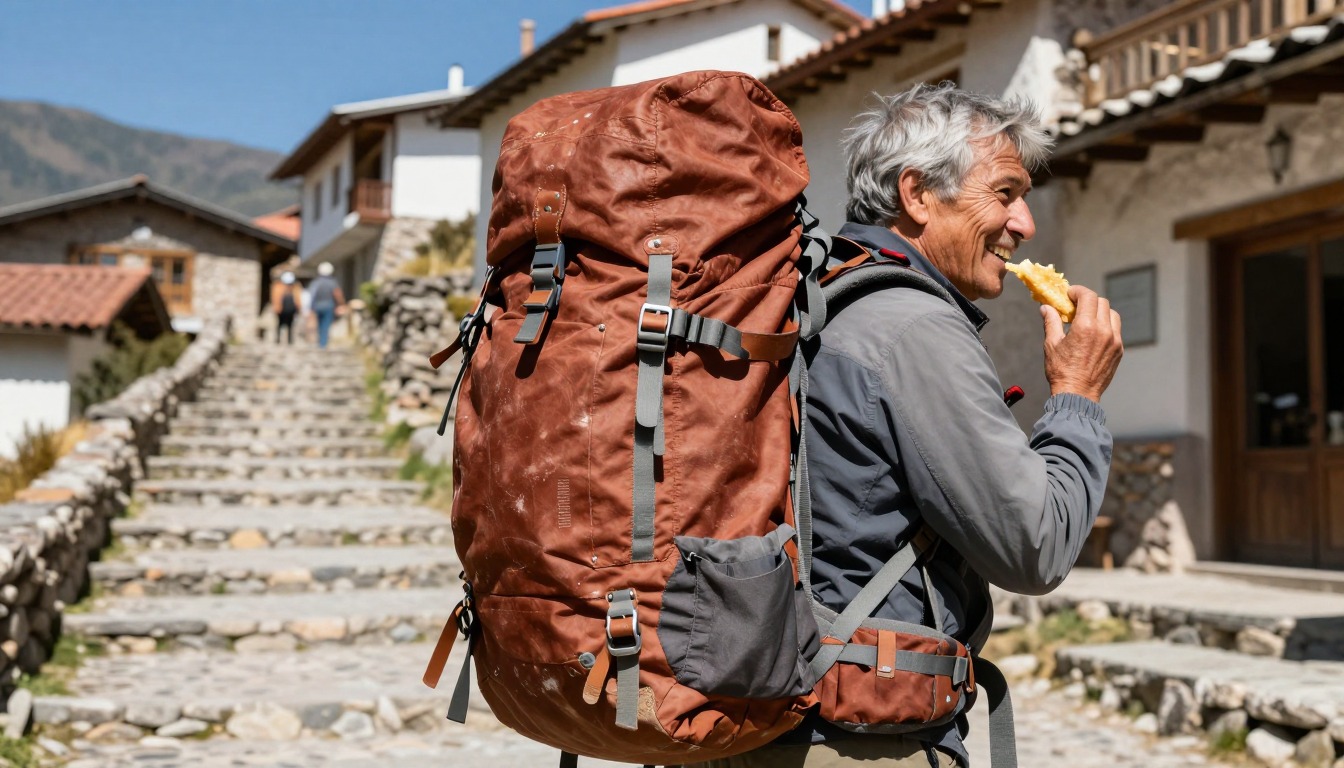


A week-long hike typically needs a 65- to 75-liter backpack, since a base gear list of shelter, sleeping bag, pad and cook kit gets combined with roughly six to seven days of food and fuel that has to fit alongside it. That range assumes a standard three-season kit; a bear canister, extra cold-weather layers or a bulkier sleeping bag push the same trip toward 75 to 80 liters instead.
Food is the biggest swing factor over a week. Budgeting roughly 1.5 to 2.5 liters of pack space per day of food means a full week adds 10 to 17.5 liters on top of base gear, which is why the same base kit that fits a weekend in 45 liters needs an extra 20 to 30 liters of capacity once it's carrying seven days of meals.
What affects where in the 65–75L range to land?
- Resupply plans: a mid-trip resupply lowers the food volume actually carried at any one time, letting some hikers use a smaller pack than a fully self-supported week would need
- Base weight: an experienced ultralight hiker can often complete the same week in 50 to 60 liters using more compressible, lighter individual items
- Season: winter and shoulder-season trips need extra insulation volume on top of the standard range
- Wildlife regulations: a required bear canister adds a fixed volume block regardless of how everything else is packed