
Best Sleeping Bags (2026)
A sleeping bag is what stands between a good night on the trail and a genuinely miserable one, trapping a layer of warm, still air around your body. The right choice balances warmth against weight and packed size, since a backpacking bag has to do far more than a car-camping bag ever will. Match the rating, fill, and fit to your trip, and it disappears into the background.
Who it's for
A weekend three-season hiker needs a different bag than someone chasing shoulder-season peaks or winter nights out. Warm and cold sleepers can comfortably use bags rated ten to fifteen degrees apart. Thru-hikers weighing every ounce lean toward down and a snug mummy cut; car campers can trade weight for roomier comfort.
How to choose a sleeping bag
Bags list a comfort rating and a lower limit rating; the comfort number is the more honest guide to how you'll sleep. Rate conservatively and buy a little warmer than the coldest night you expect — a bag can be vented if too warm, but not warmed up if too cold.
Down gives the best warmth-to-weight ratio and compresses smallest, ideal for long trips where every ounce matters. Synthetic costs less, keeps insulating when damp, and dries faster, suiting wetter climates. Down needs more care to stay dry and loses much of its warmth when soaked, so weigh climate against budget.
Fill power measures how much loft an ounce of down produces; higher numbers mean a warmer bag for less weight and a smaller packed size, usually at a higher price. Two bags with the same temperature rating can pack down very differently depending on fill power. If pack space is tight, prioritize it over weight alone.
Mummy bags taper around the shoulders, hips, and feet, trapping heat efficiently and packing small — the standard for backpacking. Rectangular bags trade that efficiency for roomier movement, better suited to car camping. Quilts drop the zipper and back insulation entirely, saving weight for hikers comfortable pairing one with a sleeping pad.
A bag that's too roomy leaves cold air pockets; one that's too snug compresses insulation and traps less warmth, so check listed height and shoulder girth. A close-fitting hood and draft collar seal in heat on cold nights. A two-way zipper adds venting, and a snag-free draft tube saves frustration in the dark.
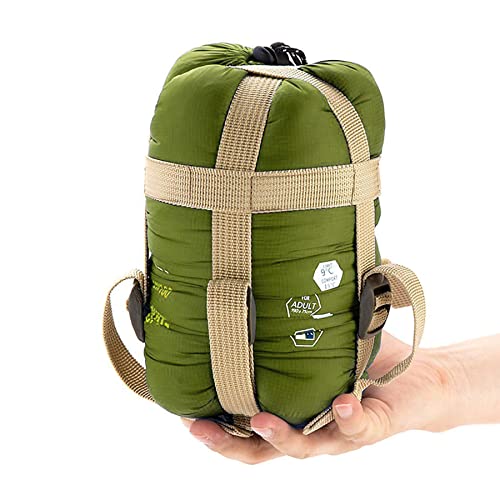
4 sleeping bags to compare
Real options that fit the criteria above. We don't publish prices or ratings — check the current price and reviews on Amazon.



Common questions
What temperature rating should I actually look for?
Choose a comfort rating at or below the coldest temperature you realistically expect, then add a margin for cold sleepers or exposed camps. It's easier to unzip a too-warm bag than to add warmth you don't have. Layering clothing and an insulated pad help close any gap.
Is down or synthetic fill better for backpacking?
Down wins on warmth-to-weight and packed size, best for longer trips or tight pack space, but it needs to stay dry to perform. Synthetic is heavier for the same warmth but keeps insulating when wet and costs less. Wetter climates favor synthetic; drier, weight-focused trips favor down.
How do I keep a down sleeping bag dry on the trail?
Store it in a waterproof stuff sack or pack liner rather than trusting a rain cover alone, and let it loft fully once camp is set rather than staying compressed. Avoid breathing into the bag on cold nights, since that moisture collects in the insulation. Air it out and dry it fully before storage.
This is a general buying guide, not a lab review — it explains what to look for so you can choose well, and links to real products to compare. We publish no prices or ratings; current price, availability and reviews are shown on Amazon. Product links are affiliate links: we may earn a commission at no extra cost to you. See our affiliate disclosure.