
Best Backpack For Weekend Backpacking
Best Backpack For Weekend Backpacking, ranked from aggregated owner ratings and reviews, not first-hand testing. Real pros, cons, and who each pick is best for.

Affiliate disclosure: this page contains affiliate links. Purchases made through them may earn us a commission at no extra cost to you. See our affiliate disclosure.
In plain English
A weekend backpacking pack carries gear for two nights in the backcountry. Compared with a one-night pack, it needs room for an extra day of food, a little more fuel for cooking and sometimes an extra warm layer.
You will often hear that a loaded backpack should weigh no more than 20% of your body weight. That is a handy starting point, like a rule of thumb for how much to tip. But it is not a scientific limit. Studies and experts give different numbers, and many real backpackers carry more than 20% without trouble.
The practical takeaway is to aim light, but pay more attention to how the pack feels than to a single number. A pack that fits well, keeps its weight close to your back and sits on your hips can carry a weekend load comfortably.
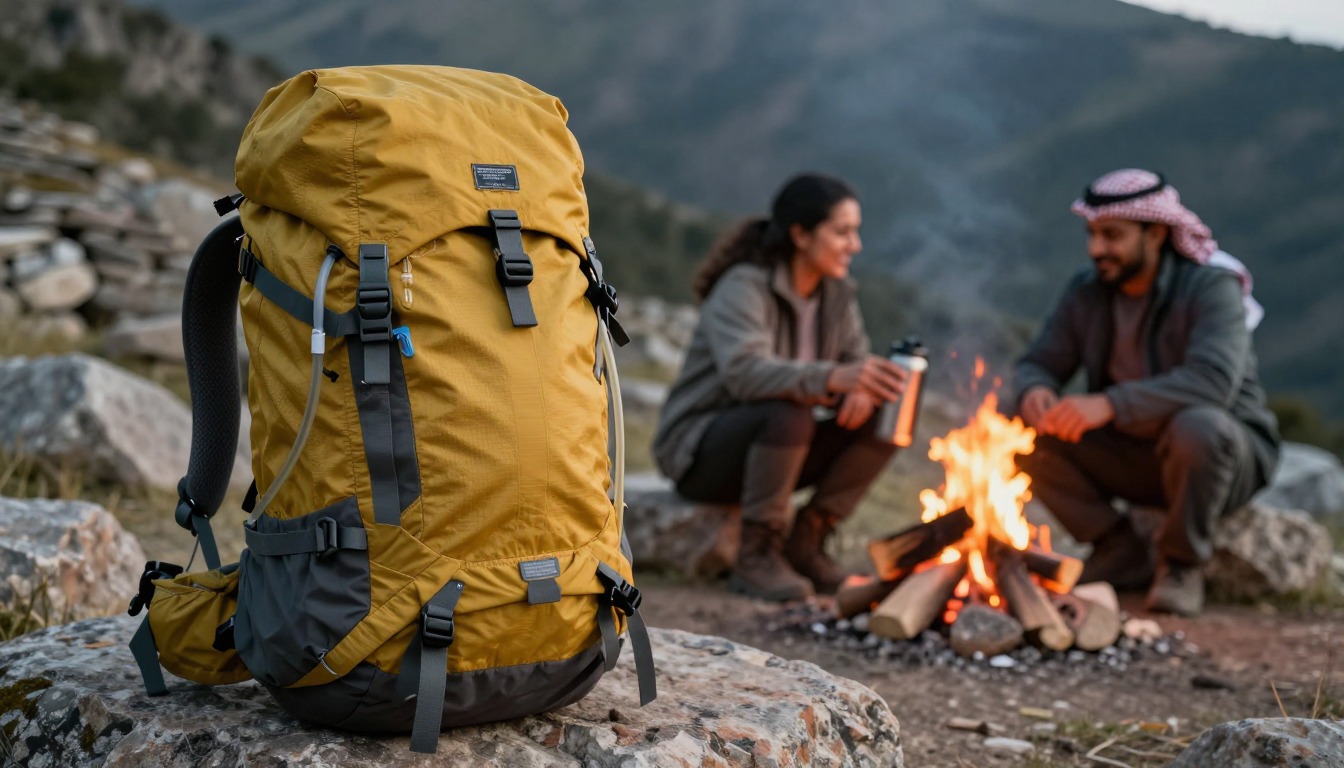
Our Top 3 Picks
Quick Comparison
| Shell | Extras | Buy | ||||
|---|---|---|---|---|---|---|
| 1 | Teton 55L Scout Internal Frame Backpack for HikingTop Overall Pick | 45–65 L | 4.1 lb | — | Rain cover | View |
| 2 | Osprey Exos 48L Men's Ultralight Backpacking BackpackBest Value | 48 L | 2.8 lb | — | Hydration | View |
| 3 | Gregory Zulu 45L Hiking/Backpacking PackAlso Great | 45 L | — | — | Hip belt | View |
| 4 | Teton 65L Explorer Internal Frame Backpack for HikingBest Hydration Pack | 65–85 L | 5.0 lb | — | Rain cover | View |
| 5 | Bseash 60L Waterproof Hiking Camping Backpack with Rain CoverBest Ultralight | 60 L | 2.2 lb | Ripstop nylon | Rain cover | View |
What should you look for in a weekend backpacking pack?
A weekend pack needs to carry roughly one extra day of food and fuel over an overnight pack, which means slightly more structured load support matters more here than on a lighter one-night pack. Start with torso fit, measured from the C7 vertebra to the iliac crest, then weigh suspension type, back panel style, and how the compression system performs across a range of loads, since a weekend pack often carries both one-night and two-night trips over its lifetime.
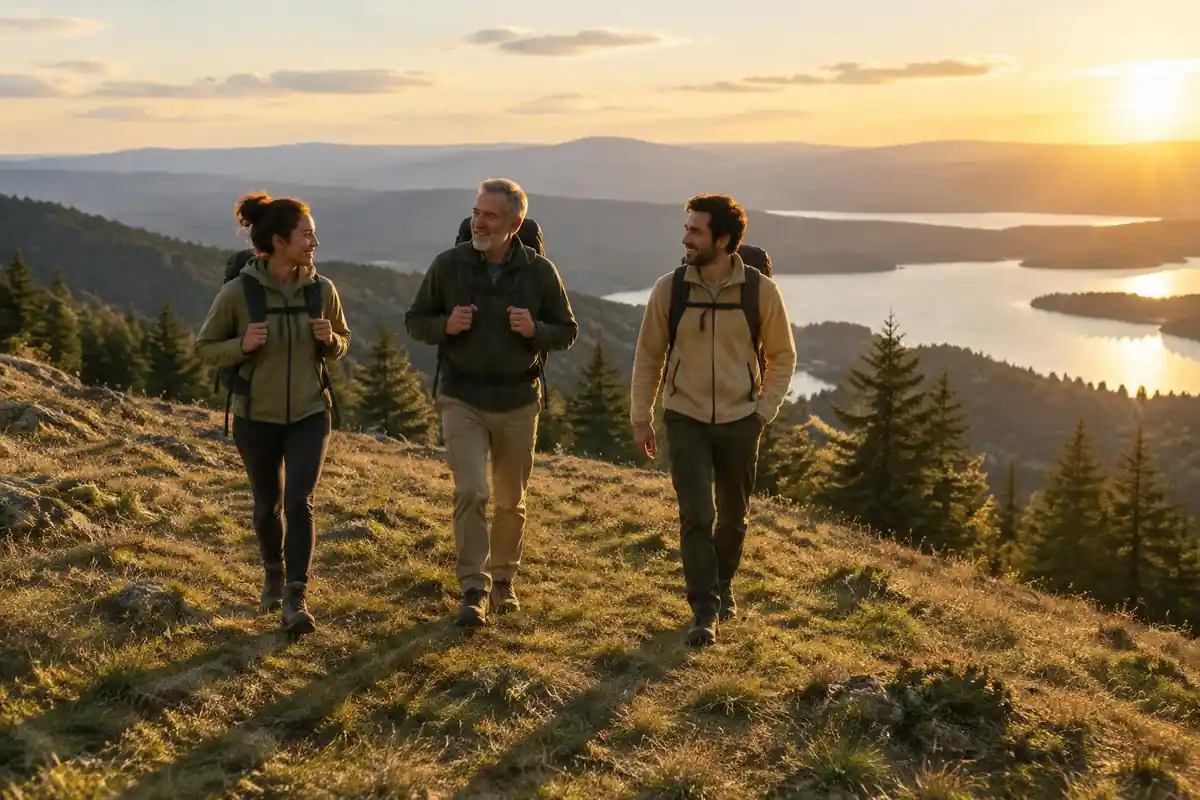
Suspension and back panel choices
Most 45–55L weekend packs use an internal frame, either aluminum stays or a perimeter wire, that transfers load to the hipbelt — a correctly fitted hipbelt carries, by a common rule of thumb, roughly 80% of total weight, which matters more on a weekend pack than a lighter overnight pack simply because there's more weight to carry. Back panels split into two styles worth comparing directly:
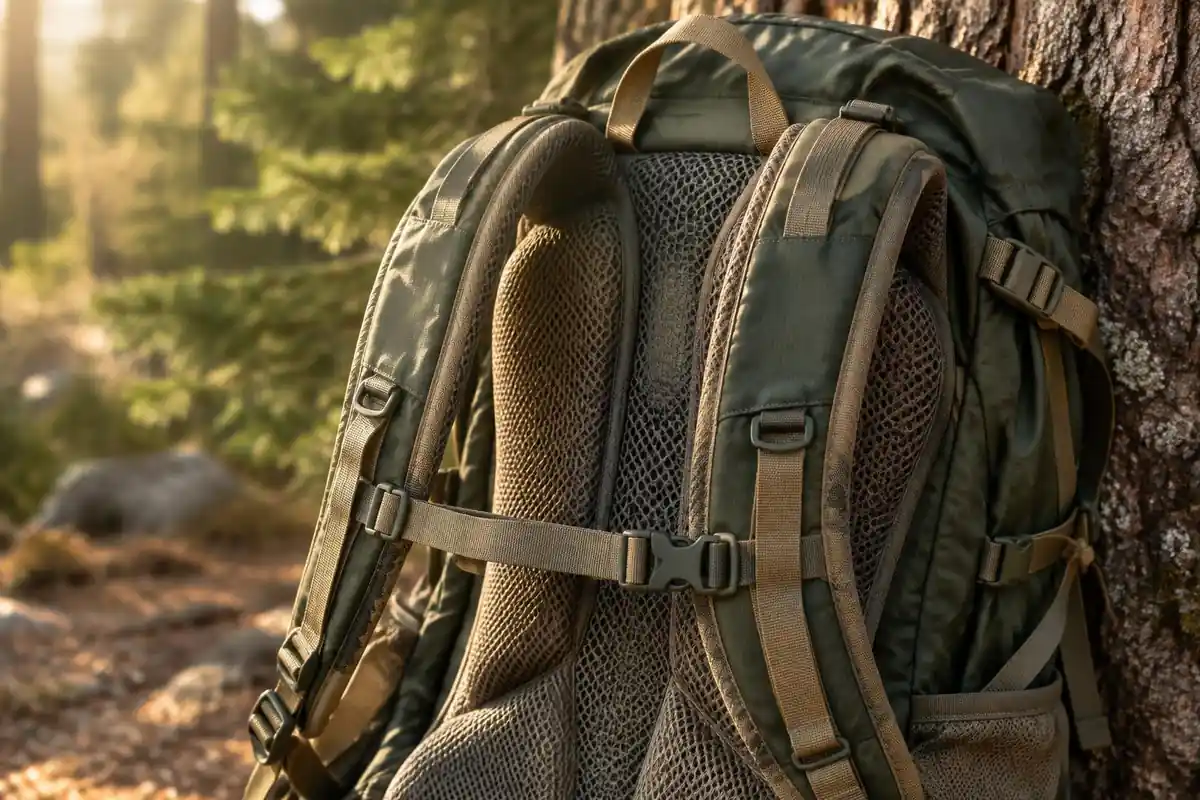
| Back Panel Type | How It Works | Trade-off |
|---|---|---|
| Trampoline-style mesh | Suspends a taut mesh sheet off the pack body | Better airflow, slightly less stable load on rough terrain |
| Contact mesh | Sits directly against the back | More stable, load-hugging carry, less ventilation |
How much does the added food weight change the pack?
An extra night of food and fuel adds a few pounds to a weekend pack compared with a single overnight, which is usually the difference between staying comfortably under and creeping toward the commonly used rule of thumb of keeping total pack weight at or under roughly 20% of body weight. That added weight is also why weekend packs generally use a sturdier suspension than the lightest overnight-only packs, even though the core gear list is nearly the same.
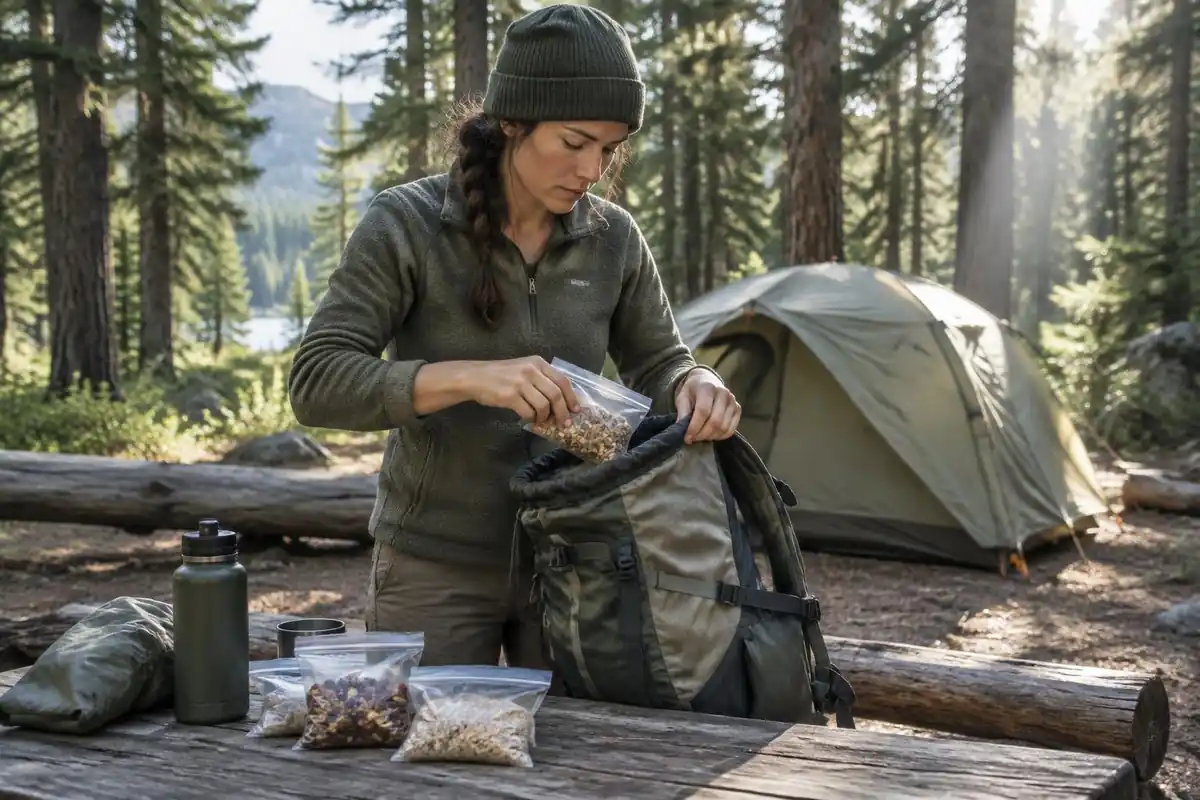
Who a weekend pack suits
A 45–55L pack suits hikers whose trips regularly run two nights, or who want one pack flexible enough to also handle an occasional single-night trip without buying a second, smaller pack. It's generally more pack than needed for hikers who consistently do one-night trips only, and it runs short on room for hikers who regularly need a bear canister or push past two nights into true multi-day backpacking territory.
Honest trade-offs to weigh
- A pack sized for two nights carries more unused space on a one-night trip than a dedicated overnight pack, which can affect how the load sits unless compression straps are cinched fully.
- More structured suspension for the added food weight typically means a heavier empty pack than a minimalist overnight-only design.
- Versatility across one- and two-night trips comes at the cost of not being optimized perfectly for either one.
- Extra external organization for a second day's food and fuel adds convenience but also adds pack weight.
How to decide
Choose a 45–55L weekend pack if your trips regularly include a second night, or if you want a single pack that reasonably covers both one- and two-night outings. Choose a smaller, lighter overnight-specific pack if your trips are consistently a single night and you'd rather not carry the extra structure a weekend pack needs for its added food capacity. Either way, torso fit and hipbelt sizing decide comfort more than the ten-liter difference between the two categories.
Full Ranking, Reviewed

Best for Weekend Backpacking Packs
- 45–65 L capacity
- 4.1 lb empty
- Rain cover included
- Teton tough
- Hydration sleeve keeps water within easy reach
- Breathable mesh back keeps air moving against your spine
- That 45–65 L volume is overkill for quick hikes and better suited to multi-night trips.
Verdict: TETON Sports’s 45–65 L backpacking pack pairs a breathable back with room for a bladder, making it a strong choice for Weekend Backpacking Packs.

Best for Weekend Backpacking Packs
- 48 L capacity
- 2.8 lb empty
- Hydration-ready
- Hipbelt Pockets
- Routes a hydration bladder and hose without fuss
- Tunable harness helps you find a comfortable carry
- The 48 L size is a versatile in-betweener rather than a specialist at either end.
Verdict: This 48 L hiking pack pairs room for a bladder with real hip-belt support, making it a strong option for Weekend Backpacking Packs.

Best for Weekend Backpacking Packs
- 45 L capacity
- Padded hip belt
- Tunable harness helps you find a comfortable carry
- Supportive hip belt takes weight off the shoulders
- The 45 L size is a versatile in-betweener rather than a specialist at either end.
Verdict: This 45 L hiking pack pairs real hip-belt support with an adjustable fit, making it well worth a look for Weekend Backpacking Packs.
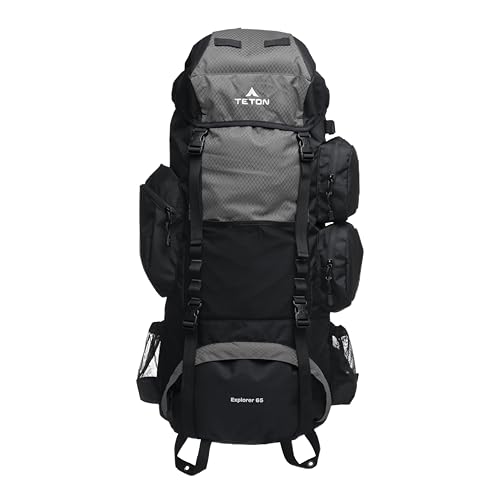
Best for Weekend Backpacking Packs
- 65–85 L capacity
- 5.0 lb empty
- Rain cover included
- Teton tough
- Set up to carry a reservoir for hands-free sipping
- Airflow channels help your back stay cooler under load
- At 65–85 L it is more pack — and more weight — than a day hiker needs; it earns its keep on overnight and multi-day loads.
- Empty weight (5.0 lb) runs above ultralight rivals.
Verdict: TETON Sports’s 65–85 L backpacking pack pairs a breathable back with room for a bladder, making it well worth a look for Weekend Backpacking Packs.

Best for Weekend Backpacking Packs
- 60 L capacity
- Ripstop nylon shell
- 2.2 lb empty
- Rain cover included
- Comfortable Daypack
- Hydration sleeve keeps water within easy reach
- Breathable mesh back keeps air moving against your spine
- At 60 L it is more pack — and more weight — than a day hiker needs; it earns its keep on overnight and multi-day loads.
Verdict: This 60 L backpacking pack pairs a breathable back with room for a bladder, making it an easy shortlist pick for Weekend Backpacking Packs.
The 20% guideline: what the evidence actually shows
The figure this page mentions, keeping total pack weight near 20% of body weight, is widely repeated but has no primary scientific source. It is best treated as a hiking-community rule of thumb. Published figures spread in both directions. Deuter, a pack maker, states people can carry a maximum of 20 to 25% of their body weight.1 A 2022 review of backpack ergonomics says loads for adults in military, hiking and mountaineering settings should generally not exceed 40% of body mass.2
Other research points lower. A 2026 study of long-distance hikers notes the literature has suggested 10 to 15% of body weight, and found packs heavier than about 10% produced a clear, load-dependent increase in foot pressure.3 In practice, Appalachian Trail backpackers in one study carried averages of 25% (men) and 27.9% (women) of body weight, above the popular 20% guideline.4
Military doctrine sits higher still. The US Army suggests a fighting load of about 30% of body weight for a conditioned soldier,5 but that assumes training most weekend hikers do not have. For a weekend trip, lighter is kinder to your feet and joints; no single percentage marks a safe line.
The second night's fuel and stove choice
An extra day means more fuel, and the stove type affects both weight and reliability. MSR says canister stoves are almost always lighter and more compact than liquid fuel stoves, though they cannot be field-repaired.6 Cold is their weak point: isobutane has a sea-level boiling point of 11°F, so it vaporizes poorly in cold,7 and canister pressure falls as temperatures drop.8 MSR says pressure-regulated canister stoves perform much better in cold than unregulated ones.6
Whatever you cook on, never use it inside your tent. A CDC report on camping deaths found camping stoves, heaters and lanterns should never be used inside a tent, and that opening tent flaps does not prevent dangerous carbon monoxide build-up.9
Back panel choice and a heavier weekend load
A military review found that keeping the load's center of mass as close as possible to your own gives the lowest energy cost.10 Suspended-mesh panels hold the pack a few inches off your back to cut sweat,11 which moves the load slightly outward. With a weekend's food on board, that difference is more noticeable on rocky or steep ground than on a smooth trail. Cinching compression straps helps either design, since they keep the internal load from shifting and hold it closer to the body.5
Frequently Asked Questions
What size pack is best for a two-night weekend trip?
A 45–55L pack fits most two-night weekend trips, carrying a standard shelter, sleep system, and roughly two days of food without excess unused space. Efficient packers with lighter gear can sometimes manage a weekend trip in 40–45L instead of stepping up further.
Do I need a bigger pack for a weekend trip than an overnight?
Usually, by about 5 to 10 liters. The extra room mainly holds one additional day of food and fuel rather than a fundamentally different gear list, since shelter and sleep system needs stay almost the same between one and two nights.
Related Buying Guides
Planning a hiking trip? Compare hotels, lodges and guesthouses.
Book on Booking.com Book on AgodaAffiliate links: we may earn a commission at no extra cost to you.