

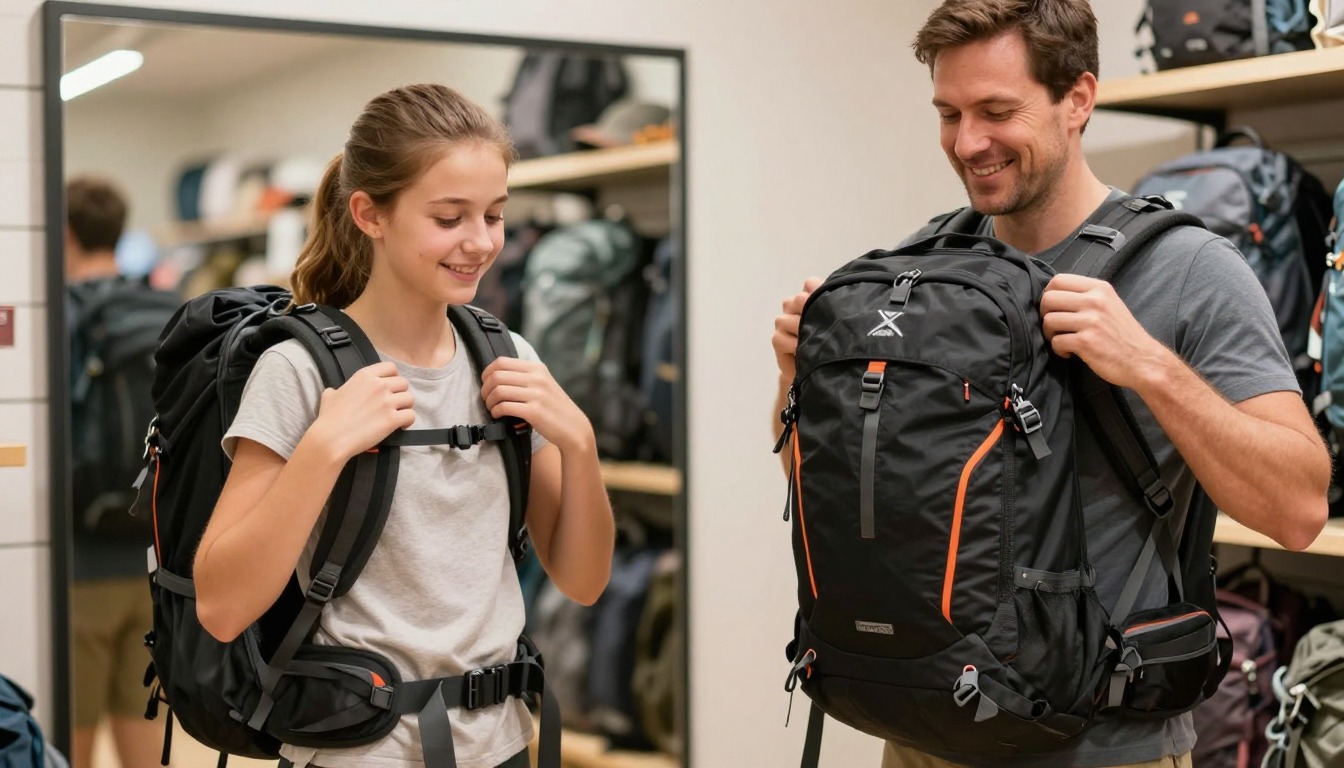


Whether a hiking backpack qualifies as a carry-on depends on its packed dimensions matching the airline's stated cabin bag limits, not on its liter volume alone. A 40-liter pack with a slim, boxy shape can clear a gate sizer more reliably than a 35-liter pack with bulging side pockets.
What size limits apply
US major airlines commonly cap carry-on dimensions around 22 x 14 x 9 inches, roughly 45 linear inches total. International and budget carriers often set smaller limits, and many budget airlines separate a small free "personal item" from a larger paid cabin-bag allowance.
| Situation | What to check |
|---|---|
| Domestic US flight | Standard ~22x14x9in carry-on limit, enforced by gate sizers on full flights |
| International or budget carrier | Often a smaller limit; some airlines charge extra for a full-size cabin bag |
| Multi-airline itinerary | Size the pack to the smallest limit among all airlines on the trip |
How to improve the odds of clearing a gate check
Compression straps cinched down after packing pull in loose fabric and flatten a pack's overall footprint, which matters most on a half-packed bag. A pack with a boxy, minimally padded silhouette and a structured base panel holds its packed shape more consistently than one with rounded side pockets or a floating lid, both of which add inches in ways that don't show up in the stated liter count.
Travelers with a tight, multi-leg itinerary should treat the smallest airline's limit as the real requirement, since a bag that clears a US domestic flight can still be pulled aside on a connecting international or budget-carrier leg.