

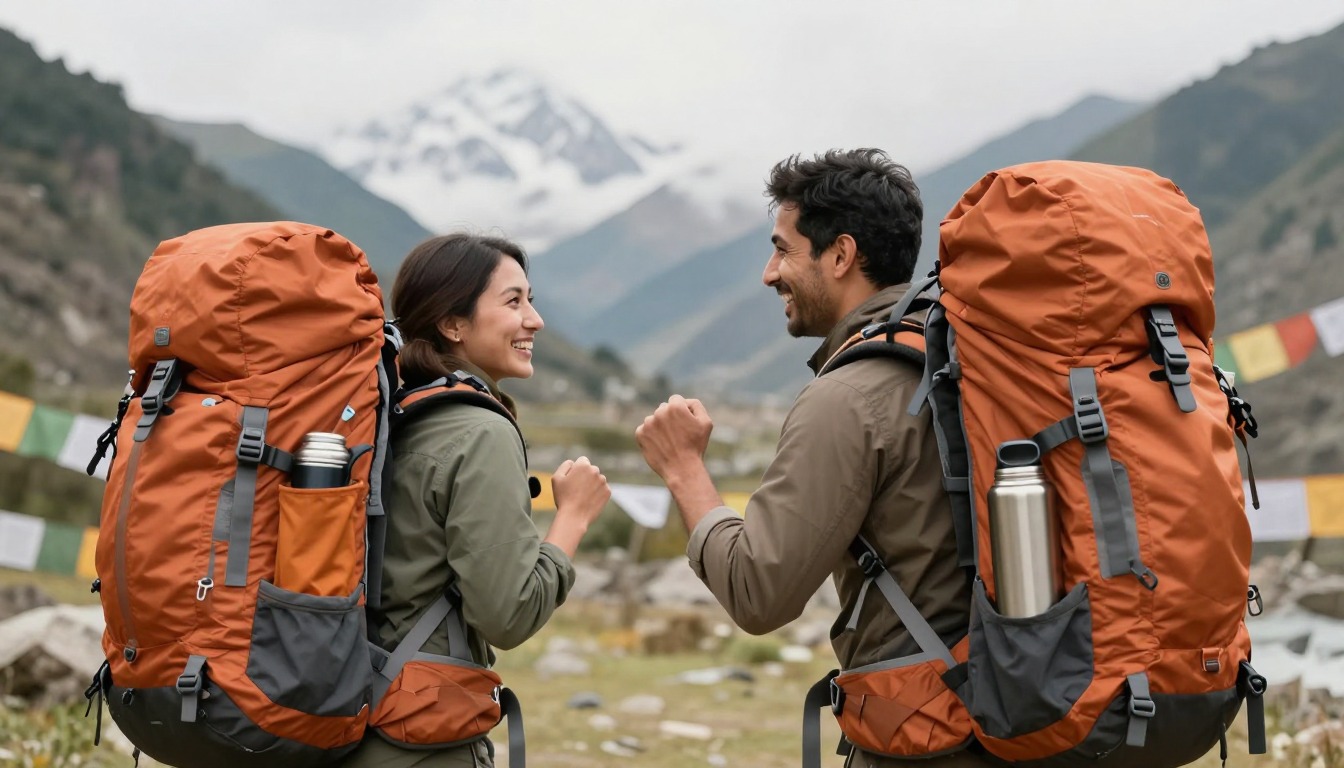


A five-day trek without resupply typically needs a 60L to 75L backpack, since roughly 7.5 to 12.5 lbs of food alone (at 1.5 to 2.5 lbs per person per day) takes up significant volume alongside a standard shelter, sleep system, and cook kit. Food volume, not gear bulk, is usually the deciding factor at this trip length.
Why five days is a step up from a weekend trip
At two or three nights, food and gear both fit comfortably in a 45–55L pack. By five days, cumulative food weight and volume push noticeably higher, and packing efficiency starts to matter more: repackaging food out of bulky retail wrapping and choosing calorie-dense, low-volume meals can meaningfully reduce how much space five days of food actually needs.
Does a resupply change the answer?
Yes. A five-day trek with a planned resupply partway through only needs to carry food for the days between stops, which can bring required capacity back down to the 55–65L range typical of a shorter unsupported trip. This is a key reason two five-day treks can call for very different pack sizes depending on route planning.
Ultralight vs traditional packing for five days
| Packing Style | Typical Capacity for 5 Days, No Resupply |
|---|---|
| Traditional 3-season kit | 65–75L |
| Efficient 3-season packing | 60–65L |
| Ultralight, low base weight | 50–60L |
Other factors that push capacity higher
A five-day trek requiring a bear canister, common in many wilderness areas with high food-storage regulations, adds rigid, non-compressible volume that pushes many hikers toward the upper end of this range regardless of how efficiently the rest of the kit packs down. Cold or shoulder-season conditions add a similar effect through bulkier insulation.
Bottom line
Plan for 60–75L for an unsupported five-day trek with a standard kit, adjust down toward 55–65L with a resupply or a lighter gear list, and confirm torso length and hipbelt fit before finalizing size, since a pack's comfort at that loaded weight depends on fit as much as liter count.