

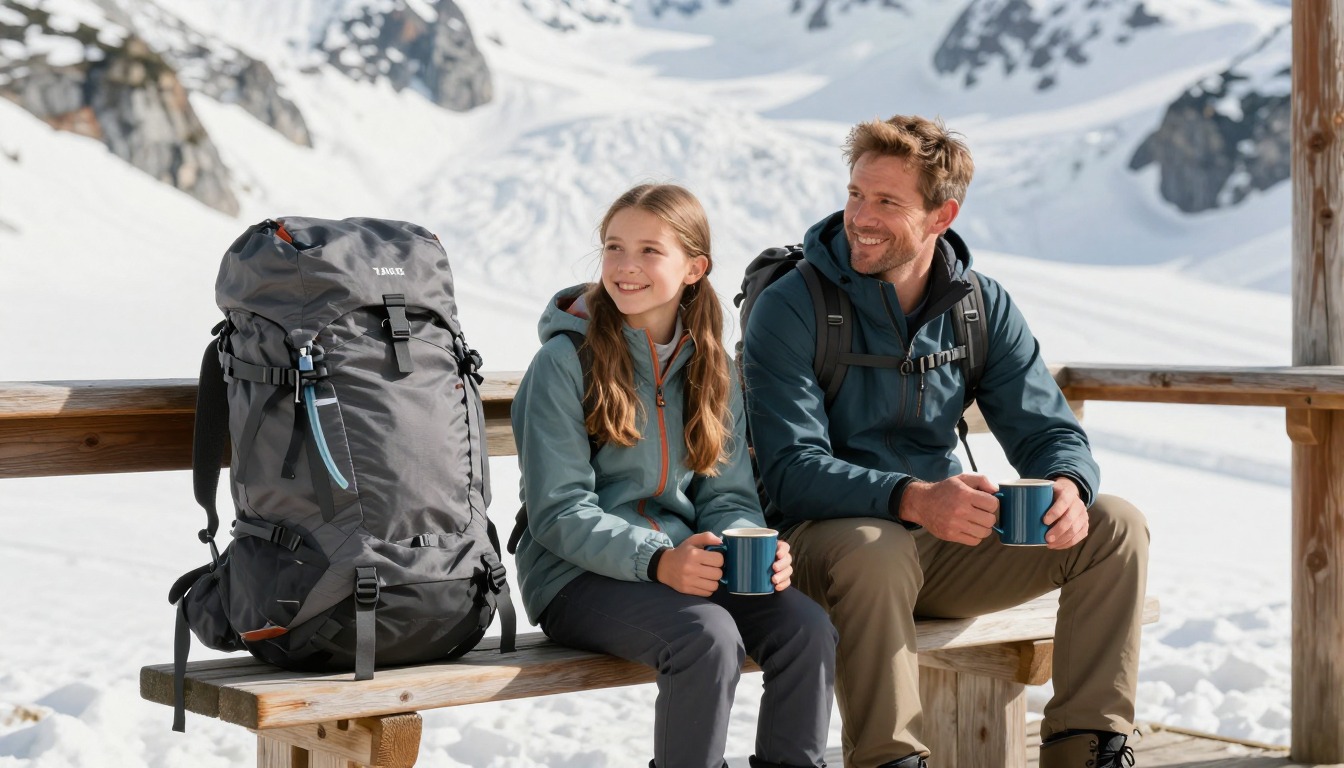


The ten essentials, developed by The Mountaineers, form the core of any day hike packing list regardless of trail length or difficulty. Packing them doesn't require a large pack; most fit inside 15 to 25 liters alongside water and food.
The ten essentials for a day hike
| Category | Examples |
|---|---|
| Navigation | Map, compass, GPS or phone with offline maps |
| Sun protection | Sunscreen, sunglasses, sun hat |
| Insulation | Extra layer, rain shell |
| Illumination | Headlamp with spare batteries |
| First aid | Basic first-aid kit |
| Fire | Lighter or matches, fire starter |
| Repair kit | Knife or multi-tool, duct tape |
| Nutrition | Extra food beyond planned meals |
| Hydration | Extra water or a filter/purification method |
| Shelter | Emergency bivy or space blanket |
Sizing the packing list to the hike
A short, warm-weather hike under three hours needs a lighter version of this list, fitting comfortably in a 10- to 15-liter pack. A full-day hike, a route with elevation gain, or a shoulder-season trail with unpredictable weather calls for bulkier insulation, more water and a larger first-aid kit, pushing the useful pack size toward 20 to 25 liters.
What to add beyond the ten essentials
Beyond the core list, most hikers add trekking poles, a trail map or guidebook, a phone with a portable charger, and snacks sized to hike length rather than a single large meal. Hikers deciding between a hydration reservoir and bottles should pack whichever their chosen day-hiking pack supports best, since a pack without a reservoir sleeve makes carrying one impractical regardless of preference. Packing everything on this list doesn't require the largest pack available; matching gear to actual conditions keeps the load light and the pack comfortable for the whole hike.