
Best Carry On Hiking Backpack
Best Carry On Hiking Backpack, ranked from aggregated owner ratings and reviews, not first-hand testing. Real pros, cons, and who each pick is best for.

Affiliate disclosure: this page contains affiliate links. Purchases made through them may earn us a commission at no extra cost to you. See our affiliate disclosure.
In plain English
A carry-on backpack is one small enough to take onto the plane with you instead of checking it. Airlines check the size with a sizer, a metal frame at the gate. If your bag doesn't slide in, it may be sent to the hold under the plane.
Backpacks are sold by liters, which measures how much they hold, like the size of a soda bottle. But the sizer measures length, width and depth. A tall, skinny pack and a short, wide pack can hold the same amount, yet only one might fit the frame. That is why shape matters more than the liter number on the tag.
Straps that pull the pack tighter, called compression straps, help a lot. Cinching them down is like squeezing the air out of a bag of chips before you pack it.
Our Top 3 Picks
Quick Comparison
| Shell | Extras | Buy | ||||
|---|---|---|---|---|---|---|
| 1 | MIYCOO Ultralight Packable BackpackTop Overall Pick | 35 L | 13 oz | — | — | View |
| 2 | Maelstrom 40L Hiking BackpackBest Value | 40 L | 2.2 lb | 210D ripstop nylon | Rain cover | View |
| 3 | Osprey Farpoint 40L Men's Travel BackpackAlso Great | 40 L | 3.3 lb | — | Hip belt | View |
| 4 | Nerlion 40L Hiking Backpack Travel Backpack for Men Women Camping WaterpBest Ultralight | 40 L | 32 oz | Nylon | — | View |
| 5 | Osprey Fairview 40L Women's Travel BackpackBest for Women | 40 L | 3.3 lb | — | Hip belt | View |
Choosing a carry-on hiking backpack starts with matching a pack's actual footprint — not just its liter count — to the size limits of the airlines on a given itinerary.
What size backpack counts as a carry-on?
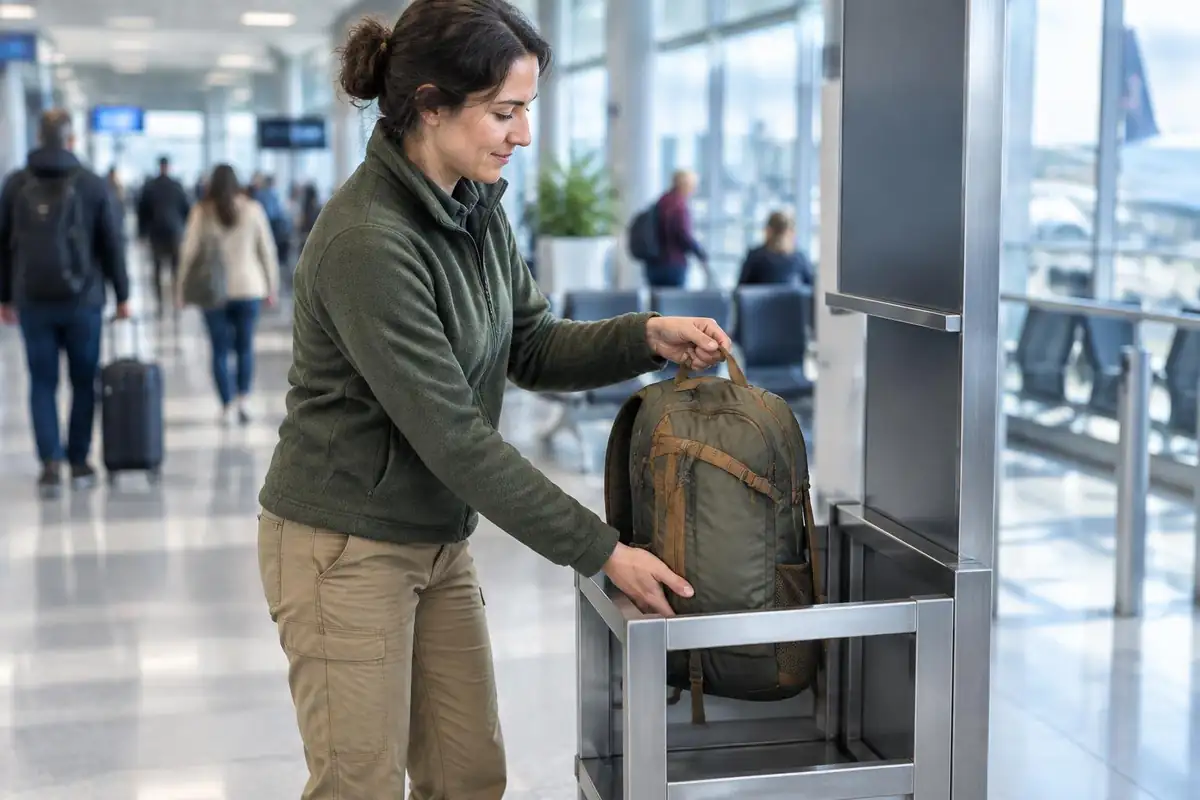
A backpack counts as a carry-on when its packed dimensions fall within the airline's stated limit. Delta, for example, publishes a limit of 22 x 14 x 9 inches (about 45 linear inches total), and other airlines set their own. Packs between 30 and 45 liters typically fit that footprint when compression straps are cinched down and side pockets aren't overstuffed, though the exact fit depends on the pack's shape more than its stated volume.
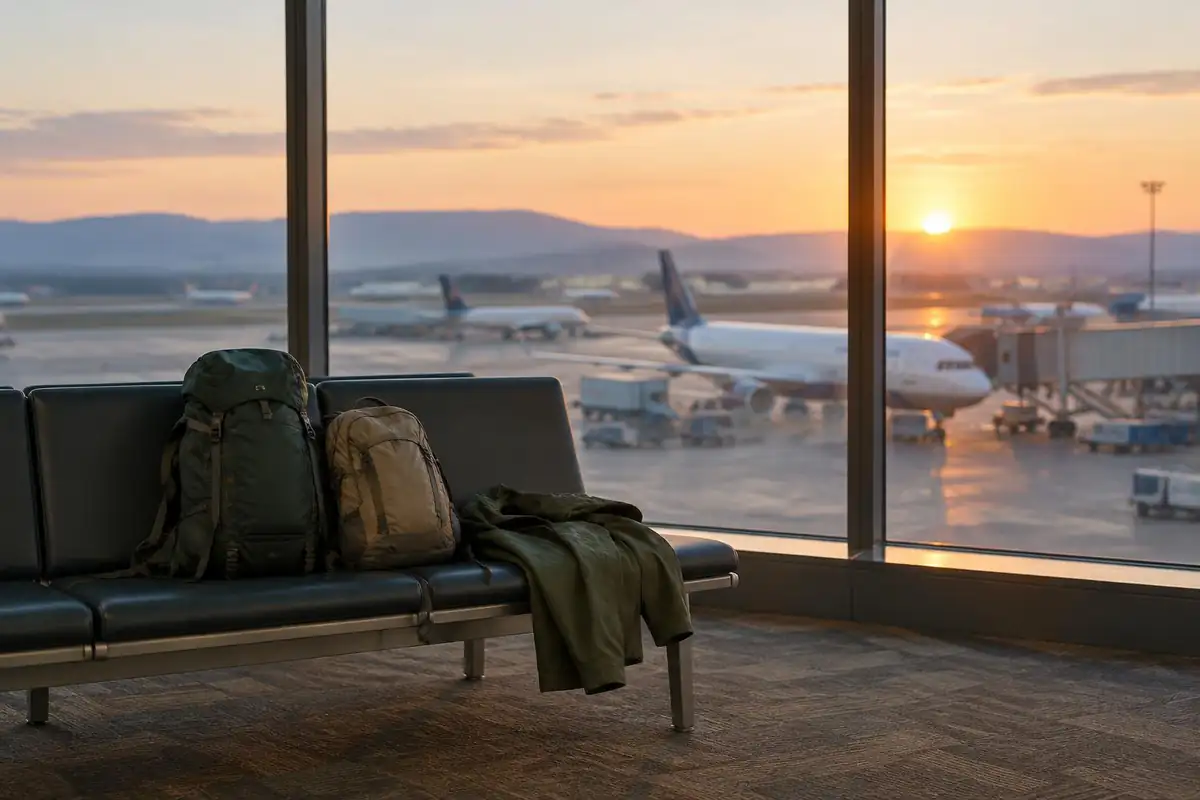
International and budget carriers frequently set smaller limits than US majors, and some enforce a separate, smaller "personal item" allowance for basic fares, so a pack that clears a US domestic flight without issue can still get flagged on a connecting international leg.
Does liter count predict whether a pack fits as a carry-on?
Liter count is a rough guide, not a guarantee, because two packs with the same stated volume can have very different external shapes — one with a slim, boxy profile that matches a gate sizer closely, another with rounded side pockets or a floating lid that adds inches in every direction. A pack advertised at 40 liters with minimal external pockets often clears gate sizers more reliably than a 35-liter pack with bulging side mesh pockets.
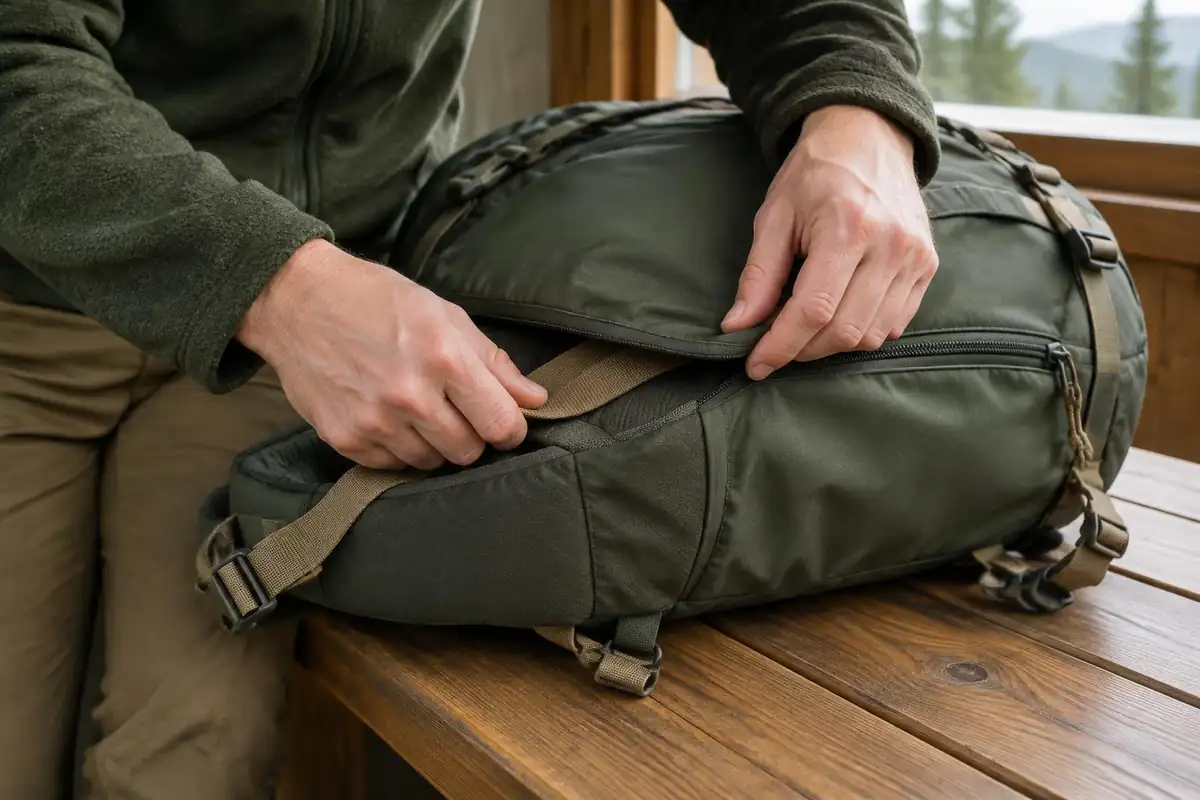
Compression straps are the most useful tool for keeping a packed bag within a gate sizer, since cinching them down after packing pulls in loose fabric and flattens the pack's overall footprint, which matters more on a half-packed bag than on one already stuffed to capacity.
What features help a pack pass gate checks?
- A boxy, slim silhouette with minimal rounded padding or floating lid keeps the packed footprint closer to the pack's stated dimensions.
- External compression straps on the sides and front let a traveler cinch the pack smaller once packed, which matters most for gate sizers that measure a snug fit.
- A structured base panel helps the pack hold its shape upright in a sizer rather than slumping wider under its own weight.
- A low or removable exterior daypack attachment avoids adding extra inches to the pack's outer profile when clipped on.
Should I check airline limits before buying?
Yes — checking the specific carry-on dimensions for the airlines most likely to be used matters more than picking a pack based on a general "carry-on friendly" label, since that label isn't standardized across brands or airlines. Travelers with international itineraries spanning multiple carriers should size their pack to the smallest limit on the trip rather than the largest, since a bag that clears one leg can still get gate-checked on another; general strategy for choosing a size and access style for this category is covered under hiking backpacks for travel.
What happens if a pack gets gate-checked anyway?
A pack that gets flagged at the gate is typically tagged and loaded into the plane's hold rather than refused outright, so the trip isn't derailed, but the traveler loses the convenience of keeping the bag within reach and risks the same handling wear-and-tear a checked suitcase gets. Valuables, electronics, and medication should stay in a smaller secondary bag that meets the airline's personal-item allowance so they aren't at risk if the main pack gets checked at the gate. Packing a pack loosely rather than fully compressed, so straps can be cinched down on the spot if a gate agent flags it as borderline, is a simple way to avoid this outcome without changing which pack gets purchased.
Does pack weight matter for carry-on compliance?
Some airlines enforce a weight limit on cabin bags in addition to the size limit, and the limit varies by airline and fare, which a fully packed 40-liter bag can exceed even if its dimensions are within the sizer. Checking both the size and weight limits for a specific route matters most on international and budget-carrier itineraries, where limits can be stricter.
Full Ranking, Reviewed

Best for Carry-On Hiking backpacks
- 35 L capacity
- 13 oz empty
- Waterproof & Durability
- Light enough that you forget you are wearing it
- Packable build stows into its own pocket for travel
- Colours and exact capacity options change often on Amazon — confirm the current variant on the listing before buying.
Verdict: This 35 L hiking pack offers a packable build, making it our overall pick for Carry-On Hiking Backpacks.

Best for Carry-On Hiking backpacks
- 40 L capacity
- 210D ripstop nylon shell
- 2.2 lb empty
- Rain cover included
- Ergonomic and Comfortable Design
- Packs an integrated rain cover to keep gear dry
- Tough, tear-resistant shell built for trail abuse
- At 40 L it sits between a daypack and a backpacking pack — a touch large for quick hikes, a touch small for long multi-night loads.
Verdict: This 40 L hiking pack pairs a bundled rain cover with a tough ripstop shell, making it an easy shortlist pick for Carry-On Hiking Backpacks.

Best for Carry-On Hiking backpacks
- 40 L capacity
- 3.3 lb empty
- Padded hip belt
- Travel pack
- Tunable harness helps you find a comfortable carry
- Supportive hip belt takes weight off the shoulders
- The 40 L size is a versatile in-betweener rather than a specialist at either end.
Verdict: This 40 L hiking pack pairs real hip-belt support with an adjustable fit, making it a strong option for Carry-On Hiking Backpacks.
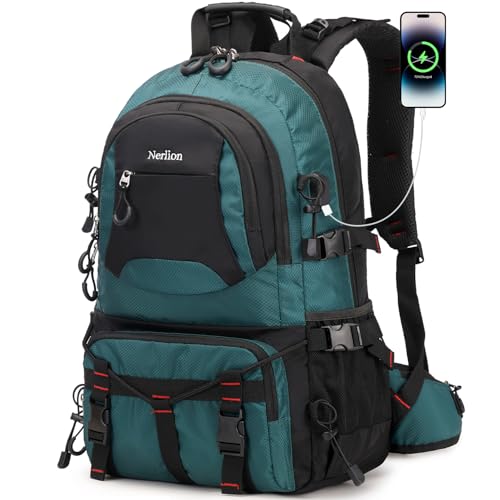
Best for Carry-On Hiking backpacks
- 40 L capacity
- Nylon shell
- 32 oz empty
- Functionality and safety
- Low carry weight pays off on big-mileage days
- Multiple compartments make organising kit easy
- The 40 L size is a versatile in-betweener rather than a specialist at either end.
Verdict: NerIion’s 40 L hiking pack keeps things refreshingly simple, making it a strong option for Carry-On Hiking Backpacks.

Best for Carry-On Hiking backpacks
- 40 L capacity
- 3.3 lb empty
- Padded hip belt
- Travel pack
- Tunable harness helps you find a comfortable carry
- Supportive hip belt takes weight off the shoulders
- The 40 L size is a versatile in-betweener rather than a specialist at either end.
Verdict: This 40 L hiking pack pairs real hip-belt support with an adjustable fit, making it a strong option for Carry-On Hiking Backpacks.
The 22 x 14 x 9 figure: what is and isn't documented
The page now cites Delta's published limit as an example rather than as the rule for most US airlines. The only airline rule verified for this guide is Delta's: carry-on bags must not exceed 22 x 14 x 9 inches, or 45 linear inches combined.1 It is a common figure, but treat it as one airline's limit and check every carrier on your itinerary, as the page advises. Delta also says a small backpack can count as the free personal item if it fits under the seat in front,1 which is a separate, smaller allowance.
It helps to know what that box holds. A perfect box of 22 x 14 x 9 inches is about 2,770 cubic inches, or roughly 45 liters. No backpack is a perfect box, so a pack sold as 45 liters will almost never fit when full. That math is why the page's 30 to 45 liter range, with the smaller end safer, holds up. This page no longer gives a specific cabin-bag weight limit, because a figure of around 7 to 10 kilograms is not backed by a verified source; check weight limits directly with each airline.
Hiking gear that can't ride in the cabin
A carry-on hiking pack often holds gear the TSA restricts in the cabin. Sharp-tipped hiking poles cannot go in carry-on bags, although blunt-tipped poles can.2 Knives are not allowed in carry-on bags except rounded, blunt ones such as butter knives.3 Camp stoves are allowed only if completely emptied of fuel and cleaned so no vapors or residue remain,4 and flammable liquid fuels are banned from both carry-on and checked bags.5 The TSA lists bear spray as not allowed in carry-on or checked bags.6
If your trip depends on one of these items, a carry-on-only plan may not work. Either check a bag for the knife and sharp poles, or plan to buy or rent them at your destination. The TSA notes its officers make the final decision at the checkpoint,4 so an item packed in a gray area can still be taken from you.
Fitting a carry-on pack to your body
Carry-on packs are often worn for hours between airports, stations and lodging, so torso fit still matters. Makers size packs by torso length, measured from the C7 vertebra, the bump at the base of your neck, to the iliac crest at the top of your hip bones.7 Hyperlite notes height is not a reliable proxy for torso length and it should be measured.8
Many carry-on packs have thin, stowable hipbelts to keep the profile slim. That is a real trade-off: research on load carriage found the hip region tolerates pack pressure significantly better than the shoulders.9 If you expect long walks with a full bag, favor a pack whose belt is padded enough to take some weight. Big Agnes suggests fitting a pack with 10 to 20 pounds loaded,10 which is close to what a packed carry-on weighs.
Frequently Asked Questions
What is the standard US carry-on size limit?
Delta, for example, caps carry-on dimensions at 22 x 14 x 9 inches, roughly 45 linear inches total. Other airlines set their own limits, so always check the specific airline before a trip, since limits vary and are enforced at the gate with a sizer.
Will a 40-liter pack always fit as a carry-on?
Not always. A 40-liter pack fits as a carry-on when its shape is boxy and compression straps are cinched, but a rounder or more heavily pocketed 40-liter pack can exceed gate sizer dimensions even at the same stated volume.
Related Buying Guides
Planning a hiking trip? Compare hotels, lodges and guesthouses.
Book on Booking.com Book on AgodaAffiliate links: we may earn a commission at no extra cost to you.