

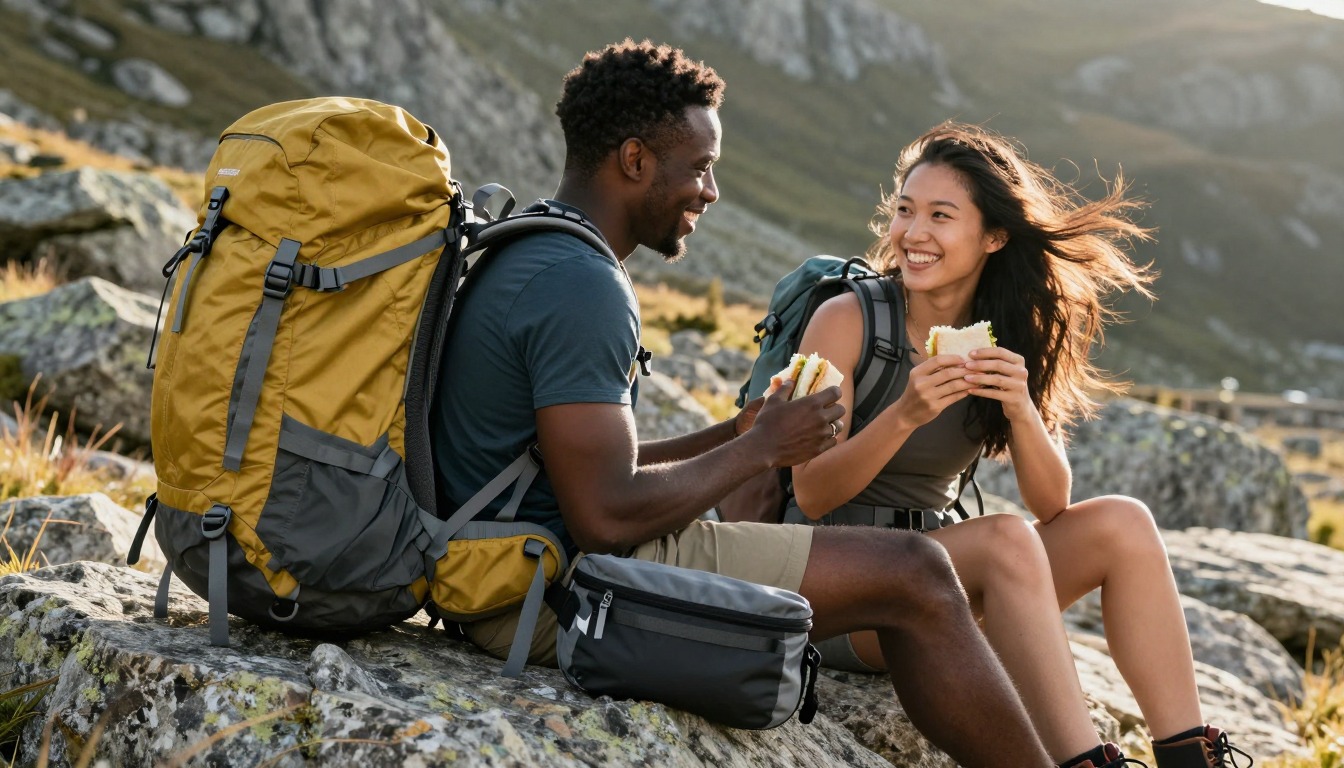


Two-night backpacking trips typically fit in a 45L to 55L backpack, which is enough for a standard three-season kit — shelter, sleeping bag, pad, stove, and two days of food — without excess unused volume. That's the same range that generally covers a 3-day hike, since a 3-day hike and a two-night trip describe the same length of time counted two different ways.
What actually needs to fit
A typical two-night kit includes a tent or shared shelter, a 20°F to 30°F three-season sleeping bag, a sleeping pad, a stove and small cook system, roughly 3 to 5 lbs of food, and a modest clothing layer set. None of that individually demands a large pack, but together it fills a 45–55L pack efficiently without wasted space.
Is it worth sizing up for two nights?
Sizing up beyond 55L for a two-night trip usually isn't necessary and can work against you: extra unused volume makes it easier to add items you don't need, and a partially loaded larger pack can ride less predictably on the hips than a well-loaded smaller one. Compression straps cinched down fully help, but starting with the right-sized pack is simpler.
When two-night trips need more room
A few situations push a two-night trip toward the larger end of 45–55L, or occasionally beyond it:
- Carrying a bear canister where required, since canisters are rigid and don't compress around other gear
- Shoulder-season conditions needing a warmer bag and extra insulating layers
- Sharing group gear, like carrying the tent or stove for a hiking partner
Bottom line
A 45–55L pack, matched to your torso length via the standard C7-to-iliac-crest measurement, covers most two-night backpacking trips. Reach for the upper end of that range, or slightly beyond, only when bear-canister requirements or cold-weather gear genuinely demand the extra volume.