
Travel & Hiking Hybrid Packs: Complete Guide
Comprehensive technical analysis of sizing, materials, installation requirements, and manufacturer standards for travel & hiking hybrid packs.


Recommended Products
See the full ranking →

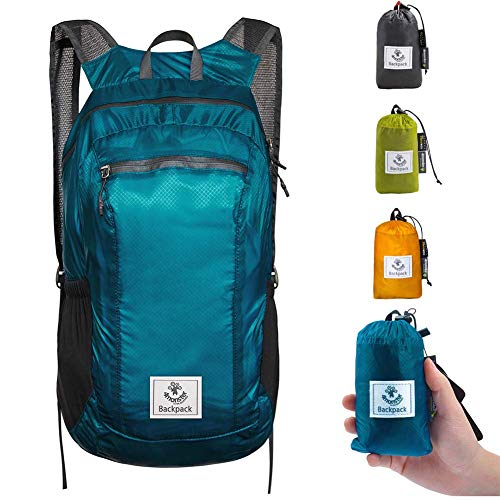
A travel-hiking pack combines panel access and carry-on compliance with trail-ready suspension for one-bag adventure travel. It stands in for both a wheeled suitcase and a stripped-down trekking pack, carrying folded clothes and travel documents through airports and bus terminals, then switching to trail mode for day hikes once a trip reaches its destination. Most travel-hiking hybrids fall between 30 and 45 liters, a range small enough to satisfy most airline carry-on rules and large enough to hold a week or more of mixed city-and-trail gear. The category trades some of the load-hauling comfort of a dedicated backpacking pack for suitcase-style access, lockable zippers, and a low-profile look that doesn't stand out in a hotel lobby or on a train platform.
A travel-hiking hybrid is a backpack built for both international travel and day hikes, combining a suitcase-style panel opening, a stowable or removable hipbelt, and a lighter internal frame than a dedicated backpacking pack while still supporting a loaded walk from a train station to a hostel. It sits between a soft-sided travel duffel and a full trekking pack.
The frame in most hybrids is a single removable framesheet or a pair of aluminum stays rather than the full perimeter frame found on a 55L-plus backpacking pack, since the design prioritizes packability and a slim profile in overhead bins over multi-day load transfer. Fabric is typically a densely woven nylon in the 400 to 600 denier range, chosen for abrasion resistance against luggage carts and conveyor belts rather than pure weight savings. Real models built around this brief include the Osprey Farpoint and Fairview series, the Gregory Border line, the Cotopaxi Allpa, and the Tortuga Outbreaker and Setout packs — each pairs a panel-loading main compartment with a stowable harness system, though exact liter counts and compartment layouts vary by model.
Most hiking packs between 30 and 45 liters fit as a carry-on on US airlines, since a common size cap is around 22 x 14 x 9 inches, roughly 45 linear inches total; packs that stay within that footprint when not overstuffed typically clear gate sizers. Liter volume alone doesn't guarantee a fit, because external pockets and loose straps add bulk.
Compression straps matter here: cinching a half-packed hybrid down flattens side pockets and pulls in loose fabric, which is often the difference between a pack that slides into a sizer and one that gets tagged for the hold. Rules vary by carrier and route, so a pack built for domestic US flights may still get pulled aside on a budget European or Asian carrier with a smaller personal-item allowance. A pack aimed specifically at gate compliance is covered in more depth under carry-on hiking backpacks, and travelers flying into multiple countries on one trip should check the tightest limit on their itinerary rather than the average.
| Carrier type | Typical cabin allowance | Notes |
|---|---|---|
| US major airlines | ~22 x 14 x 9 in (~45 linear in) | Sizers at the gate enforce this on busy flights |
| European legacy carriers | Similar to US, varies by fare class | Basic economy fares often restrict to a smaller personal item only |
| Budget/low-cost carriers | Often a small personal item free; larger cabin bag paid add-on | Limits can run smaller than US majors; check per airline |
Panel-loading packs open flat like a suitcase through a U-shaped zip on one face, letting a traveler see and reach every item at once without unpacking from the top down; top-loading packs load through a drawstring collar and lid, which seals out weather better on trail but forces digging to reach gear packed near the bottom.
- Panel-loading packs lay flat on a hostel bed or hotel floor, show the full contents at once, and pack more like a suitcase, which suits mixed clothing-and-gear travel loads.
- Top-loading packs compress tighter, shed rain and dust better through the collar closure, and suit trail use where the load is packed once each morning and not re-opened until camp.
- Hybrid designs add a smaller top-loading pocket or lid on top of a panel-loading main body, giving quick access to a rain shell or snacks without opening the full suitcase-style zip.
A convertible travel pack zips its hipbelt and shoulder straps into a rear pocket, turning a trail-style backpack into a slim, strap-free case for hotel check-ins, bus holds, and customs lines; some models add a small zip-off daypack for city use once the main pack is stashed at a hostel.
Stowing the harness protects it from catching on luggage carousels, bus racks, or overhead bin latches, and it gives the pack a cleaner, less "expedition" silhouette that draws less attention in cities. The tradeoff is a lighter, simpler suspension than a dedicated backpacking pack, so a fully loaded convertible pack won't carry as comfortably on a multi-hour hike as a purpose-built trekking pack from the 35–45L weekend category. Full details on this format, including how the zip-away harness holds up over repeated stowing, are covered under convertible travel-hiking packs.
Go Deeper
Detailed companion guides for travel & hiking hybrid packs.
Best Travel Hiking Backpacks
Buyer's guide: best hiking backpack for travel.
Best Carry-On Hiking Backpacks
Buyer's guide: best carry on hiking backpack.
Best Hiking Backpacks For Europe
Buyer's guide: best hiking backpack for europe.
Best Hiking Backpacks With A Laptop Compartment
Buyer's guide: best hiking backpack with laptop compartment.
Convertible Travel-Hiking Packs
Convertible travel-hiking packs stow their hipbelt and straps for suitcase-style carry, then convert back to trail mode for day hikes at the destination.
Hunting Backpacks
Related backpacks by activity guide.
Winter & Snow Backpacks
Related backpacks by activity guide.