
Best Hiking Backpack For Europe
Best Hiking Backpack For Europe, ranked from aggregated owner ratings and reviews, not first-hand testing. Real pros, cons, and who each pick is best for.

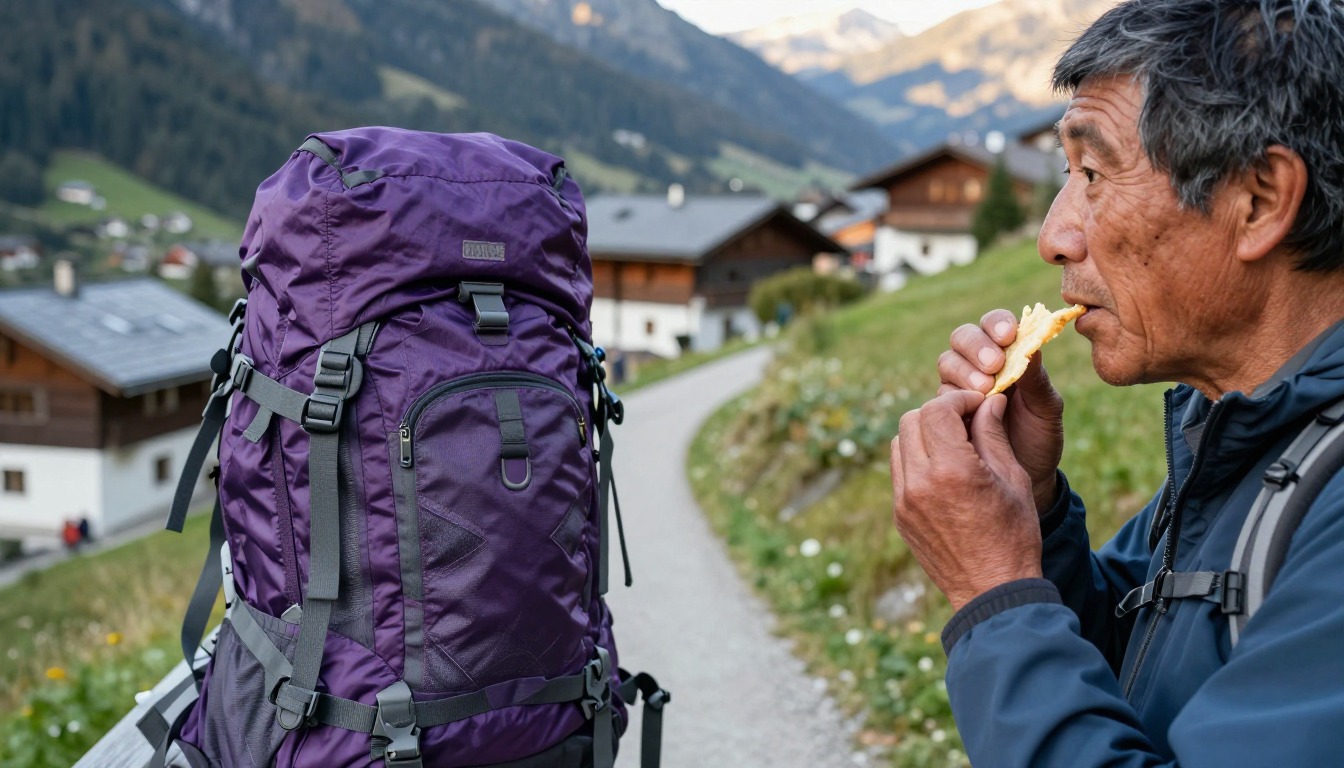
Our Top 3 Picks
Quick Comparison
| Product | Best for | Buy | |
|---|---|---|---|
| Seektop 15L Small Hiking Backpack for Women Men | Top Overall Pick | See Amazon | View |
| MIYCOO Ultralight Packable Backpack | Best Value | See Amazon | View |
| Maelstrom 40L Hiking Backpack | Best Ultralight | See Amazon | View |
| SUIKIHUM Ultra Lightweight Hiking-Daypack | Best Compact Pack | See Amazon | View |
| Bseash 50L Hiking Backpack | Most Breathable | See Amazon | View |
| G4Free 20L Lightweight Packable Hiking Backpack for Women Men | Best for Women | See Amazon | View |
Choosing a hiking backpack for a European trip starts with the trip's specific mix of budget-airline flights, train travel, and day hikes, since each of those favors a slightly different pack size and shape.
What size pack works best for European travel?
A pack in the 30 to 40 liter range generally works best for a multi-country European trip, since it's compact enough to satisfy the tighter cabin-bag limits common on European budget carriers while still holding a week or more of layered clothing for variable weather. Trips concentrated in one region with less flying and more train or car travel can size up slightly, since train luggage racks are typically more forgiving than airline overhead bins.
Why do budget airline limits matter more in Europe?
Budget carriers common on European short-haul routes often enforce smaller cabin allowances than US or European legacy airlines, sometimes limiting a free "personal item" to a small under-seat bag and charging extra for a larger cabin bag. A traveler planning several budget-airline hops within one trip should size their pack to the tightest limit among the airlines being used, since a pack that clears one carrier's sizer can still get flagged and charged a fee on another.
Do European trains and hostels affect pack choice?
Regional and city trains in Europe often have overhead racks or end-of-carriage luggage areas sized for a backpack rather than a large suitcase, which favors a compact, panel-loading pack that lifts easily overhead without wide side pockets catching on rack edges. Hostels and budget hotels frequently have narrow stairwells, elevators, or storage lockers, where a slim, convertible-style pack with a stowable harness moves more easily than a bulkier trekking pack.
Should the pack support day hikes as well as city travel?
If a European itinerary includes day hikes — Alpine trails, coastal paths, national park visits — a pack with reasonable trail comfort matters, even at a smaller travel-oriented size, since it will carry water, a rain layer, and snacks for several hours at a time. A travel-hiking hybrid with a stowable harness handles this dual role better than either a pure city daypack, which lacks a real hipbelt, or a full trekking pack, which is oversized and harder to manage on trains and in hostels; general access-style tradeoffs for this format are covered under panel-loading versus top-loading design.
What climate and packing factors matter for Europe specifically?
European trips spanning multiple seasons or regions — a spring city stretch followed by an Alpine hike, for instance — benefit from a pack with external compression straps to manage a variable clothing load, since packing for both cobblestone city walks and mountain trails within one trip means volume needs can shift day to day. A rain cover or weather-resistant main fabric is worth prioritizing given Europe's variable shoulder-season weather across regions.
Does the itinerary's country mix change the pack choice?
A trip concentrated in Alpine countries with more day-hiking time benefits from slightly better trail comfort, even at the cost of a bit more bulk, since the pack will spend more hours on a wearer's back with a real load. A trip weighted toward cities — museum-hopping, regional trains, short walking tours — favors the lightest, most compact pack that still clears every budget airline on the route, since trail comfort matters less when most days involve a few hours of walking with a mostly empty pack.
Is a single pack enough for a multi-week European trip?
A single 30 to 40 liter pack works for most multi-week European trips when paired with laundry access every four to seven days, which is realistic in most cities and larger towns across the region. Trips without reliable laundry access, or those crossing into colder shoulder-season weather partway through, may need either a slightly larger pack or a packing strategy built around fewer, more versatile layers rather than a bigger bag.
Full Ranking, Reviewed
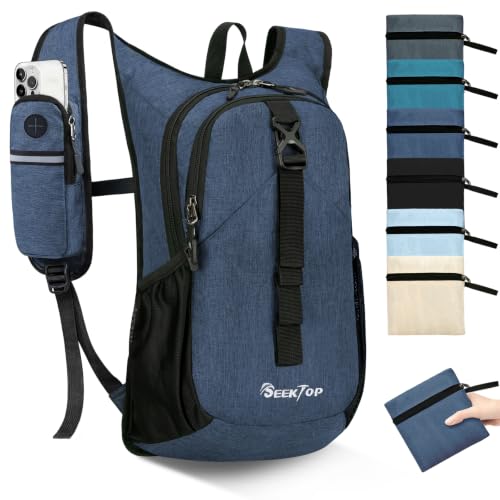
Best for Hiking Backpacks for Europe
- 15 L capacity
- Polyester shell
- 12 oz empty
- Low carry weight pays off on big-mileage days
- Folds down small when you do not need the space
- Multiple compartments make organising kit easy
- At 15 L it is best kept to shorter outings — it fills up once you add layers, lunch and water for a full day.
Verdict: This 15 L daypack offers a packable build, making it the one we would grab first for Hiking Backpacks for Europe.

Best for Hiking Backpacks for Europe
- 35 L capacity
- 13 oz empty
- Waterproof & Durability
- Low carry weight pays off on big-mileage days
- Folds down small when you do not need the space
- Check the size and colour options on the live listing, as availability shifts.
Verdict: This 35 L hiking pack offers a packable build, making it well worth a look for Hiking Backpacks for Europe.

Best for Hiking Backpacks for Europe
- 40 L capacity
- 210D ripstop nylon shell
- 2.2 lb empty
- Rain cover included
- Ergonomic and Comfortable Design
- Includes a rain cover for sudden downpours
- Ripstop fabric shrugs off scrapes and snags on the trail
- The 40 L size is a versatile in-betweener rather than a specialist at either end.
Verdict: This 40 L hiking pack pairs a bundled rain cover with a tough ripstop shell, making it well worth a look for Hiking Backpacks for Europe.
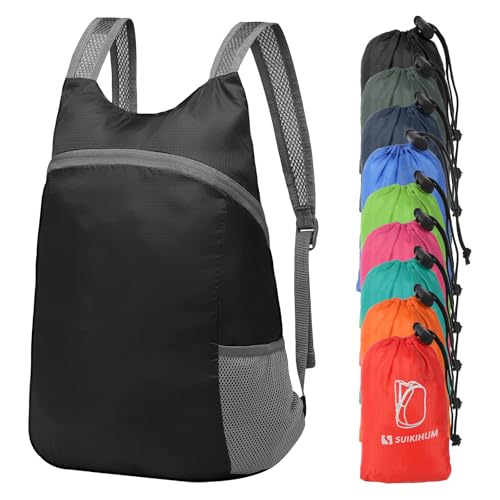
Best for Hiking Backpacks for Europe
- 20 L capacity
- Polyester shell
- Low carry weight pays off on big-mileage days
- Folds down small when you do not need the space
- At 20 L it is best kept to shorter outings — it fills up once you add layers, lunch and water for a full day.
- The fabric is water-resistant rather than fully waterproof, so a pack liner helps in sustained rain.
Verdict: This 20 L daypack offers a packable build, making it a strong option for Hiking Backpacks for Europe.

Best for Hiking Backpacks for Europe
- 50 L capacity
- Ripstop nylon shell
- 26 oz empty
- Ventilated back panel
- Comfortable Daypack
- Airflow channels help your back stay cooler under load
- Tough, tear-resistant shell built for trail abuse
- At 50 L it is more pack — and more weight — than a day hiker needs; it earns its keep on overnight and multi-day loads.
- Water-resistant shell handles showers, but a liner or cover is wise for all-day rain.
Verdict: This 50 L backpacking pack pairs a breathable back with a tough ripstop shell, making it well worth a look for Hiking Backpacks for Europe.

Best for Hiking Backpacks for Europe
- 20 L capacity
- Nylon shell
- 12 oz empty
- Compact & Packable
- Light enough that you forget you are wearing it
- Packable build stows into its own pocket for travel
- The 20 L capacity is snug for anything beyond a half-day on the trail.
- Water-resistant shell handles showers, but a liner or cover is wise for all-day rain.
Verdict: This 20 L daypack offers a packable build, making it well worth a look for Hiking Backpacks for Europe.
Frequently Asked Questions
Do European budget airlines have stricter carry-on limits than US airlines?
Often, yes. Many European budget carriers cap a free personal item at a smaller size than the standard US carry-on allowance, charging extra for a larger cabin bag. Limits vary by airline, so check each carrier on a multi-flight itinerary.
Is a rolling suitcase or a backpack better for Europe?
It depends on the trip. A backpack suits cobblestone streets, train travel, and hostel stairs better than a rolling suitcase, while a suitcase can be easier on flat, paved routes. Trips mixing city travel with day hikes generally favor a backpack.