
Best Hiking Backpack For Hunting
Best Hiking Backpack For Hunting, ranked from aggregated owner ratings and reviews, not first-hand testing. Real pros, cons, and who each pick is best for.
Affiliate disclosure: this page contains affiliate links. Purchases made through them may earn us a commission at no extra cost to you. See our affiliate disclosure.
In plain English
A hunting backpack is a hiking pack with one extra job. On the way in it carries your normal gear. After a successful hunt it has to carry meat out, and that meat can weigh far more than anything a regular hiker carries.
That is why the frame matters more than pockets or pattern. The frame is the stiff skeleton inside or outside the pack. It passes the weight down to the hipbelt, the padded strap around your hips, so your legs do the work instead of your shoulders. Think of carrying a heavy box: holding it at your waist is far easier than letting it hang from your hands.
Your torso length, the distance from the bump at the base of your neck to the top of your hip bones, decides the size. Then match the pack's load rating to the heaviest trip you really expect to make, with some margin to spare.
Our Top 3 Picks
Quick Comparison
| Shell | Extras | Buy | ||||
|---|---|---|---|---|---|---|
| 1 | TIDEWE Hunting Backpack for MenTop Overall Pick | 90 L | — | — | Rain cover | View |
| 2 | MARITTON Hunting Backpack with Waterproof Rain Cover for Men.Best Value | 40 L | — | Polyester | Rain cover | View |
| 3 | Wotony Military tactical backpackBest Ultralight | 25 L | 23 oz | — | — | View |
| 4 | Hunting Backpack for MenBest Hydration Pack | 80 L | 3.4 lb | — | Rain cover | View |
A hunting backpack should be chosen around the heaviest realistic pack-out weight for the game you're hunting, not just the gear you carry in. Elk demand a different frame than deer, and a day hunt near the truck needs far less pack than a multi-day backcountry trip.
What should you look for in a hunting backpack?
Look for four things first: a rated load capacity that covers your worst-case pack-out weight, a detachable or expandable meat shelf, a hipbelt built to transfer, by a common rule of thumb, roughly 80% of the load off the shoulders, and a torso-length adjustment that fits your measured torso rather than a generic size. Camo pattern and pocket layout matter, but they're secondary to whether the frame can actually carry the weight you're planning for.
Beyond the frame, check for quiet hardware — buckles and zipper pulls that don't rattle on the final stalk — and exterior attachment points for a bow, rifle or spotting scope that don't interfere with the meat shelf when it's loaded.
Internal frame or external frame for hunting?
Choose an internal-frame hunting pack if you also want to use it for general backpacking, or if most of your hunts keep the pack-out load light; choose an external or hybrid frame if you're hunting elk or other big game where a single animal can mean multiple heavy trips out of the backcountry. External frames carry more but ride farther from the body, which costs some balance on steep or technical terrain.
There's no universally "better" choice here — it's a direct trade-off between raw carrying capacity and stability, and the right answer depends on the game you're hunting and the terrain you're hunting it in.
How much backpack capacity do you need for a hunt?
Size a day or scouting hunt pack around 25 to 50 liters, a multi-day backcountry hunt around 65 to 105 liters with an expandable meat shelf, and a dedicated meat-hauler setup around 105 liters or more when the plan involves hauling out a full animal over several trips. These ranges mirror standard hiking capacity bands, but hunting packs need extra headroom in rated load capacity beyond their liter figure, since meat weight adds far more bulk than a typical overnight kit.
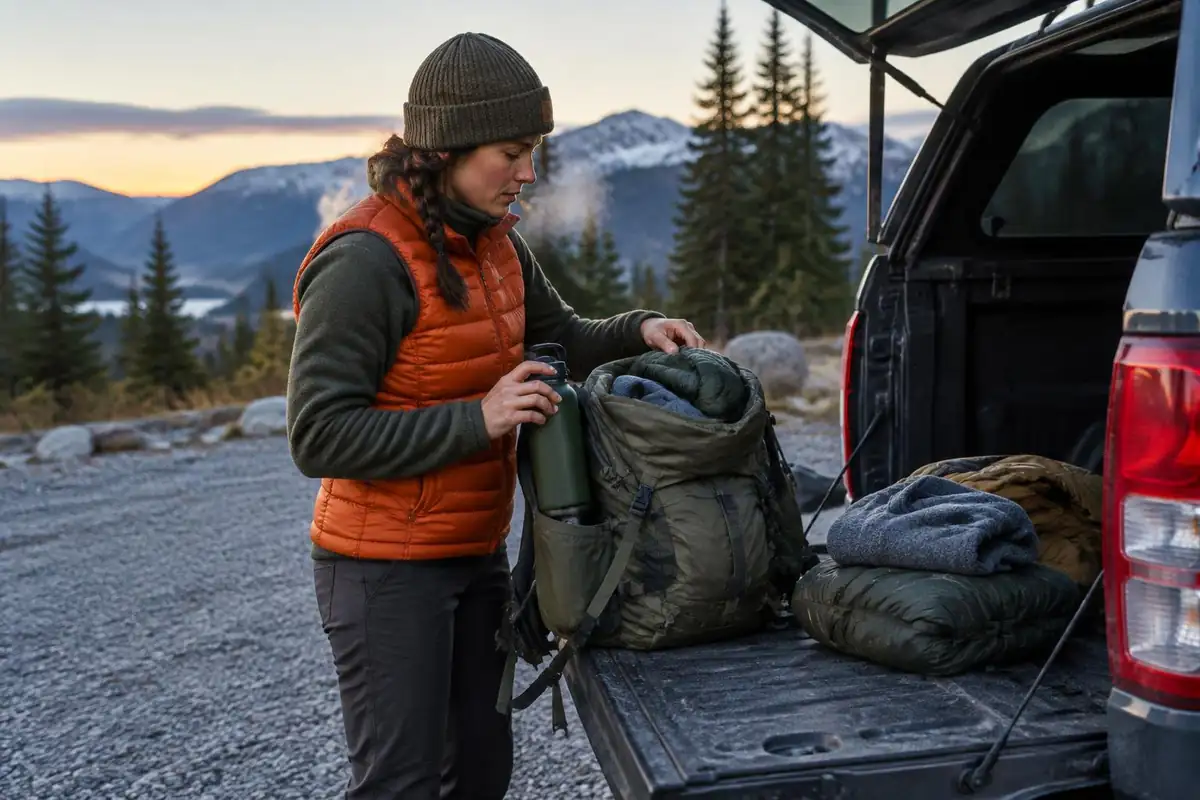
- Day/scouting hunts: 25–50L, light loads
- Multi-day backcountry hunts: 65–105L, heavy loads with meat
- Meat-hauler/expedition setups: 105L+, the heaviest pack-outs
Which hunting backpack suits your hunt type?
Bow hunters generally want a quieter pack with a dedicated bow-carry system and enough capacity for a multi-day spot-and-stalk trip; rifle hunters need a stable scabbard or lash system that keeps a rifle secure and quick to access. Late-season and mountain hunters should size up for bulkier cold-weather layers and check how the pack handles snow and freezing conditions, since a winter hunting kit takes up meaningfully more room than a September archery kit.
Whichever pack you choose, prioritize a proven, load-tested frame and hipbelt over pocket count or camo pattern — a pack that's comfortable empty but painful under a heavy load of meat isn't doing its job.
Full Ranking, Reviewed

Best for Hunting backpacks
- 90 L capacity
- Rain cover included
- Ergonomic Design & Comfortable
- Routes a hydration bladder and hose without fuss
- Includes a rain cover for sudden downpours
- That 90 L volume is overkill for quick hikes and better suited to multi-night trips.
Verdict: This 90 L backpacking pack pairs room for a bladder with a bundled rain cover, making it a strong choice for Hunting Backpacks.
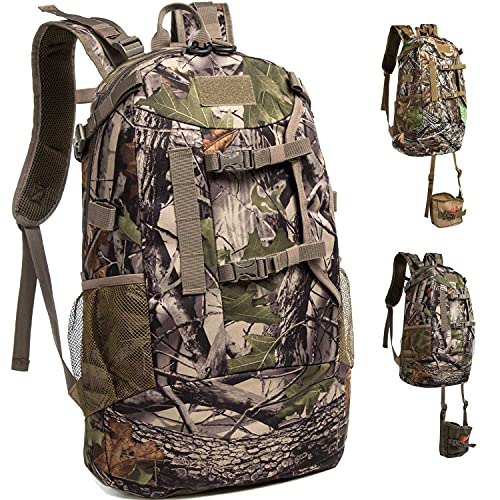
Best for Hunting backpacks
- 40 L capacity
- Polyester shell
- Rain cover included
- Integrated Bow/Rifle carrying system
- Packs an integrated rain cover to keep gear dry
- Plenty of pockets keep small gear sorted and findable
- At 40 L it sits between a daypack and a backpacking pack — a touch large for quick hikes, a touch small for long multi-night loads.
Verdict: This 40 L hiking pack offers a bundled rain cover, making it an easy shortlist pick for Hunting Backpacks.

Best for Hunting backpacks
- 25 L capacity
- 23 oz empty
- Reliable and durable materials
- Low carry weight pays off on big-mileage days
- Comfortable and practical
- Check the size and colour options on the live listing, as availability shifts.
Verdict: This 25 L hiking pack keeps things refreshingly simple, making it a strong option for Hunting Backpacks.

Best for Hunting backpacks
- 80 L capacity
- 3.4 lb empty
- Rain cover included
- Load-Reducing System
- Hydration sleeve keeps water within easy reach
- Packs an integrated rain cover to keep gear dry
- At 80 L it is more pack — and more weight — than a day hiker needs; it earns its keep on overnight and multi-day loads.
Verdict: Wild Cedar’s 80 L backpacking pack pairs room for a bladder with a bundled rain cover, making it well worth a look for Hunting Backpacks.
What research says about very heavy pack-outs
Pack-out loads of 60 to 100-plus pounds are closer to military loads than to backpacking loads, so military research is the most useful guide. US Army doctrine says a properly conditioned soldier's fighting load should ideally be about 30% of body weight, and an approach-march load about 45%.1 For a 180-pound hunter, 45% works out to about 81 pounds. The same manual says energy expenditure stays constant at loads up to 30% of body weight but rises through the march above that.1
A 2022 review of backpack ergonomics says adult loads in military, hiking and mountaineering settings should generally not exceed 40% of body mass.2 Soldiers often exceed that and carry loads over 45 kilograms,3 and UK infantry testing found metabolic cost rose about 1% for every extra kilogram in the 25 to 70 kilogram range.4 The practical lesson for a hunter is that splitting an animal into more trips is not just about comfort. Each extra kilogram costs energy, and the trips add up over a long pack-out.
How much of the meat load really reaches your hips
The page's figure of roughly 80% on the hips is a common outdoor-industry number, not a settled one. The Washington Trails Association says a hip belt moves around 80% of pack weight to the hips,5 Big Agnes aims for about 80%,6 and Alpkit gives a range of 60 to 80%.7 US Army doctrine, looking at loads of 31 to 90 pounds with a frame and hip belt, puts it at about 30% on the hips and lower back and 70% on the shoulders.1
Whatever the exact share, shifting weight toward the hips is well supported. A lab study found the hip region tolerates pack pressure significantly better than the shoulders, and the authors recommend moving load from shoulders to hips wherever possible.8 Placement also matters on rough ground: a load-carriage review notes that low or mid-back placement may suit uneven terrain, while high placement may be best on even terrain.9 Steep, broken elk country favors keeping heavy meat snug and not stacked high.
Injuries, and why hunters should plan more trips
Prolonged heavy carrying has a known injury list: foot blisters, stress fractures, back strains, metatarsalgia (pain in the ball of the foot), rucksack palsy (nerve pressure from shoulder straps) and knee pain.9 March speed, grade and terrain can be adjusted to change load-carriage intensity, not just load weight.3 Slowing down on the steep sections is a real tool, not just a preference.
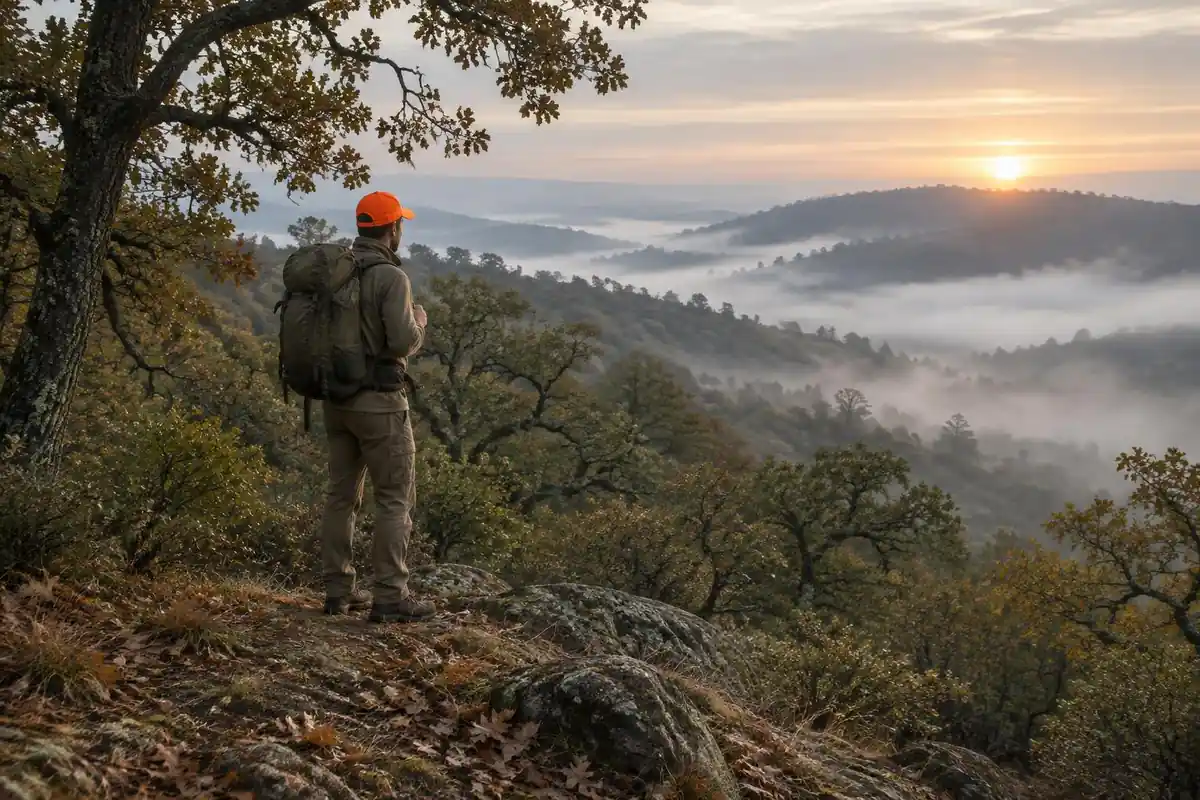
Camo raises a separate safety question. Colorado requires firearm big-game hunters to wear fluorescent orange or pink.10 The Hoosier National Forest warns that blue and red can resemble a turkey's head in spring season,11 and the Mark Twain National Forest advises avoiding white or tan in deer season and covering your backpack with orange.12 If you choose a full-camo pack, plan how you will add orange when the law or common sense calls for it, especially while carrying meat out.
Frequently Asked Questions
What's the difference between a hunting backpack and a hiking backpack?
A hunting backpack uses the same frame and hipbelt technology as a hiking backpack but adds a detachable or expandable meat shelf, exterior lashing points for a bow or rifle, and camo or muted earth-tone fabric instead of bright trail colors, so it can convert from a normal kit-carrying pack into a load hauler after game is down.
Do I need an external frame pack for elk hunting?
Not always, but many backcountry elk hunters choose an external or hybrid frame because a single elk can require multiple pack-out trips at 80 to 100-plus pounds each. Hunters expecting lighter pack-out weight, or who also want the pack for general backpacking, can size a well-rated internal-frame hunting pack instead.
What size hunting backpack do I need for a multi-day hunt?
Most multi-day backcountry hunts call for a 65 to 105-liter pack with an expandable meat shelf and a frame rated for at least 80 to 100 pounds loaded. Measure your torso length the same way as for any backpacking pack and match it to the pack's adjustment range before comparing capacity.
Related Buying Guides
Planning a hiking trip? Compare hotels, lodges and guesthouses.
Book on Booking.com Book on AgodaAffiliate links: we may earn a commission at no extra cost to you.