

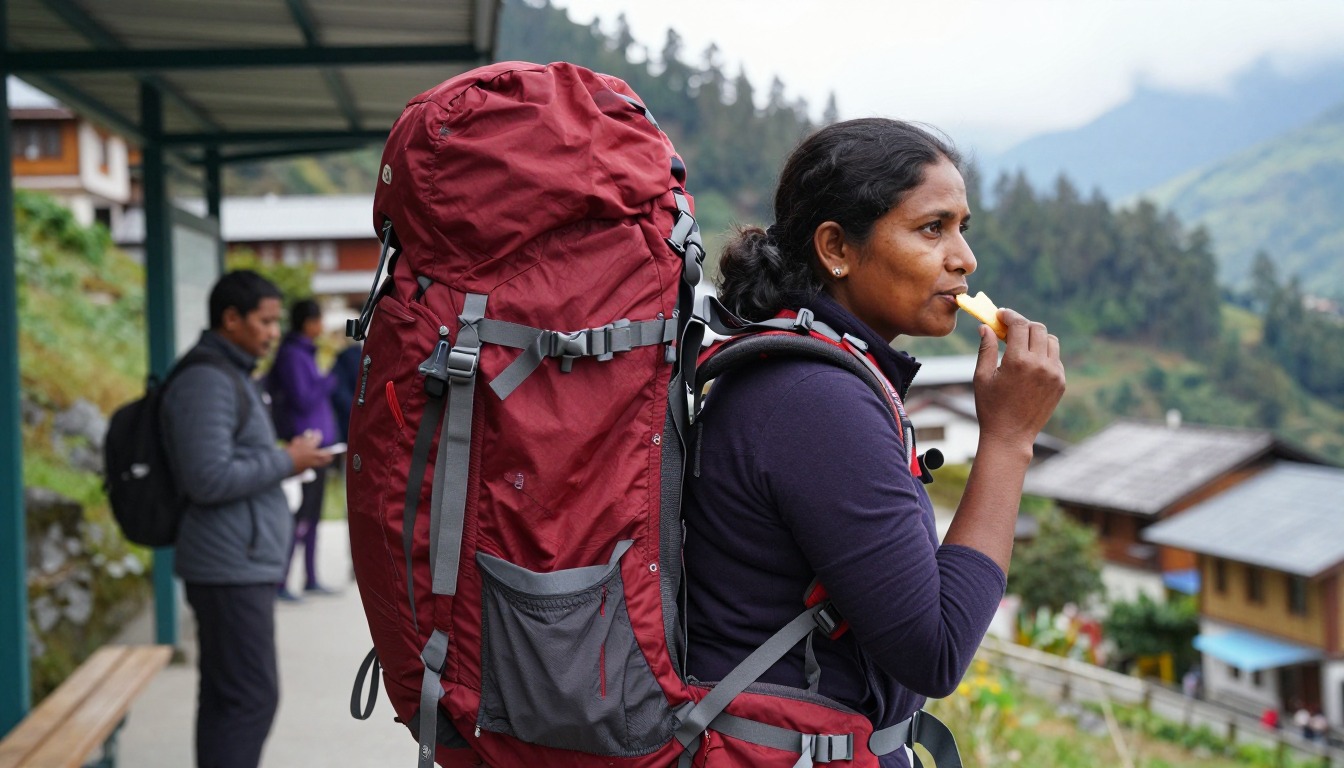


Weight belongs on the hips because the pelvis and legs are built to bear sustained load over distance, while the shoulder and neck muscles fatigue much faster under the same weight. This is the core principle behind every framed backpack's suspension design: route force from the pack body, through the frame, down to a hipbelt positioned over the iliac crest.
When shoulders end up carrying too much
Shoulders take on more weight than they should when the hipbelt is too loose, positioned too low or too high, or when the pack lacks a frame capable of transferring load in the first place. Overloading a frameless pack has the same effect — without internal structure, weight rides mostly on the shoulders and back panel regardless of how padded the hipbelt is.
Checking the balance on your own pack
A quick field check: loosen the shoulder straps slightly while the hipbelt is snugged over the hip bones. If the pack stays roughly in place and doesn't sag or drop, the hipbelt is carrying its share of the load correctly. If the pack drops noticeably, weight was riding on the shoulders more than the hips, and the hipbelt position or torso-length fit needs adjustment before the next hike.
Why frame type changes the answer
The 80/20 hip-to-shoulder guideline assumes a framed pack — one built around internal stays, a stiff framesheet, or a peripheral wire perimeter that can actually route force down to the hipbelt. Without that structure, there's no path for weight to travel from the pack body to the hips, so even a well-padded hipbelt on a frameless pack mostly steadies the load rather than carrying it. This is one reason frameless and minimalist ultralight packs are generally kept lighter overall, since the shoulders end up doing more of the work regardless of belt fit.
Load and terrain both matter
Heavier loads make correct hip-first distribution more important, since the shoulders fatigue faster under sustained weight than the hips do. Uneven or steep terrain adds another factor: a pack that rides properly on the hips stays more stable during scrambles or stream crossings than one where weight sits high and loose on the shoulders, which can throw off balance at exactly the moments balance matters most.