
Hiking Backpack Hip Belt Pockets
Hiking Backpack Hip Belt Pockets, ranked from aggregated owner ratings and reviews, not first-hand testing. Real pros, cons, and who each pick is best for.

Affiliate disclosure: this page contains affiliate links. Purchases made through them may earn us a commission at no extra cost to you. See our affiliate disclosure.
In plain English
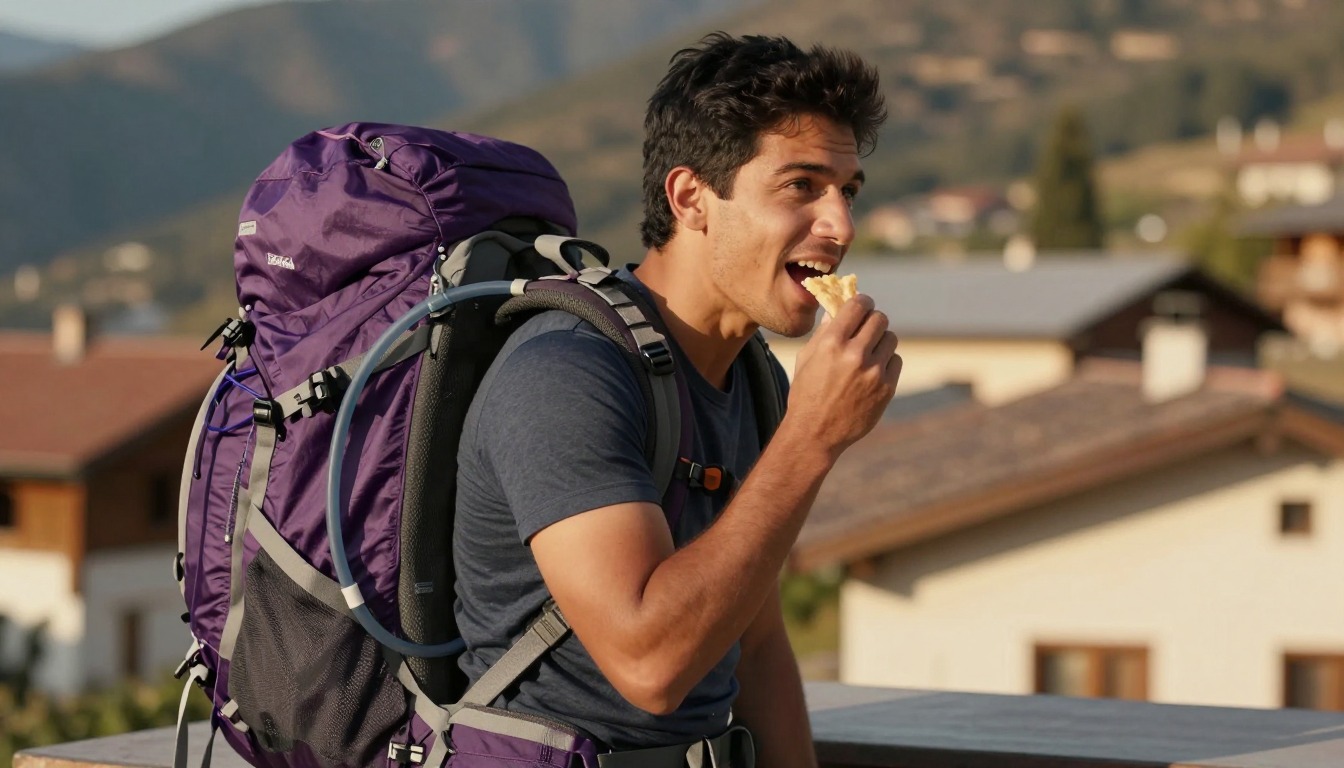
A hipbelt pocket is a small zippered pouch sewn onto the padded belt that wraps around your waist. It lets you grab a phone, a snack or sunscreen while you keep walking, instead of stopping and taking the whole pack off.
The belt is the key part. On a hiking pack, the hip belt is what carries most of the weight, a little like a well-fitted tool belt. If the belt sits in the wrong place, the pockets end up too far back to reach or too far forward and bouncing.
So think of hipbelt pockets as a bonus that depends on fit. First make sure the pack's belt fits your hips. Then look at whether the pockets are big enough for the one or two things you grab most often.
Our Top 3 Picks
Quick Comparison
| Shell | Extras | Buy | ||||
|---|---|---|---|---|---|---|
| 1 | StorForge Lightweight Hiking Backpack & Camping Daypack for Men/WomenTop Overall Pick | 35 L | 2.1 lb | Nylon | Rain cover | View |
| 2 | TILYMOL 30L Hiking Travel Backpack for Men Women with Hydration SystemBest Value | 30 L | — | Ripstop fabric | Hydration | View |
| 3 | Osprey Talon 22L Men's Lightweight Hiking BackpackBest Hydration Pack | 22 L | 2.4 lb | — | Hydration | View |
| 4 | Osprey Kyte 48L Women's Backpacking Backpack with HipbeltBest for Women | 48 L | 4.3 lb | — | Rain cover | View |
| 5 | Gregory Zulu 45L Hiking/Backpacking PackAlso Great | 45 L | — | — | Hip belt | View |
| 6 | Osprey Tempest 22L Women's Lightweight Hiking BackpackMost Breathable | 22 L | 2.3 lb | — | Hydration | View |
Choosing a hiking backpack with hipbelt pockets starts with confirming the pack has a proper load-bearing hipbelt, then narrowing by pocket size, placement, and how that pocket design interacts with arm swing and overall fit.
What makes a hipbelt pocket useful rather than just decorative?
A useful hipbelt pocket sits within easy reach of either hand, has a zipper that can be operated one-handed while walking, and holds at least a phone or a folded map without bulging awkwardly against the hip. Pockets that require two hands to open, or that sit angled toward the back where a hiker can't see or reach them without twisting, add weight without adding real convenience.
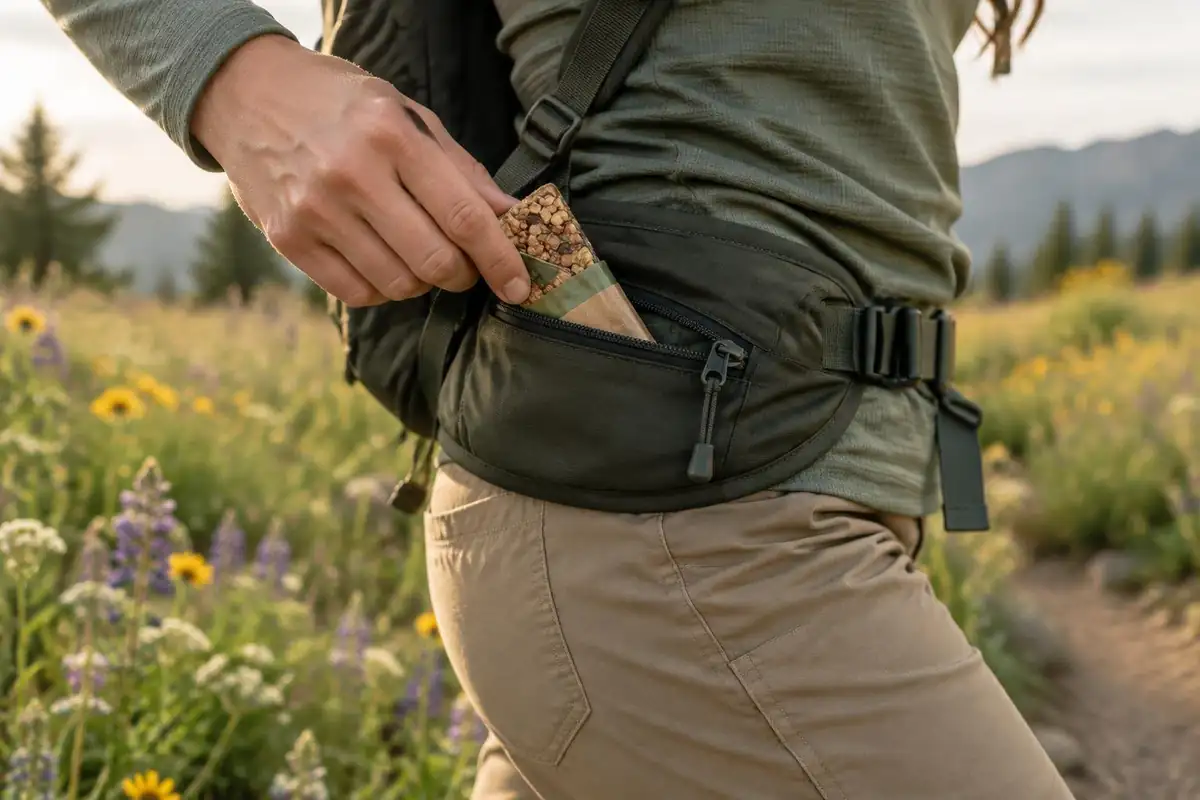
Pocket placement varies by brand: some sit flat against the front of the belt wings, others angle slightly forward for easier access while the arms are swinging. Testing reach with the pack loaded, not empty, gives the most accurate sense of whether a pocket will actually get used on trail.
How much should hipbelt pockets hold?
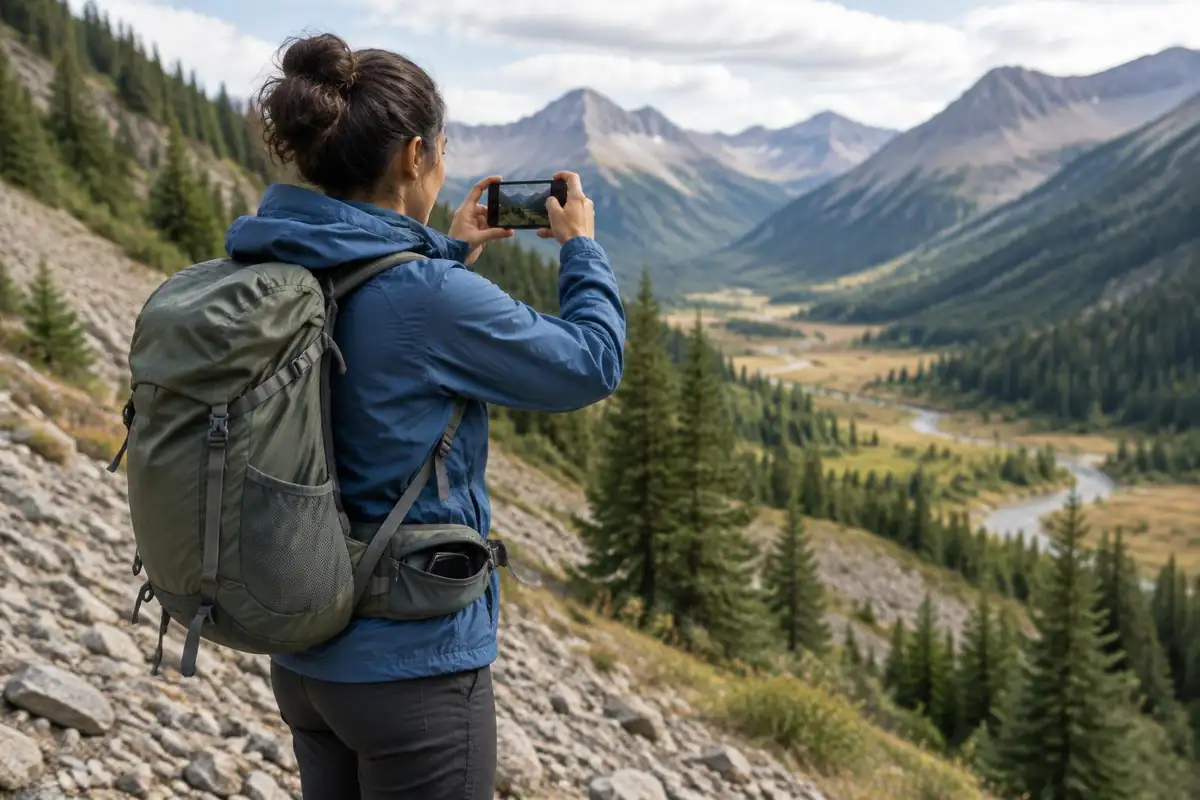
Hipbelt pockets should hold at minimum a smartphone, since that's the item hikers reach for most often; beyond that, capacity needs depend on what else you want at hand. A hiker who snacks frequently benefits from a pocket sized for an energy bar or trail mix alongside a phone, while a hiker mainly using the pocket for a phone and lip balm can get by with a slimmer design.
- Slim hipbelt pockets fit a phone or a single snack item and add the least bulk to the belt wings.
- Standard hipbelt pockets fit a phone plus a small item like sunscreen or a lighter, covering most day-to-day needs.
- Deep hipbelt pockets fit a compact camera, a larger snack supply, or a phone inside a protective case.
Does adding hipbelt pockets affect pack weight or fit?
Yes, hipbelt pockets add a small amount of weight — typically a modest fraction of total pack weight — and larger pockets can interfere with arm swing on packs where the belt wings sit higher on the torso. This trade-off matters more on packs meant for fast hiking or scrambling, where unrestricted arm movement counts, and matters less on a standard-pace day hike or multi-day trip where the convenience outweighs a minor bulk increase.

Hipbelt pocket size and placement should be checked against the pack's overall hipbelt design, since a pack with a minimal, low-profile belt may not have room for a deep pocket without compromising the belt's core job of transferring weight to the hips.
Who benefits most from hipbelt pockets?
Hikers who want quick access to a phone, snacks, or sun protection without removing the pack benefit most, particularly on longer day hikes or multi-day trips where stopping to dig through the main compartment repeatedly wastes time and breaks hiking rhythm. Hikers who rarely need mid-hike access to small items, or who prefer shoulder-strap pockets for the same purpose, may not find hipbelt pockets essential and can prioritize other fit and load-transfer features instead.
The honest trade-off is straightforward: hipbelt pockets add minor weight and, on some designs, a small amount of bulk near the hips, in exchange for reach-without-stopping convenience. For most day hikers and backpackers, that trade favors having at least one functional hipbelt pocket, even a slim one.
Full Ranking, Reviewed

Best for Packs With Hipbelt Pockets
- 35 L capacity
- Nylon shell
- 2.1 lb empty
- Rain cover included
- Backpack waterproof cover included
- Hydration sleeve keeps water within easy reach
- Packs an integrated rain cover to keep gear dry
- Colours and exact capacity options change often on Amazon — confirm the current variant on the listing before buying.
Verdict: StorForge’s 35 L hiking pack pairs room for a bladder with a bundled rain cover, making it our overall pick for Packs With Hipbelt Pockets.

Best for Packs With Hipbelt Pockets
- 30 L capacity
- Ripstop fabric shell
- Hydration-ready
- Hydration-Ready Design
- Routes a hydration bladder and hose without fuss
- Supportive hip belt takes weight off the shoulders
- The fabric is water-resistant rather than fully waterproof, so a pack liner helps in sustained rain.
Verdict: This 30 L hiking pack pairs room for a bladder with real hip-belt support, making it an easy shortlist pick for Packs With Hipbelt Pockets.

Best for Packs With Hipbelt Pockets
- 22 L capacity
- 2.4 lb empty
- Hydration-ready
- Lightweight & versatile design
- Hydration sleeve keeps water within easy reach
- Ventilated back panel cuts sweat on long climbs
- Check the size and colour options on the live listing, as availability shifts.
Verdict: This 22 L daypack pairs a breathable back with room for a bladder, making it an easy shortlist pick for Packs With Hipbelt Pockets.

Best for Packs With Hipbelt Pockets
- 48 L capacity
- 4.3 lb empty
- Rain cover included
- Made for Work
- Includes a rain cover for sudden downpours
- Tunable harness helps you find a comfortable carry
- The 48 L size is a versatile in-betweener rather than a specialist at either end.
Verdict: This 48 L hiking pack pairs a bundled rain cover with real hip-belt support, making it a strong option for Packs With Hipbelt Pockets.

Best for Packs With Hipbelt Pockets
- 45 L capacity
- Padded hip belt
- Adjustable torso dials the fit to your back length
- Padded hip belt shifts load onto your hips, not your shoulders
- At 45 L it sits between a daypack and a backpacking pack — a touch large for quick hikes, a touch small for long multi-night loads.
Verdict: This 45 L hiking pack pairs real hip-belt support with an adjustable fit, making it a strong option for Packs With Hipbelt Pockets.

Best for Packs With Hipbelt Pockets
- 22 L capacity
- 2.3 lb empty
- Hydration-ready
- Lightweight & versatile design
- Set up to carry a reservoir for hands-free sipping
- Ventilated back panel cuts sweat on long climbs
- Check the size and colour options on the live listing, as availability shifts.
Verdict: This 22 L daypack pairs a breathable back with room for a bladder, making it an easy shortlist pick for Packs With Hipbelt Pockets.
Pocket position depends on belt fit
Where a hipbelt pocket ends up on your body is set by how the belt fits. Gossamer Gear says the top third of the belt should rest on the iliac crest, the top ridge of the hip bone,1 and Osprey says a correctly sized hipbelt leaves a 3 to 6 inch gap between the pad tips when tightened.2 If the belt is too long, the pockets slide toward your belly and can meet in the middle; too short, and they sit behind your hips where you have to twist to reach them.
Belt size tracks waist size. Granite Gear says hip belt size is roughly your regular pant waist size,3 while ULA sizes men's belts at pant waist plus two inches.4 Some belts adjust after purchase, such as Osprey's Fit-on-the-Fly hipbelt2 and Granite Gear's Re-Fit belt,5 which can help pocket placement as well as fit.
Why light items belong on the hips and heavy ones don't
The hips are a good place for small loads. A study of load carriage found the hip region tolerates pack pressure significantly better than the shoulder region and recommended shifting load from the shoulders to the hips wherever possible.6 A military load-carriage review also says hip belts should be used whenever possible because they reduce shoulder pressure and increase comfort.7
That does not make hip pockets a place for heavy gear. The Appalachian Mountain Club recommends dense, heavy items sit about two-thirds of the way up the main compartment, centered and against the back.8 A full water bottle or a heavy battery bank hanging off one hip wing pulls the belt sideways and swings with each step. Keep the pockets for light things you reach for often, and balance them left and right.
What earns a spot within reach
The best use of hipbelt pockets is for small items you would otherwise put off using. The CDC recommends broad-spectrum sunscreen of SPF 30 or higher reapplied every two to four hours,9 which is much easier when the tube is on your hip. The American Academy of Dermatology says stopping when skin becomes painful or red can prevent a blister,10 so a few adhesive pads within reach help you act on a hot spot early.
Phones are the most common hip-pocket item, but NPS advises not relying on a cell phone for emergencies and suggests considering a personal locator beacon.11 A whistle is another good candidate, since NPS notes it helps rescuers find you and saves energy compared with yelling.12 If a pack has no belt pockets at all, some makers sell add-ons; REI, for example, describes its Packmod system of removable compression straps and pockets on the Flash 55.13
Frequently Asked Questions
Do all backpacks with a hipbelt include hipbelt pockets?
No, many packs have a padded, load-bearing hipbelt with no pockets at all, especially minimalist and ultralight designs. Hipbelt pockets are a separate feature added to the belt wings and should be checked specifically, since a pack can transfer load well without offering any pocket storage.
Are hipbelt pockets removable on most packs?
On most packs, hipbelt pockets are sewn directly into the belt wings and aren't removable. A smaller number of packs offer accessory hipbelt pockets that attach separately via straps or clips, which can be added or removed as needed.
Related Buying Guides
Planning a hiking trip? Compare hotels, lodges and guesthouses.
Book on Booking.com Book on AgodaAffiliate links: we may earn a commission at no extra cost to you.