

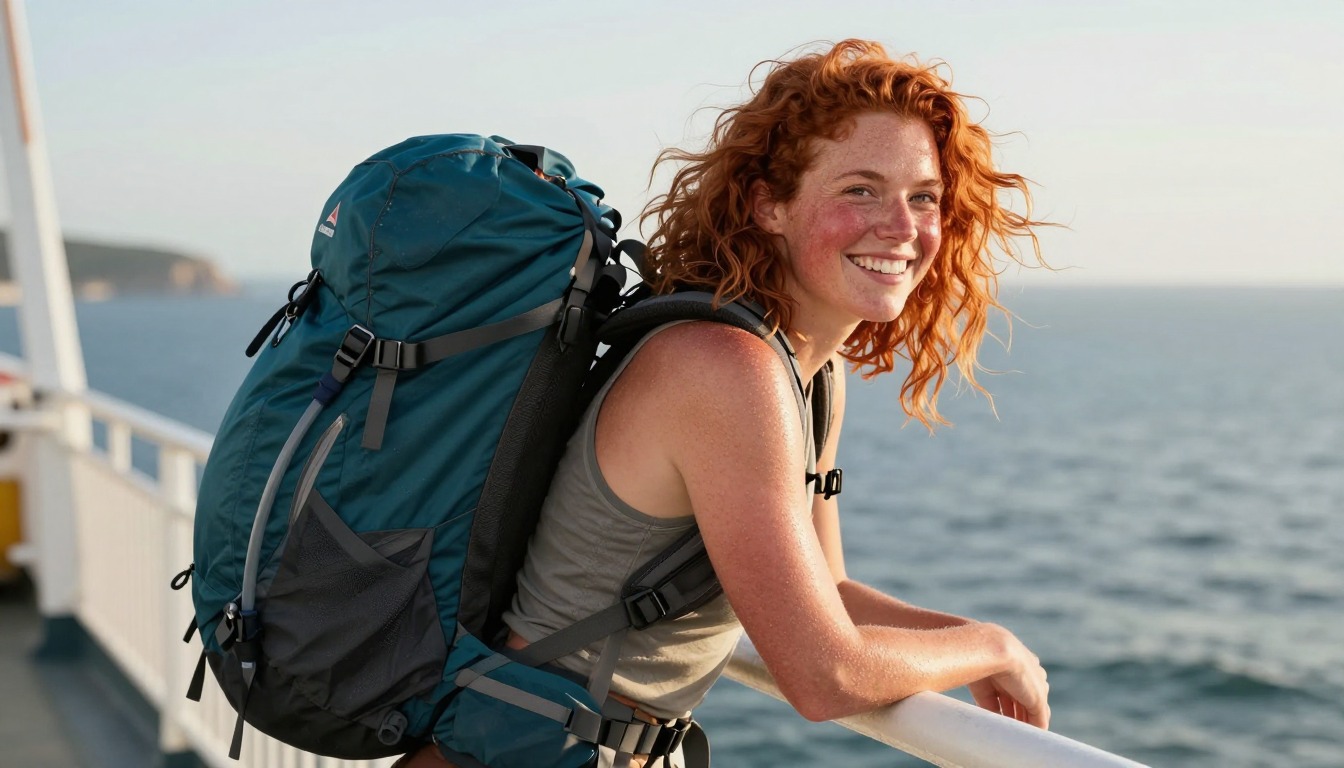


A hiker with a sweaty back gets the most relief from a trampoline mesh suspension, since it lifts the pack body off the back entirely rather than resting foam or mesh-covered padding directly against the skin. That open air gap lets sweat evaporate instead of soaking into a panel pressed against the spine, which is the main cause of a soaked back on a hot or humid trail.
Why does back panel style matter more than pack weight for sweating?
Pack weight affects overall exertion and heat generation, but back panel style determines whether sweat can actually evaporate once it forms. A light pack with a flat, unventilated foam panel can still leave a hiker's back soaked, while a slightly heavier pack with trampoline mesh suspension often feels noticeably drier over the same distance.
What else helps besides the back panel?
The shoulder straps and hipbelt matter almost as much as the main back panel, since both are large, sustained contact points. Mesh-covered, channeled padding at those points, combined with a moisture-wicking base layer, reduces trapped sweat further than back panel choice alone.
- Trampoline mesh back panel — creates a true air gap; best for heavy sweating in hot or humid climates.
- Channeled contact foam panel — vents some heat through grooves while staying in contact; a middle-ground option.
- Flat, unventilated foam panel — traps the most heat and moisture; found mostly on budget or minimalist packs.
Are there trade-offs to choosing a suspension for a sweaty back?
Trampoline mesh suspension adds some hardware weight and holds the load's center of gravity slightly farther from the spine than a contact panel does, which can reduce stability under heavier loads on technical terrain. For hikers whose main complaint is a sweaty back rather than load stability on rough ground, that trade-off is usually worth making.