
Best Hiking Backpack With Hydration
Best Hiking Backpack With Hydration, ranked from aggregated owner ratings and reviews, not first-hand testing. Real pros, cons, and who each pick is best for.

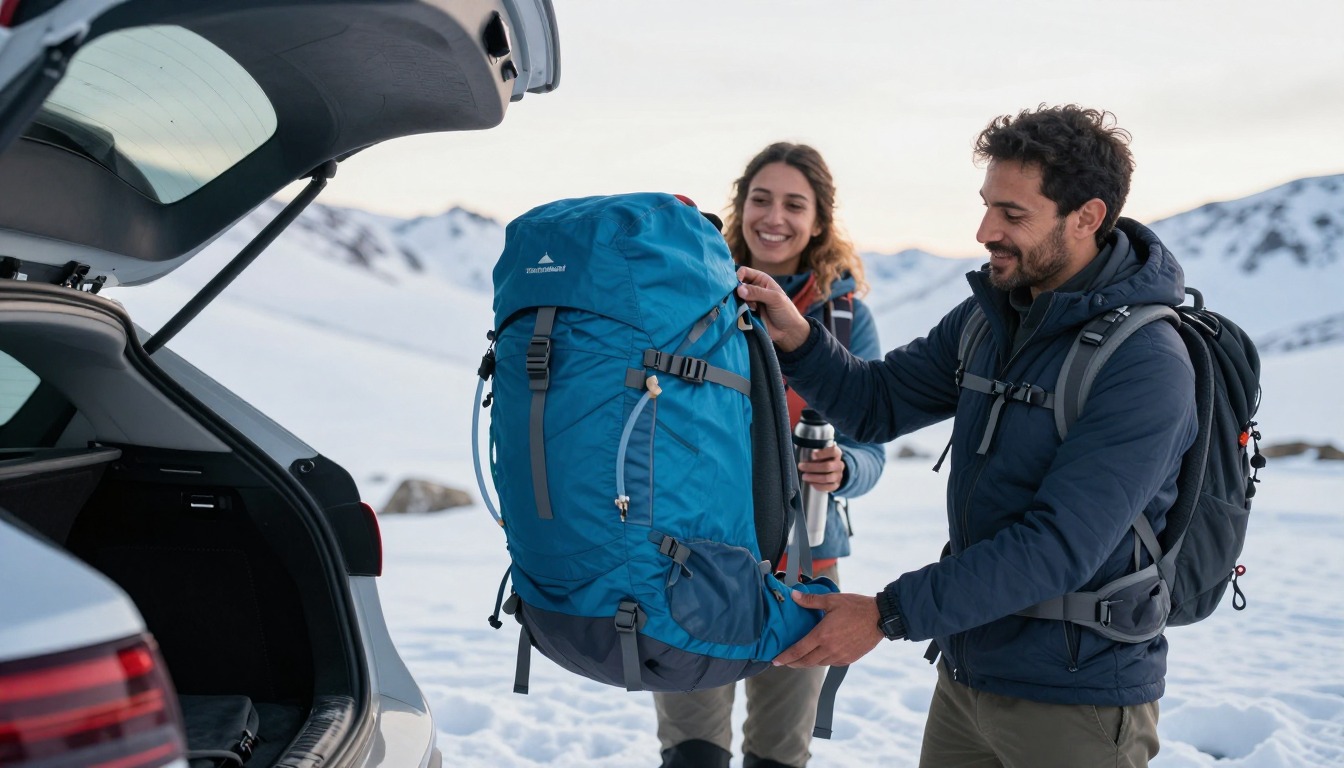
Our Top 3 Picks
Quick Comparison
| Product | Best for | Buy | |
|---|---|---|---|
| Lightweight Hydration Backpack | Top Overall Pick | See Amazon | View |
| Teton Oasis Hydration Backpack | Best Value | See Amazon | View |
| N NEVO RHINO Hydration Backpack | Best Ultralight | See Amazon | View |
| Unigear Hydration Pack Backpack with 2L Water Bladder for Hiking & Cycli | Best Hydration Pack | See Amazon | View |
Choosing the best hydration hiking backpack starts with deciding whether a reservoir, bottles or a mixed setup fits the hike, then checking how well the pack's sleeve, tube routing and pockets support that choice.
Should I choose a hydration reservoir or water bottles?
A hydration reservoir suits longer, hotter hikes where frequent sipping matters more than tracking exact water use, while bottles suit shorter hikes where seeing remaining water at a glance and refilling from a stream or trailhead tap is simple. Neither is objectively better; the right choice depends on hike length, climate and personal habit.
Reservoirs typically hold 1.5 to 3 liters, sit in a dedicated internal sleeve against the back panel, and route water through a drink tube clipped to a shoulder strap, letting a hiker sip without stopping or taking the pack off. Bottles sit in side or front pockets, are easier to fill from a natural water source or a filter, don't add a hose that can freeze in cold weather, and swap out instantly if one is empty or compromised.
What features make a hiking backpack good for hydration?
A hydration-focused hiking backpack needs a properly built reservoir sleeve, a well-routed tube port, and pockets that don't compete with the reservoir for space.
- Reservoir sleeve — a dedicated internal compartment, usually against the back panel, that keeps a full reservoir from shifting or crushing other gear.
- Tube port and routing — a covered exit point near the top of the pack and a clip or loop on the shoulder strap that keeps the bite valve within easy reach.
- Insulated tube sleeve — a fabric wrap over the drink tube that slows freezing in cold weather and slows warming in direct sun.
- Side bottle pockets — angled, stretch-mesh pockets sized to hold a bottle securely while letting a hiker retrieve it one-handed without removing the pack.
- Capacity headroom — enough internal volume left over after a full reservoir to still fit the ten essentials, since a 2- to 3-liter reservoir takes up meaningful space in a smaller daypack.
How much water do I actually need to carry?
Water needs scale with hike length, temperature and elevation gain rather than distance alone, and a rough planning figure is about half a liter to one liter per hour of moderate hiking in mild conditions, more in heat or at altitude. A hiker who can refill from streams along the route can carry less water and more filtering capacity instead of a full day's supply, freeing pack volume for other gear.
| Hike type | Typical water need | Suggested setup |
|---|---|---|
| Short, cool-weather hike | 0.5–1L | Single bottle |
| Half-day, moderate climate | 1.5–2L | Bottle or small reservoir |
| Full-day, hot or exposed | 2–3L | Reservoir, possibly plus a backup bottle |
What's the honest trade-off between reservoirs and bottles?
The honest trade-off is that a reservoir makes drinking easier but harder to monitor, while bottles make monitoring easy but require stopping and reaching into a pocket to drink. A full reservoir with its sleeve and tube also typically weighs a little more than the equivalent volume in bottles, though the difference is small enough that convenience, not weight, should usually decide it.
Many experienced day hikers carry both: a reservoir for steady sipping on the move and a single backup bottle for a known refill point or an emergency reserve. That combination costs a little pack volume but removes the single point of failure a reservoir-only or bottle-only setup carries if a hose clogs or a bottle is dropped.
Full Ranking, Reviewed

Best for Hydration Hiking backpacks
- 12 L capacity
- Nylon shell
- 9 oz empty
- Hydration-ready
- Leakproof & Anti-popping Water Bladder
- Routes a hydration bladder and hose without fuss
- Ventilated back panel cuts sweat on long climbs
- At 12 L it is best kept to shorter outings — it fills up once you add layers, lunch and water for a full day.
Verdict: NEVO RHINO’s 12 L hydration pack pairs a breathable back with room for a bladder, making it the one we would grab first for Hydration Hiking Backpacks.
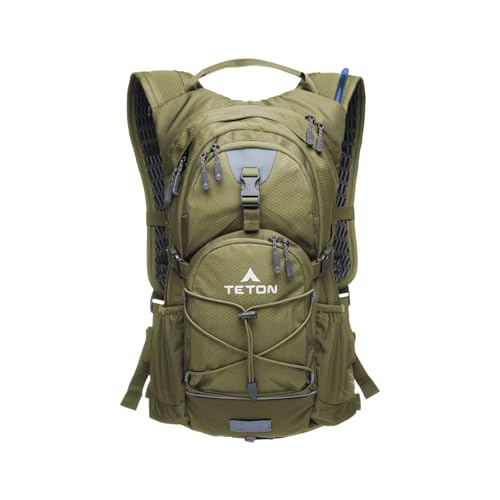
Best for Hydration Hiking backpacks
- 18–22 L capacity
- 2.0 lb empty
- Rain cover included
- Stay hydrated on the go
- Hydration sleeve keeps water within easy reach
- Includes a rain cover for sudden downpours
- Check the size and colour options on the live listing, as availability shifts.
Verdict: TETON Sports’s 18–22 L daypack pairs room for a bladder with a bundled rain cover, making it an easy shortlist pick for Hydration Hiking Backpacks.

Best for Hydration Hiking backpacks
- 18 L capacity
- 28 oz empty
- Hydration-ready
- Large Water Bladder
- Set up to carry a reservoir for hands-free sipping
- Ventilated back panel cuts sweat on long climbs
- At 18 L it is best kept to shorter outings — it fills up once you add layers, lunch and water for a full day.
Verdict: NEVO RHINO’s 18 L hydration pack pairs a breathable back with room for a bladder, making it well worth a look for Hydration Hiking Backpacks.

Best for Hydration Hiking backpacks
- Nylon shell
- 18 oz empty
- Hydration-ready
- Fit perfectly
- Hydration sleeve keeps water within easy reach
- Low carry weight pays off on big-mileage days
- Check the size and colour options on the live listing, as availability shifts.
Verdict: This hiking pack offers room for a bladder, making it an easy shortlist pick for Hydration Hiking Backpacks.
Frequently Asked Questions
Do hydration reservoirs make a hiking pack heavier?
A full 2-liter reservoir with its sleeve and tube typically weighs a little more than two 1-liter bottles carrying the same volume, mostly from the sleeve fabric and hose hardware. The difference is small enough that most hikers should choose based on convenience rather than weight.
Can I add a hydration reservoir to a bottle-only pack?
Only if the pack has a reservoir sleeve and a drink-tube port already built in; without those, a reservoir has nowhere secure to sit and no way to route the hose to a shoulder strap. Check the pack's spec sheet for a reservoir sleeve before assuming one can be added later.